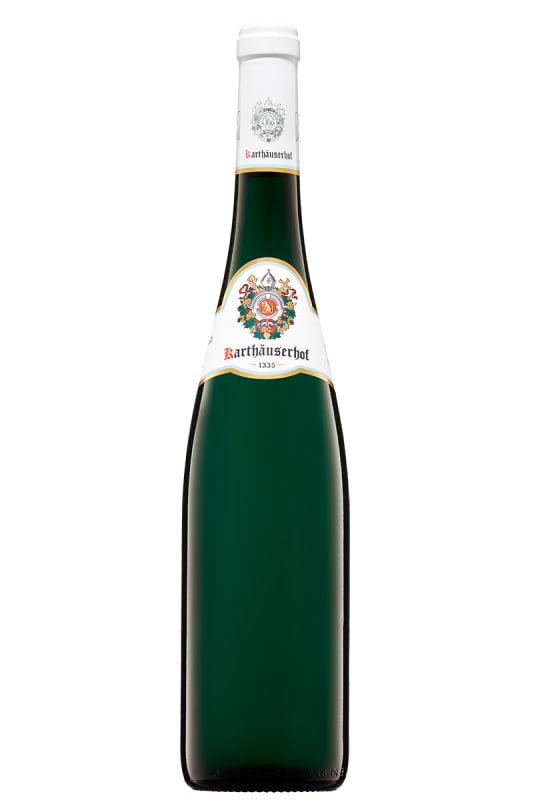


Winemaker Notes
Delicately flowery and spicy nose of herbs, spices, and pear. Zesty on the light palate. with a bone-dry feel to the long finish.
Professional Ratings
-
Wine Enthusiast
This feather-light dry Riesling announces itself with peels of white flower, tea leaf and honeydew perfume. Delightfully fragrant and transcendent in fruit quality, it's a sleek, zippy sip with a dazzling mineral finish. It's such a youthful, pretty wine now, it's hard not to drink immediately but should maintain peak well through 2026.
Editors' Choice -
James Suckling
Very effusive nose of white peaches, lemon zest and fresh herbs. This sleek, spritzy and effusive dry riesling manages simultaneously to be light on its feet and have good depth. Zesty and mineral finish. Drink or hold.
-
Robert Parker's Wine Advocate
The selection even for the dry entry cuvée was very strict, and so opens the new Gutswein of the domain, the 2019 Riesling trocken Schieferkristall, with a delicate yet dense apricot aroma and a polished slate tone. Pure, fresh and vital on the palate, this is a substantial, tightly structured yet juicy and persistently aromatic Ruwer Kabinett (though it is not declared as such for ask-the-VDP reasons) with tension and a stimulatingly salty finish. More serious, complex and structured compared to Bruno, so rather another style than quality.
Rating: 90+
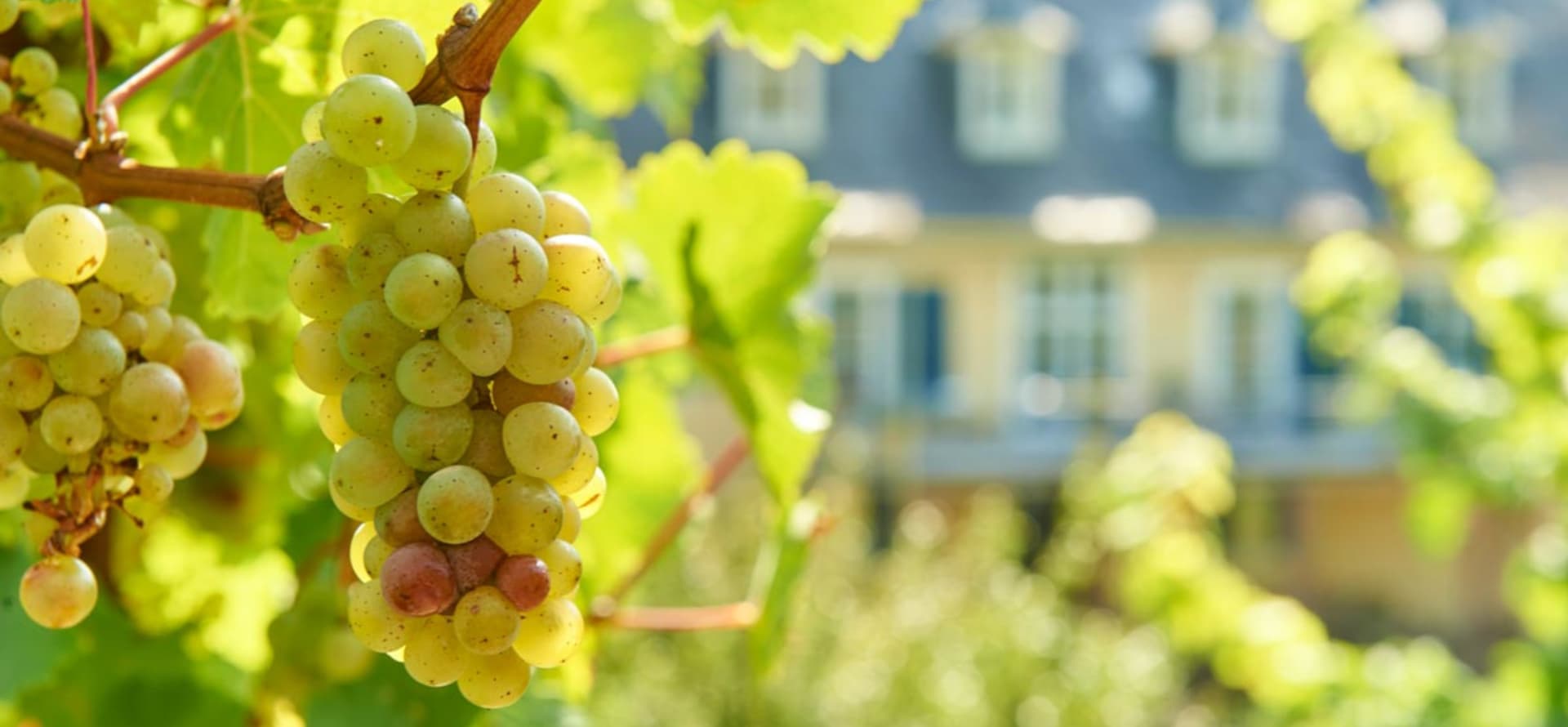


The historic Karthäuserhof estate is just before the confluence of the Ruwer and Mosel rivers, nestled along a side valley adjacent to the small village of Eitelsbach. While winemaking here dates back to Roman times, most consider the "official" founding of the estate as we know it to be 1335—when Balduin, the Archbishop and Elector of Trier, gave the vineyards to The Carthusians monks, calling it the "Farm of the Carthusians," or Karthäuserhof in German.
In the early 19th century, Napoleon secularized the region, and the property saw an auctioning off in Paris. Valentin Leonardy bought the property on this auction in 1811, and miraculously, despite turbulent times over 200 years, it has remained in the same family—from Leonardy to Rautenstrauch to Tyrell, who inherited the estate in the mid-20th century. The eldest Tyrell son, Christoph, oversaw all operations of the vineyard and cellar until 2012. In that same year, the estate was turned over to Christoph Tyrell’s cousin, Albert Behler.
The wines that come from this place (although 15 years ago grouped under appellation Mosel) are unmistakably different and unique to the Ruwer valley. Ruwer is much smaller, almost like an expansive stream, and runs only 30 miles (49 kilometers) with just on the last 10 miles vineyards on hills alongside the river. The region is nothing like what you see on the hills of the Mosel riverbanks. There are forests and bushes, and the feeling is more rustic, and thus, the wines are slightly more rigorous and somewhat austere. From the 2020 vintage, producers are allowed to label their wines as Ruwer.
For a long time, Karthäuserhof was a single-vineyard Ruwer estate that made wines exclusively from the Karthäuserhofberg vineyard. The 19 hectares (47 acres) here are planted almost entirely to Riesling, partly on original rootstock. While the expositions and expressions are unique, the soils throughout the vineyard are quite similar, consisting of iron-rich, oxidized blue, and gray slate, which is unique also for the Ruwer region. Eitelsbach, the name of the surrounding village, stems from the German word "Eisen," meaning iron.
Recently other vineyards have been strategically added to the estate in Waldrach (monopole Laurentiusberg) and Mertesdorf (Herrenberg). Today, the estate totals over 28 hectares (69 hectares) of vineyards.
In 2020, estate management also changed. Albert Behler hired Mathieu Kauffmann, 2020 Gault Millau Winemaker of the Year, who previously worked at Von Buhl, and before, the esteemed Champagne producer, Bollinger. Since he joined, the estate started enhancing the soil with natural fertilizers, and 30 percent of the vineyards turned to organic production. Kauffmann is a big devotee of biodynamic practices, and his goal is to get the entire estate certified. There is no use of pesticides or artificial sprays. In the cellar, wines are made using whole bunches, no added enzymes or yeasts, and bottled without fining. Wines age in small stainless steel tanks and 500- and 1,200-liter used oak barrels.
While the estate produces the classic Prädikat wines, they have long been ahead of the curve and are renowned for their dry Rieslings—most of their production is dry. These wines speak about Ruwer, about the forest, with a range of flavors that includes forest floor notes, pine, star anise, and dried fruit. They show a crystal-clear structure, paired by its typical minerality and a fruity acidity. They are also famously age-worthy, and few German wines have a reputation for being as long-lived as the wines of the Ruwer.

Riesling possesses a remarkable ability to reflect the character of wherever it is grown while still maintaining its identity. A regal variety of incredible purity and precision, this versatile grape can be just as enjoyable dry or sweet, young or old, still or sparkling and can age longer than nearly any other white variety. Somm Secret—Given how difficult it is to discern the level of sweetness in a Riesling from the label, here are some clues to find the dry ones. First, look for the world “trocken.” (“Halbtrocken” or “feinherb” mean off-dry.) Also a higher abv usually indicates a drier Riesling.

Following the Mosel River as it slithers and weaves dramatically through the Eifel Mountains in Germany’s far west, the Mosel wine region is considered by many as the source of the world’s finest and longest-lived Rieslings.
Mosel’s unique and unsurpassed combination of geography, geology and climate all combine together to make this true. Many of the Mosel’s best vineyard sites are on the steep south or southwest facing slopes, where vines receive up to ten times more sunlight, a very desirable condition in this cold climate region. Given how many twists and turns the Mosel River makes, it is not had to find a vineyard with this exposure. In fact, the Mosel’s breathtakingly steep slopes of rocky, slate-based soils straddle the riverbanks along its entire length. These rocky slate soils, as well as the river, retain and reflect heat back to the vineyards, a phenomenon that aids in the complete ripening of its grapes.
Riesling is by far the most important and prestigious grape of the Mosel, grown on approximately 60% of the region’s vineyard land—typically on the desirable sites that provide the best combination of sunlight, soil type and altitude. The best Mosel Rieslings—dry or sweet—express marked acidity, low alcohol, great purity and intensity with aromas and flavors of wet slate, citrus and stone fruit. With age, the wine’s color will become more golden and pleasing aromas of honey, dried apricot and sometimes petrol develop.
Other varieties planted in the Mosel include Müller-Thurgau, Spätburgunder (Pinot Noir) and Weissburgunder (Pinot Blanc), all performing quite well here.