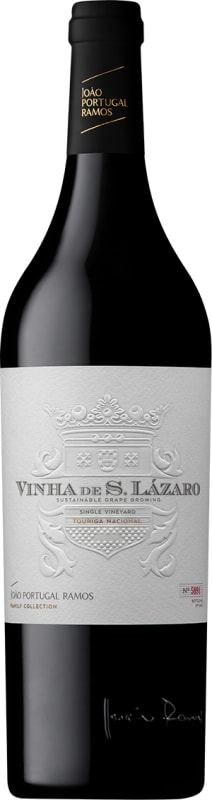


Winemaker Notes
Aromas of fully ripe dark fruit with a touch of vegetal and truffles. The fruit is rich and voluminous on the palate, with soft tannins and a long, toasty finish.
Touriga Nacional is a great pairing for any meat dish. In this particular wine, as it is very delicate and full bodied, it is ideal with a lamb tagine, or any variety of matured meats.
Professional Ratings
-
Wine Enthusiast
From fruit foot trodden in open lagars, the wine is powerful with a generous texture. It is an impressive wine, its tannins giving the wine richness. Black fruits are still young, still vibrant, so the wine needs to soften.
-
James Suckling
This is a chewy and flavorful red with rich layers of dark chocolate, spiced cherries, dried flowers, thyme and toasted lemon peel. Medium- to full-bodied, broad and firm, yet lively and bright too.


Gaining great popularity for its bold but beautifully aromatic dry red wines, Touriga Nacional is the noblest variety in Port wine. Most likely originating from the Dão region, today it grows throughout the Douro Valley as well. Somm Secret—As many as 80 grape varieties can be used to make Port wine, each contributing something unique to the resulting blend. Touriga Nacional adds great color, tannins and aromatics.

Responsible for a majority of Portugal’s fine wine production—and over half of the world’s cork production—Alentejo represents a major force in Portugal’s wine industry. This southern Portugese region is characterized by stretches of rolling plains and vineyards dotted with majestic cork oaks. Access to land enables the farmers of Alentejo to produce wines in great economies of scale, without compromising quality, compared to those regions to the north. The region of Alentejo indeed covers a third of the country.
Its classified (DOP) wines must come from one of eight subregions, where elevations are a bit higher, air cooler and less fertile soils are perfect for vines. The optimal regions are Portalegre, Borba, Redondo, Reguengos de Monsaraz, Granja-Amareleja, Vidigueira, Evora and Moura. Alentejo is not without the conveniences of modern winemaking as well. Irrigation supplements low rainfall and temperature control in the winery assures high quality wines.
The potential of the area has attracted many producers and its wine production continues to grow. Alentejo’s charming, fruit-forward wines have naturally led to local and global popularity.
White wines tend to be blends of Antão Vaz, Roupeiro and Arinto. However, in growing proportions, the white grapes Verdelho, Alvarinho and Viognier have been enjoying success. But red varieties actually exceed whites in Alentejo. Aragonez, Trincadeira, Alicante Bouschet and Castelão grapes blend well together and are responsible for most of the Alentejo reds.