

Winemaker Notes
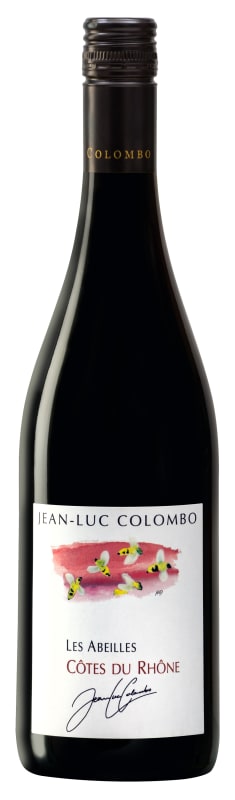
The pleasure of Southern Rhone sunshine. Seductive nose of small red fruits, coriander and bay leaf. Meaty yet silky, with notes of licorice and spices, elegant tannins and a good aromatic persistence.
Great wine with grilled lamb or pork, seared ahi tuna, or young cheeses.
Professional Ratings
-
Wilfred Wong of Wine.com
MY PUBLISHED NOTES: COMMENTARY: The 2021 Jean-Luc Colombo Côtes du Rhône Les Abeilles is a great example of honest-to-goodness CDR. Enjoy it with a lightly-spiced Pad Kra Pao (Tasted: April 7, 2024, San Francisco, CA)



Jean-Luc Colombo: Give the best from each of the most beautiful terroirs
Jean-Luc Colombo's childhood dream of becoming a winemaker and viticulturist came to fruition in the early 1980s with the acquisition of his first vineyard, a small plot of old Syrah vines perched on a granite hill overlooking the village of Cornas. From there was born the first vintage of Cornas "Les Ruchets." Early success led to the quick acquisition of more vineyards in the Northern Rhône and Provence. Throughout his journey Jean-Luc has remained true to his passion for winemaking and committed to his guiding principle: respecting nature and the unique qualities of each terroir.
Cornas is the heart and soul of Jean-Luc Colombo. A small appellation spanning 120 hectares of craggy terraces overlooking the Rhone river. It is where Syrah has found its most profound and pure expression of character, and it remains the sole grape variety cultivated throughout the appellation. A unique terroir, well-preserved in the midst of a forest of green oaks and junipers, lends depth and minerality to the wines. Not forgetting his origins Jean-Luc returned to his home region of Provence in the early 2000s. Near the Gulf of Marseille, in the limestone hills facing the Mediterranean Sea in an area locally known as Cote Bleue (Blue Coast), he purchased parcels of land from various proprietors which allowed him to create a new vineyard.
Living amidst their vineyards in Cornas, Jean-Luc and Anne have always been committed to preserving their environment by working in harmony with nature's abundance. Maintaining an ecosystem where insects, animals and vines coexist and thrive is paramount to them. As such, organic methods have been employed in their vineyards for many years. Additionally, Jean-Luc is a firm believer of dry farming. Irrigation is strictly prohibited in the vineyards, encouraging deep rooting of the vines, allowing for the full and pure expression of the terroir in accordance with the unique characteristics of each vintage.

With bold fruit flavors and accents of sweet spice, Grenache, Syrah and Mourvèdre form the base of the classic Rhône Red Blend, while Carignan, Cinsault and Counoise often come in to play. Though they originated from France’s southern Rhône Valley, with some creative interpretation, Rhône blends have also become popular in other countries. Somm Secret—Putting their own local spin on the Rhône Red Blend, those from Priorat often include Merlot and Cabernet Sauvignon. In California, it is not uncommon to see Petite Sirah make an appearance.

Typically thought of as a baby Chateâuneuf-du-Pape, the term Côtes du Rhône actually doesn’t merely apply to the flatter outskirts of the major southern Rhône appellations, it also includes the fringes of well-respected northern Rhône appellations. White wines can be produced under the appellation name, but very little is actually made.
The region offers some of the best values in France and even some first-rate and age-worthy reds. Red wine varieties include most of the Chateâuneuf-du-Pape varieties like Grenache, Syrah, Mourvedre, Cinsault, and Counoise, as well as Carignan. White grapes grown include Grenache blanc, Roussanne and Viognier, among others.