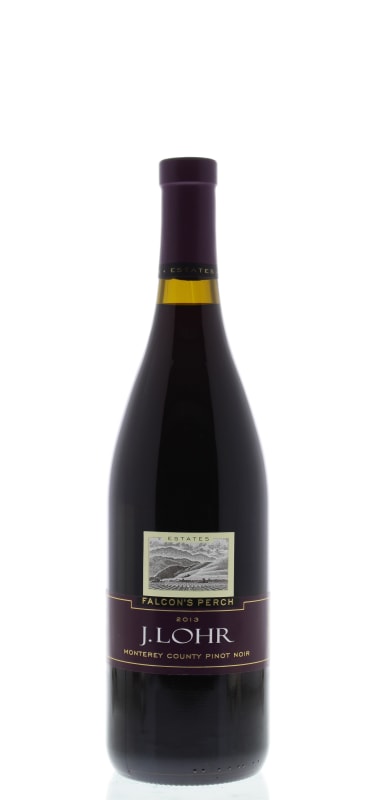


Winemaker Notes
For food pairings, a pinch of chili powder really sets off this Pinot Noir. Try with a Lowcountry Southern cuisine recipe, like shrimp gumbo. Classic matches include smoked salmon on savory crackers, or a ripened goat cheese coated with ash, such as Selles-sur-Cher.



For more than fifty years and through two generations, the Lohr family and their team have been leaders in the California wine industry. Founder Jerry Lohr and his three children Steve, Cynthia, and Lawrence oversee one of the country's most successful and trusted fine wine labels. With first plantings in Monterey in 1972 and then in Paso Robles in 1986, the team helped write the book on sustainable winegrowing on the Central Coast.
Today, J. Lohr farms more than 4,000 acres of estate vineyards in Monterey's Arroyo Seco and Santa Lucia Highlands appellations, Paso Robles, and St. Helena in the Napa Valley. They produce eight tiers of award-winning releases: J. Lohr Signature Cabernet Sauvignon, J. Lohr Cuvée Series, J. Lohr Vineyard Series, J. Lohr Gesture, J. Lohr Pure Paso Proprietary Red Wine, J. Lohr Estates, J. Lohr Monterey Roots, and ARIEL Vineyards.
J. Lohr is a Certified California Sustainable Vineyard and Winery and was honored with the 2020 Green Medal Leader Award in recognition of the company's decades-long commitment to sustainability.

Thin-skinned, finicky and temperamental, Pinot Noir is also one of the most rewarding grapes to grow and remains a labor of love for some of the greatest vignerons in Burgundy. Fairly adaptable but highly reflective of the environment in which it is grown, Pinot Noir prefers a cool climate and requires low yields to achieve high quality. Outside of France, outstanding examples come from in Oregon, California and throughout specific locations in wine-producing world. Somm Secret—André Tchelistcheff, California’s most influential post-Prohibition winemaker decidedly stayed away from the grape, claiming “God made Cabernet. The Devil made Pinot Noir.”

A geographic and climatic paradise for grape vines, Monterey is a part of the greater Central Coast AVA and contains within it five smaller sub-appellations, including Arroyo Seco, San Lucas, San Bernabe, Hames Valley and the famous Santa Lucia Highlands. The climate is relatively warm but tempered by cool, coastal winds, allowing the regions in Monterey County an exceptionally long growing season. Bud break often happens two weeks sooner and harvest tends to be two weeks later compared to other surrounding regions.
Monterey’s coastal side, where the cooling ocean fog allows grapes to develop a perfect sugar-acid balance, excels in the production of Chardonnay, Pinot Noir and Riesling. Warmer, inland subzones are home to fleshy, concentrated and full-bodied reds like Cabernet Sauvignon, Merlot and Zinfandel.
Chardonnay, covering about 40% of vineyard acreage, is the most widely planted grape in all of Monterey County.