


Winemaker Notes
Professional Ratings
-
Decanter
Without taking anything away from owner Alessandro Mori, it seems that since his son Iacopo joined him in the cellar in 2019, Il Marroneto’s wines have achieved even greater precision. Perhaps it is the result of having another equally meticulous pair of hands. Whatever the reason, this 2021 could be the estate’s best classic Brunello so far – definitely on a par with the Madonna delle Grazie bottling. Perfumes of rose, peony, lavender and lilac unfold from a sweet, earthy backdrop. It floats effortlessly yet with ample depth of dark red cherry and raspberry flavour. Juicy orange rings from the core. Exquisitely refined, suede-like tannins are long and silky, though denser than usual, while piercing minerality prolongs the finish. Drinkability that is delectably within reach.
-
James Suckling
A dark and complex wine with aromas of black cherries, cherry pits, dried flowers, licorice and hints of leather and intoxicating violets. There is elegance as well as depth. Medium- to full-bodied with great density and concentration, sleek tannins of outstanding ripeness, graceful acidity and a super-polished finish. Licorice aftertaste. Drink or hold.
-
Vinous
The 2021 Brunello di Montalcino wafts up with an exotic blend of crushed sour cherries and dried violets complemented by cedar spice box and nuances of incense. It is seamless and silken in feel, displaying notable weight while also coming across as graceful and refined, with a remarkably pretty blend of wild strawberries and a crunch of minerality. A raspberry sauce concentration and sour citrus twang remain as edgy tannins linger, offset by a bump of riveting acidity. This is a fantastic vintage for Il Marroneto's Brunello, here taking on a level of complexity and concentration I usually associate with the Madonna delle Grazie.
-
Robert Parker's Wine Advocate
Il Marroneto’s 2021 Brunello di Montalcino is immediately captivating, showing lift and verticality that sets it clearly apart, with bright cherry fruit, grenadine and grilled watermelon underscored by an energetic, punchy edge. There is an appealing sweetness to the aromatics alongside hints of white peppercorn and pressed violet, with lifted tones that flirt with volatility yet remain controlled, carried by remarkably soft and polymerized tannins. The 2021 is distinctly austere and complex, etched with mineral precision and built with multiple layers stacked one atop another, gaining depth rather than breadth. Before fermentation is complete, the cap is soft and malic acid is not yet developed, and the wine is racked with residual sugar (from six to 10 grams per liter). The skins are pressed at 350 atmospheres in a vertical press, and the free-run juice is combined with the must to complete fermentation very slowly, over many months, bubbling happily along. It ages in oak botti for 42 months. This is a release of 22,000 bottles.
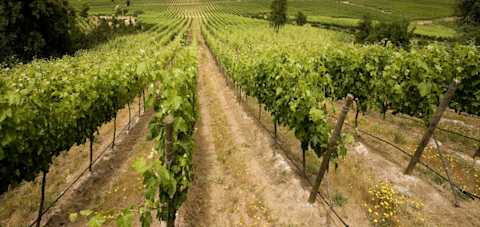
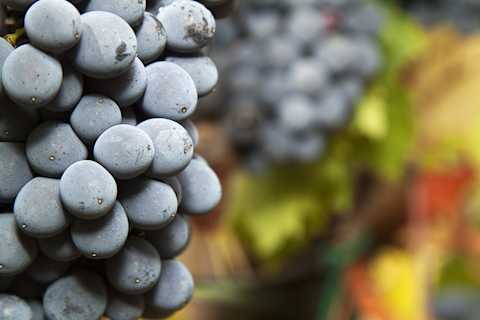
Among Italy's elite red grape varieties, Sangiovese has the perfect intersection of bright red fruit and savory earthiness and is responsible for the best red wines of Tuscany. While it is best known as the chief component of Chianti, it is also the main grape in Vino Nobile di Montepulciano and reaches the height of its power and intensity in the complex, long-lived Brunello di Montalcino. Somm Secret—Sangiovese doubles under the alias, Nielluccio, on the French island of Corsica where it produces distinctly floral and refreshing reds and rosés.
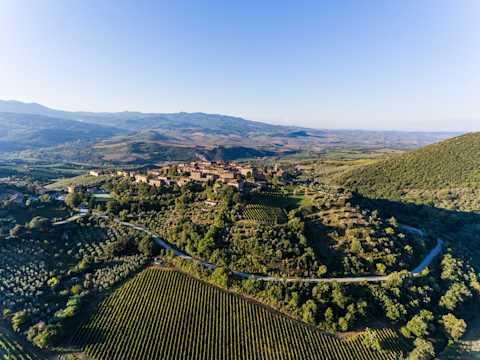
Famous for its bold, layered and long-lived red, Brunello di Montalcino, the town of Montalcino is about 70 miles south of Florence, and has a warmer and drier climate than that of its neighbor, Chianti. The Sangiovese grape is king here, as it is in Chianti, but Montalcino has its own clone called Brunello.
The Brunello vineyards of Montalcino blanket the rolling hills surrounding the village and fan out at various elevations, creating the potential for Brunello wines expressing different styles. From the valleys, where deeper deposits of clay are found, come wines typically bolder, more concentrated and rich in opulent black fruit. The hillside vineyards produce wines more concentrated in red fruits and floral aromas; these sites reach up to over 1,600 feet and have shallow soils of rocks and shale.
Brunello di Montalcino by law must be aged a minimum of four years, including two years in barrel before realease and once released, typically needs more time in bottle for its drinking potential to be fully reached. The good news is that Montalcino makes a “baby brother” version. The wines called Rosso di Montalcino are often made from younger vines, aged for about a year before release, offer extraordinary values and are ready to drink young.