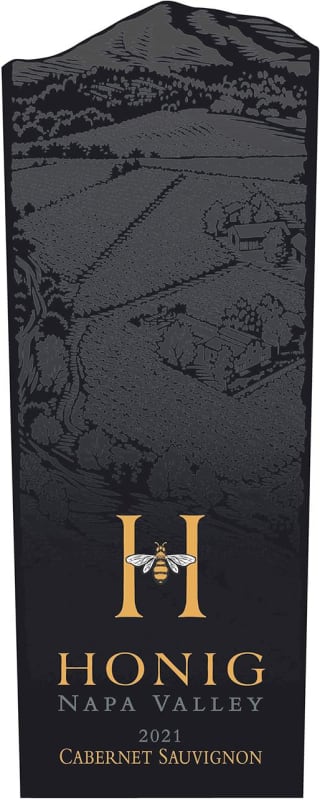

Winemaker Notes
Another classic Honig Napa Valley Cabernet Sauvignon expressing a lovely combination of black raspberry and cherry enhanced by savory notes and exotic spices (think Garam masala) and cocoa nibs. The texture is rich, framed by just the right amount of tannin and acid, giving a sense of perfect balance. While enjoyable upon release, this wine will age gracefully through 2031 and longer if you would like.
Blend: 85% Cabernet Sauvignon, 5.3% Merlot, 4.6% Malbec 2.4% Petit Verdot 1.4% Cabernet Franc, 1.2% Petit Syrah
Professional Ratings
-
James Suckling
Attractive dark-fruited character here offering ripe blackcurrants, dark cherries and dark spices with bark and walnut undertones. Full-bodied, polished and chalky with tight-grained tannins and succulent dark berries underneath. Long and mineral finish.
-
Wine Spectator
Very solid, with the core nicely packed with cassis, plum puree and cherry reduction notes that are inlaid with licorice snap and violet hints before ending with an element of singed apple wood. Drink now through 2034. 15,450 cases made.


One of the most prestigious wines of the world capable of great power and grace, Napa Valley Cabernet is a leading force in the world of fine, famous, collectible red wine. Today the Napa Valley and Cabernet Sauvignon are so intrinsically linked that it is difficult to discuss one without the other. But it wasn’t until the 1970s that this marriage came to light; sudden international recognition rained upon Napa with the victory of the Stag’s Leap Wine Cellars 1973 Cabernet Sauvignon in the 1976 Judgement of Paris.
Cabernet Sauvignon undoubtedly dominates Napa Valley today, covering half of the land under vine, commanding the highest prices per ton and earning the most critical acclaim. Cabernet Sauvignon’s structure, acidity, capacity to thrive in multiple environs and ability to express nuances of vintage make it perfect for Napa Valley where incredible soil and geographical diversity are found and the climate is perfect for grape growing. Within the Napa Valley lie many smaller sub-AVAs that express specific characteristics based on situation, slope and soil—as a perfect example, Rutherford’s famous dust or Stags Leap District's tart cherry flavors.