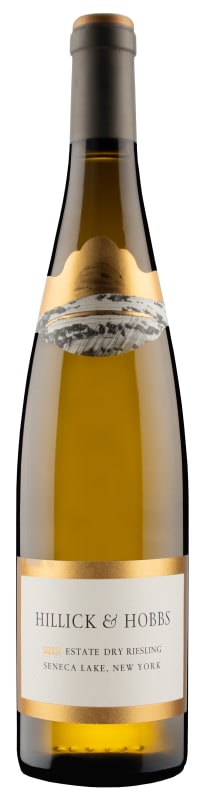


Winemaker Notes
Professional Ratings
-
James Suckling
What a beautiful floral bouquet of honeysuckle and gardenias, with mandarin orange and white peach aromas. So pristine and precisely contoured on the medium-bodied palate. Wonderfully elegant wet-stone finish that's long and complete. Whole-cluster pressed and wild-fermented in stainless steel tanks. Drink or hold.
-
Robert Parker's Wine Advocate
Lime sherbet and green apples mark the nose of the 2023 Dry Riesling Estate Vineyard. Five percent of the volume was fermented in old French oak, while the balance was done in stainless steel, using indigenous yeasts. Weighing in at 12% alcohol and four grams per liter of residual sugar, it's medium-bodied, with a rich, viscous mouthfeel and a lingering finish that seems a bit drier than the 2022.
-
Wine Spectator
A friendly version, with crisp-edged flavors of yellow apple and white peach laced with a quinine note. Pure and sleek.
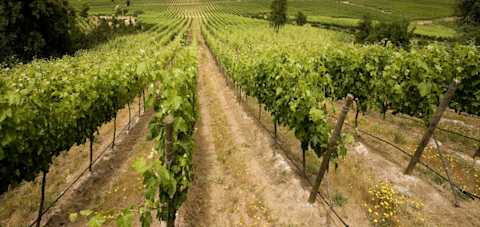
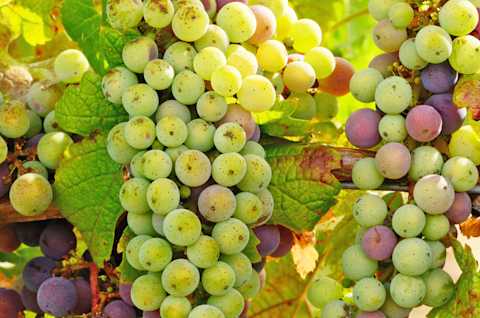
Riesling possesses a remarkable ability to reflect the character of wherever it is grown while still maintaining its identity. A regal variety of incredible purity and precision, this versatile grape can be just as enjoyable dry or sweet, young or old, still or sparkling and can age longer than nearly any other white variety. Somm Secret—Given how difficult it is to discern the level of sweetness in a Riesling from the label, here are some clues to find the dry ones. First, look for the world “trocken.” (“Halbtrocken” or “feinherb” mean off-dry.) Also a higher abv usually indicates a drier Riesling.
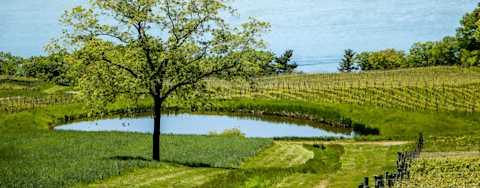
As the most historic wine-producing region in New York state, winemaking in the Finger Lakes area dates back to the 1820s and today as a region, accounts for 90% of the state’s total wine production.
Its narrow and deep lakes created by the movement of Ice Age glaciers create an environment similar to the classic Riesling-loving regions of Europe, namely Germany and Austria. The Finger Lakes retain summer heat that incidentally warms up cold winter air, making it fall down from the lakes’ steep slopes. When spring comes, the lakes, already cooled by cold winter weather, stave off vine budding until the danger of frost has subsided. The main lakes of the zone, that is those big enough to moderate the climate in this way, are the focal points of prime vineyard areas. They include Canandaigua, Keuka, Seneca and Cayuga.
While Riesling has fueled most of the region’s success, today Pinot Noir and Cabernet Franc enjoy some attention.