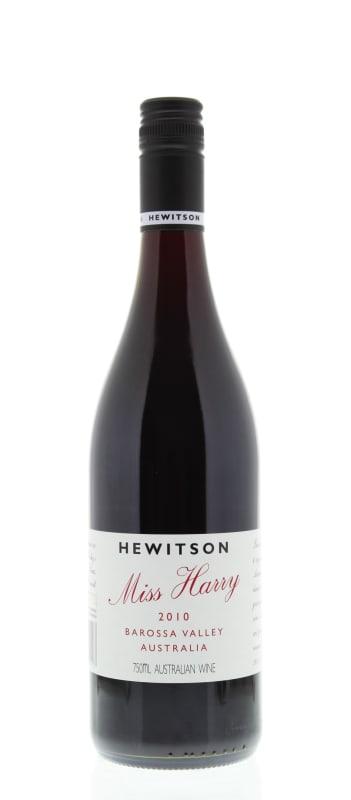


Winemaker Notes
The palate is wonderfully full, showing ripe black berries, strawberries and plums, and has a concentrated core of fruit essence with a racy acidity that gives the wine incredible vivacity. The finish is long, continuous and fresh. 2010 Miss Harry is quite an exceptional wine and is absolutely world-class.
Blend: 44% Grenache, 39% Shiraz, 8% Mourvedre, 4% Carignan, 4% Cinsault
Professional Ratings
-
Wine & Spirits
Dean Hewitson taps centenarian vines for this blend of Grenache, Syrah, Mourvedre, Carignane and Cinsault. Its bright ripeness delivers sweet fruit across a broad, sunny palate, then turns savory in the end, buzzing with a gentle energy. The supple flavors of cassis and blueberries merge with rich oak tannins, deftly integrated and satisfying. For a mixed grill.
-
James Suckling
Some berry and chocolate character on the nose and palate. Medium to full body, with firm tannins and a fresh finish. Subtle and very drinkable. Better in 2013. From Grenache, Shiraz, Mouvedre, Carignan and Cinsault.
-
Wine Spectator
Lithe and appealing, with tea leaf and orange peel accents around a sleek core of red berry flavors. The finish lingers effortlessly against refined tannins. Grenache, Shiraz, Mourvèdre, Carignane and Cinsault. Best from 2015 through 2020. 1,500 cases imported
-
Wine Enthusiast
This GSM blend includes bits of Carignan and Cinsault. It’s a full-bodied, supple wine intended for youthful consumption, with a long, mouthwatering finish. Raspberry and cherry fruit is balanced by savory notes of earth and mocha. Drink now–2016.


With bold fruit flavors and accents of sweet spice, Grenache, Syrah and Mourvèdre form the base of the classic Rhône Red Blend, while Carignan, Cinsault and Counoise often come in to play. Though they originated from France’s southern Rhône Valley, with some creative interpretation, Rhône blends have also become popular in other countries. Somm Secret—Putting their own local spin on the Rhône Red Blend, those from Priorat often include Merlot and Cabernet Sauvignon. In California, it is not uncommon to see Petite Sirah make an appearance.

Historically and presently the most important wine-producing region of Australia, the Barossa Valley is set in the Barossa zone of South Australia, where more than half of the country’s wine is made. Because the climate is very hot and dry, vineyard managers work diligently to ensure grapes reach the perfect levels of phenolic ripeness.
The intense heat is ideal for plush, bold reds, particularly Shiraz on its own or Rhône Blends. Often Shiraz and Cabernet partner up for plump and powerful reds.
While much less prevalent, light-skinned varieties such as Riesling, Viognier or Semillon produce vibrant Barossa Valley whites.
Most of Australia’s largest wine producers are based here and Shiraz plantings date back as far as the 1850s or before. Many of them are dry farmed and bush trained, still offering less than one ton per acre of inky, intense, purple juice.