

Winemaker Notes
Professional Ratings
-
Wine & Spirits
Dean Hewitson contracts the fruit from the Old Garden Vineyard in Rowland Flat, where the mourvedre vines date back to 1853. The Koch family, who tends these ancient vines, selected cuttings from them in 1996 to plant, head prune and dry farm in the same configuration as Old Garden. The result, in the cool 2011 vintage, is completely intoxicating. An honest take on mourvedre's tension between funk and brilliance, one side of this wine is blood and iron, the other side is a fresh cranberry crush of flavor. The only sign of the youth of the vines is a steeliness in the tannins, if you can stand to quibble with such a delicious, bright and spicy red.
-
Robert Parker's Wine Advocate
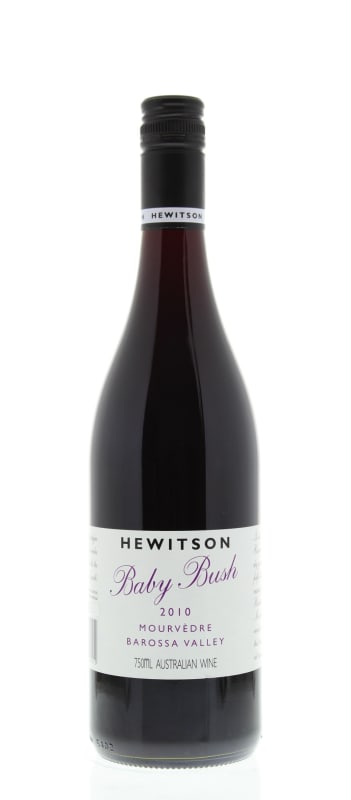
Made from 100% Mourvedre coming from younger vines that were cloned from the 1853 Old Garden block, the 2010 Baby Bush Mourvedre has a medium-deep garnet-purple color and aromas of damp loam and black truffles over warm plums, blackberry tart and black olives. Medium to full bodied with some chewy tannins, it has a pleasant earthy / meaty character complimenting the black fruits with refreshing acidity and a long finish.


Full of ripe fruit, and robust, earthy goodness, Mourvèdre is actually of Spanish provenance, where it still goes by the name Monastrell or Mataro. It is better associated however, with the Red Blends of the Rhône, namely Chateauneuf-du-Pape. Mourvèdre shines on its own in Bandol and is popular both as a single varietal wine in blends in the New World regions of Australia, California and Washington. Somm Secret—While Mourvèdre has been in California for many years, it didn’t gain momentum until the 1980s when a group of California winemakers inspired by the wines of the Rhône Valley finally began to renew a focus on it.

Historically and presently the most important wine-producing region of Australia, the Barossa Valley is set in the Barossa zone of South Australia, where more than half of the country’s wine is made. Because the climate is very hot and dry, vineyard managers work diligently to ensure grapes reach the perfect levels of phenolic ripeness.
The intense heat is ideal for plush, bold reds, particularly Shiraz on its own or Rhône Blends. Often Shiraz and Cabernet partner up for plump and powerful reds.
While much less prevalent, light-skinned varieties such as Riesling, Viognier or Semillon produce vibrant Barossa Valley whites.
Most of Australia’s largest wine producers are based here and Shiraz plantings date back as far as the 1850s or before. Many of them are dry farmed and bush trained, still offering less than one ton per acre of inky, intense, purple juice.