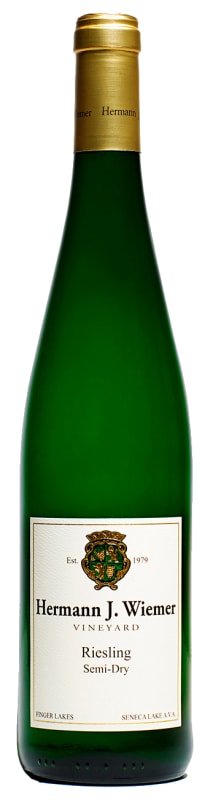


Winemaker Notes
This versatile, Kabinett-style Riesling is marked by a refined interplay of sweetness and freshness. Harvested in the beginning of the season, this delicate, fruit-forward wine reveals the classic flavors of the variety. The Riesling grape is known for expressing well in any range, from dry to sweet.
This semi-dry style exhibits a rich mouthfeel and a satisfying finish. Its mango-like juiciness makes this crowd-pleasing wine appropriate for summer sipping, or for pairing with a myriad of full-flavored foods.
Professional Ratings
-
Robert Parker's Wine Advocate
The 2020 Riesling Semi-Dry comes in with 22 grams per liter of residual sugar and 10.5% alcohol. This certainly shows off its sugar in its youth, but it is classically aromatic, fresh and simply delicious. Considering how many round and accessible 2020s I've seen of late, I worried a little as I got to the off-dry categories, fearing that they might be a bit flabby, but if anything, I like this better than the winery's Dry Riesling in this report. It is certainly a nice value in a crowd-pleasing style. We'll see how it ages, but there doesn't appear to be any reason to wait. Best After 2022


Riesling possesses a remarkable ability to reflect the character of wherever it is grown while still maintaining its identity. A regal variety of incredible purity and precision, this versatile grape can be just as enjoyable dry or sweet, young or old, still or sparkling and can age longer than nearly any other white variety. Somm Secret—Given how difficult it is to discern the level of sweetness in a Riesling from the label, here are some clues to find the dry ones. First, look for the world “trocken.” (“Halbtrocken” or “feinherb” mean off-dry.) Also a higher abv usually indicates a drier Riesling.

As the most historic wine-producing region in New York state, winemaking in the Finger Lakes area dates back to the 1820s and today as a region, accounts for 90% of the state’s total wine production.
Its narrow and deep lakes created by the movement of Ice Age glaciers create an environment similar to the classic Riesling-loving regions of Europe, namely Germany and Austria. The Finger Lakes retain summer heat that incidentally warms up cold winter air, making it fall down from the lakes’ steep slopes. When spring comes, the lakes, already cooled by cold winter weather, stave off vine budding until the danger of frost has subsided. The main lakes of the zone, that is those big enough to moderate the climate in this way, are the focal points of prime vineyard areas. They include Canandaigua, Keuka, Seneca and Cayuga.
While Riesling has fueled most of the region’s success, today Pinot Noir and Cabernet Franc enjoy some attention.