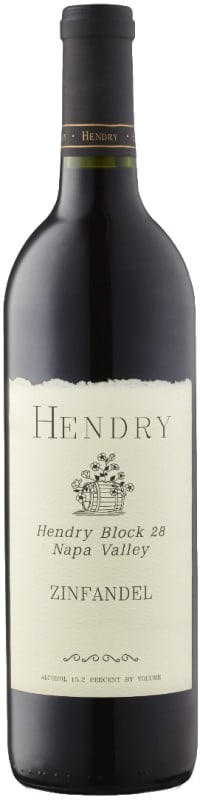


Winemaker Notes
Hendry Block 28 is located on bench lands west of the town of Napa. This 4.17-acre block is 160 feet above sea level and has thin, stony soils. Morning fog and strong afternoon breezes from San Pablo Bay moderate the maritime climate. The vines were planted in 1998 using St. George roots and grafted with budwood selected from an old-vine Zinfandel vineyard on Mt. Veeder called the Brandlin Ranch. The vines are spaced 6.9' x 5', cordon-trained and spur-pruned. A vertical trellis system supports the cordon and the canopy.
Professional Ratings
-
Wine Enthusiast
Floral scents and vivid, jammy blackberry and black-pepper flavors highlight this full-bodied, full-on fruity wine as accents of wood smoke and wild sage add a rustic, authentic complexity.
-
James Suckling
Rather inviting aromas of cracked black and white pepper, clove and baked plum. Full-bodied with silky tannins. Spicy. Lots happening here. Very savory, but with nice, juicy red and black fruit. Good length, too. Shows restraint. Drink or hold.
-
Robert Parker's Wine Advocate
Planted to a Brandlin Ranch selection, the 2019 Zinfandel Hendry Block 28 spent 15 months in French oak (65% new). The result is darker and more intensely flavored than the Blocks 7 & 22 bottling, with blackberry and slightly desiccated black cherry notes, briar patch herbal nuances and mocha and vanilla underpinnings. It's full-bodied and smooth textured—almost creamy without being overly rich or heavy—then finishes easy and silky in feel. Drink it over the next several years.


Undoubtedly proving its merit over and over, Napa Valley is a now a leading force in the world of prestigious red wine regions. Though Cabernet Sauvignon dominates Napa Valley, other red varieties certainly thrive here. Important but often overlooked include Merlot and other Bordeaux varieties well-regarded on their own as well as for their blending capacities. Very old vine Zinfandel represents an important historical stronghold for the region and Pinot noir is produced in the cooler southern parts, close to the San Pablo Bay.
Perfectly situated running north to south, the valley acts as a corridor, pulling cool, moist air up from the San Pablo Bay in the evenings during the hot days of the growing season, which leads to even and slow grape ripening. Furthermore the valley claims over 100 soil variations including layers of volcanic, gravel, sand and silt—a combination excellent for world-class red wine production.