

Winemaker Notes
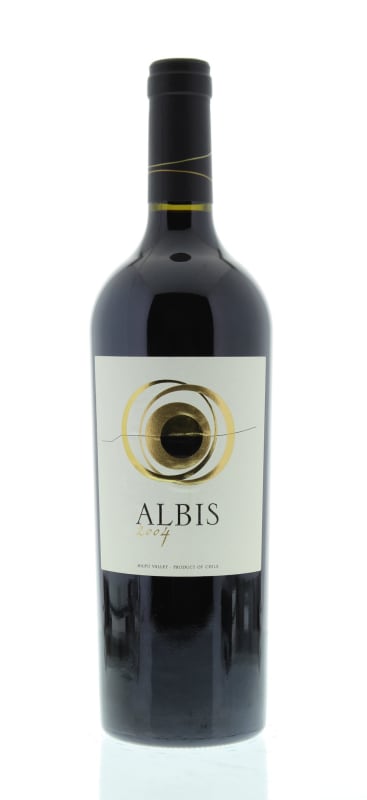
75% Cabernet Sauvignon, 25% Carménère
Professional Ratings
-
Wine & Spirits
A joint venture between Haras de Pirque and Marchesi Antinori of Tuscany, Albis is a selection of cabernet sauvignon (75%) and carmenere (25%) from the estate vineyard in Pirque. It's big and lush, with deep flavors of black currant, black pepper, and brandied cherries. An imposing wine to cellar for at least five years.
-
Wine Spectator
Quite dark, with plenty of bittersweet cocoa and fig sauce notes laid over a meaty palate of dark currant, blackberry, briar and melted licorice. The long, loamy finish lets hints of dark olive and tobacco peek in. Pulls no punches, in a classic Maipo style.





Haras de Pirque is located in the easternmost part of the Maipo Province, at the foothills of central Chile’s mountain range. This area enjoys extremely favorable climatic and geographic conditions and is well-known for producing high quality wines. The vineyards that surround the estate are bordered by a thoroughbred racetrack and the winery was built in the shape of a traditional horseshoe. The vineyards grow at an altitude of 550 to 650 meters (1804-2132 feet) above sea level, south of the Maipo River on the lower slopes of the Andes’ foothills. In the lower area, the soil is rich in clay while the upper area is rocky. The Andes Mountains and its vicinity to the Pacific Ocean influence the region’s climate: summers are hot and dry but are mitigated by humid ocean air and cool nights. The estate’s vineyards are planted to international varieties (Cabernet Sauvignon, Cabernet Franc) that are able to find a new expression in this territory, as well as to local varieties such as Carménère – one of the most authentic Chilean grape varieties. Haras de Pirque represents Marchesi Antinori’s desire to produce high quality organic wines that express Chile’s winemaking potential while promoting the Maipo Valley’s extraordinary terroir.

One of the world’s most classic and popular styles of red wine, Bordeaux-inspired blends have spread from their homeland in France to nearly every corner of the New World. Typically based on either Cabernet Sauvignon or Merlot and supported by Cabernet Franc, Malbec and Petit Verdot, the best of these are densely hued, fragrant, full of fruit and boast a structure that begs for cellar time. Somm Secret—Blends from Bordeaux are generally earthier compared to those from the New World, which tend to be fruit-dominant.

Dramatic geographic and climatic changes from west to east make Chile an exciting frontier for wines of all styles. Chile’s entire western border is Pacific coastline, its center is composed of warm valleys and on its eastern border, are the soaring Andes Mountains.
Chile’s central valleys, sheltered by the costal ranges, and in some parts climbing the eastern slopes of the Andes, remain relatively warm and dry. The conditions are ideal for producing concentrated, full-bodied, aromatic reds rich in black and red fruits. The eponymous Aconcagua Valley—hot and dry—is home to intense red wines made from Cabernet Sauvignon, Syrah and Merlot.
The Maipo, Rapel, Curicó and Maule Valleys specialize in Cabernet and Bordeaux Blends as well as Carmenère, Chile’s unofficial signature grape.
Chilly breezes from the Antarctic Humboldt Current allow the coastal regions of Casablanca Valley and San Antonio Valley to focus on the cool climate loving varieties, Pinot Noir, Chardonnay and Sauvignon Blanc.
Chile’s Coquimbo region in the far north, containing the Elqui and Limari Valleys, historically focused solely on Pisco production. But here the minimal rainfall, intense sunlight and chilly ocean breezes allow success with Chardonnay and Pinot Noir. The up-and-coming southern regions of Bio Bio and Itata in the south make excellent Riesling, Chardonnay and Pinot Noir.
Spanish settlers, Juan Jufre and Diego Garcia de Cáceres, most likely brought Vitis vinifera (Europe’s wine producing vine species) to the Central Valley of Chile sometime in the 1550s. One fun fact about Chile is that its natural geographical borders have allowed it to avoid phylloxera and as a result, vines are often planted on their own rootstock rather than grafted.