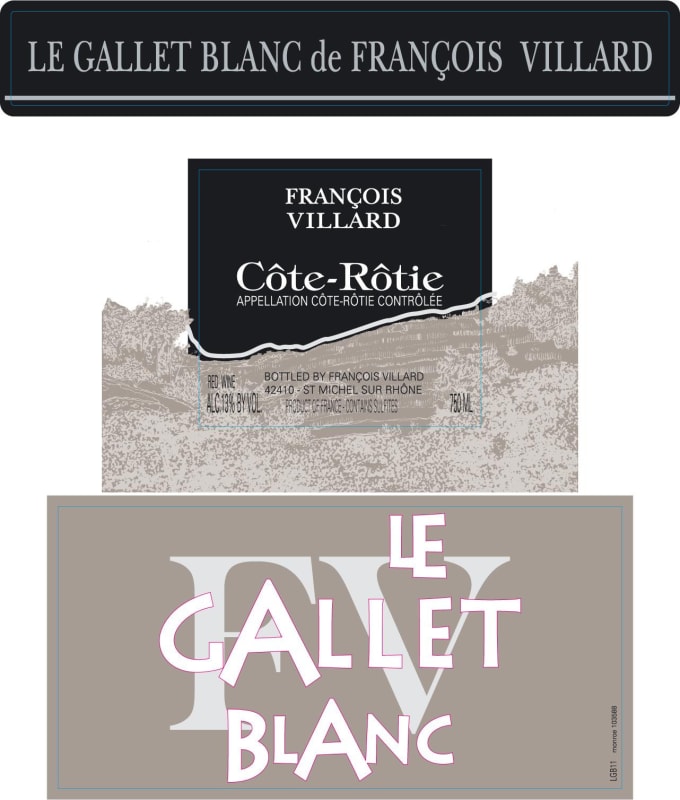

Winemaker Notes


Full-bodied and flavorful, white Rhône blends originate from France’s Rhône Valley. Today these blends are also becoming popular in other regions. Typically some combination of Grenache Blanc, Marsanne, Roussanne and Viognier form the basis of a white Rhône blend with varying degrees of flexibility depending on the exact appellation. Somm Secret—In the Northern Rhône, blends of Marsanne and Roussanne are common but the south retains more variety. Marsanne, Roussanne as well as Bourboulenc, Clairette, Picpoul and Ugni Blanc are typical.

The cultivation of vines here began with Greek settlers who arrived in 600 BC. Its proximity to Vienne was important then and also when that city became a Roman settlement but its situation, far from the negociants of Tain, led to its decline in more modern history. However the 1990s brought with it a revival fueled by one producer, Marcel Guigal, who believed in the zone’s potential. He, along with the critic, Robert Parker, are said to be responsible for the zone’s later 20th century renaissance.
Where the Rhone River turns, there is a build up of schist rock and a remarkable angle that produces slopes to maximize the rays of the sun. Cote Rotie remains one of the steepest in viticultural France. Its varied slopes have two designations. Some are dedicated as Côte Blonde and others as Côte Brune. Syrahs coming from Côte Blonde are lighter, more floral, and ready for earlier consumption—they can also include up to 20% of the highly scented Viognier. Those from Côte Brune are more sturdy, age-worthy and are typically nearly 100% Syrah. Either way, a Cote Rotie is going to have a particularly haunting and savory perfume, expressing a more feminine side of the northern Rhone.