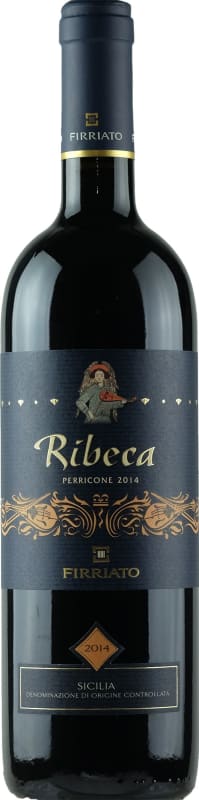


Winemaker Notes
Ribeca is the fruit of multiple decades of work recovering the relic vine of Perricone, from which Firriato has selected their own clone. The company has always believed in the quality of this vine variety that comes from the Sicilian wine-producing tradition, which is grown on the Pianoro Cuddìa Estate. This area has extremely windy and dry soil and climate conditions, and is where Perricone has found the ideal conditions for bringing out all its character. Firriato’s clone construes all the varietal characteristics of this once diffuse vine that has now all but vanished. The character of this variety is manifested in its notably elegant flavor, while Pianoro Cuddìa’s microclimate favors the development of the grapes’ aromatic complexity and intense but refined fragrances.
Professional Ratings
-
Tasting Panel
Perricone, also referred to as Pignatello, was used for making Marsala Rubino but is now employed in Sicily for the production of dry reds. Its heady aromas, powerful tannins, and vertical line of acidity are among the first signs that this is a variety to watch. Scents of coffee, chocolate, cigar leaf, and a sweet note of blueberry are followed by flavors of tart cherry, dark chocolate, cedar, and dried violets that are anything but shy.
-
James Suckling
The dried-clove and roasted-nutmeg character is very endearing, and the dried cherries and redcurrants are pretty. Rich and flavorful, but firm and dialed-in, this sports a lithe complexion of tannins.
-
Robert Parker's Wine Advocate
The 2014 Sicilia Perricone Ribeca is a dense red wine with a sharp and well-defined bouquet. You get generous tones of black fruit, dried cherry, pipe tobacco and camphor ash. This is a full-bodied red to pair with grilled meats or fennel-stuffed pork. There is a lot of power here with almost 15% alcohol. Some 38,000 bottles were produced.


Beyond the usual suspects, there are hundreds of red grape varieties grown throughout the world. Some are indigenous specialties capable of producing excellent single varietal wines, while others are better suited for use as blending grapes. Each has its own distinct viticultural characteristics, as well as aroma and flavor profiles, offering much to be discovered by the curious wine lover. In particular, Portugal and Italy are known for having a multitude of unique varieties but they can really be found in any region.

A large, geographically and climatically diverse island, just off the toe of Italy, Sicily has long been recognized for its fortified Marsala wines. But it is also a wonderful source of diverse, high quality red and white wines. Steadily increasing in popularity over the past few decades, Italy’s fourth largest wine-producing region is finally receiving the accolades it deserves and shining in today's global market.
Though most think of the climate here as simply hot and dry, variations on this sun-drenched island range from cool Mediterranean along the coastlines to more extreme in its inland zones. Of particular note are the various microclimates of Europe's largest volcano, Mount Etna, where vineyards grow on drastically steep hillsides and varying aspects to the Ionian Sea. The more noteworthy red and white Sicilian wines that come from the volcanic soils of Mount Etna include Nerello Mascalese and Nerello Cappuccio (reds) and Carricante (whites). All share a racy streak of minerality and, at their best, bear resemblance to their respective red and white Burgundies.
Nero d’Avola is the most widely planted red variety, and is great either as single varietal bottling or in blends with other indigenous varieties or even with international ones. For example, Nero d'Avola is blended with the lighter and floral, Frappato grape, to create the elegant, Cerasuolo di Vittoria, one of the more traditional and respected Sicilian wines of the island.
Grillo and Inzolia, the grapes of Marsala, are also used to produce aromatic, crisp dry Sicilian white. Pantelleria, a subtropical island belonging to the province of Sicily, specializes in Moscato di Pantelleria, made from the variety locally known as Zibibbo.