


Winemaker Notes
The rose hue displays a brilliant sheen, shot through with fine bubbles. The complexity of the nose is immediately evident, allowing hints of blood orange, redcurrants, plums and raspberries to emerge. Gradually, one perceives notes of sugared almonds and aromatic breads, with suggestions of cumin. On the palate it reveals an attractively rich yet elegant structure, and a notably long aftertaste that again conjures up sensations of red berry fruits.
Blend: 80% Pinot Nero, 20% Chardonnay





Mastering the art of Italian living is not difficult. Simply pop open a bottle of Ferrari, Italy’s most iconic sparkling wine, and you will find luxury, glamour, and undeniable quality in every sip.
Giulio Ferrari, a Trentino native, started his venerable sparkling wine house in 1902, after studying winemaking in France. Convinced that his native region’s terroir was ideal for growing Chardonnay, he produced three of his now best-known cuvées – Ferrari Brut, Perlé and Giulio Ferrari – as blanc de blancs. This innovative approach quickly paid off. Ferrari wines consistently receive some of Italy’s top accolades, including being awarded Tre Bicchieri 22 years in a row.
With its mountain viticulture (the Dolomites), Trentino is an area well-suited to the production of sparkling wines of great elegance and complexity. Large diurnal temperature range and high altitudes ensures high acidity and freshness in the grapes. With 300 acres of vineyards, Ferrari represents the largest estate in the Trentino region.
In 1952, Giulio Ferrari, having no children of his own, chose friend and local merchant Bruno Lunelli as successor for his beloved business. Today, the third generation of the Lunelli family is at the helm. Bruno Lunelli’s passion and entrepreneurial talent passed on to his sons, Franco, Gino and Mauro, who established Ferrari as the market leader in Italy and the nation’s celebratory wine par excellence. Production is in the hands of a capable team of eight winemakers and four agronomists, led by chief winemaker Marcello Lunelli. The pursuit of excellence in all areas of Ferrari production and management is an enduring family legacy with several cousins involved from the new generation: Marcello’s cousin, Matteo Lunelli, is the Chairman of Ferrari F.lli Lunelli SpA, Camilla Lunelli heads up global communications, and Alessandro Lunelli, an engineer by training, is responsible for planning and technical oversight. This generation leads the company with the aim of combining innovation and tradition, promoting Ferrari around the world as ambassadors of the Italian Art of Living.

What are the different types of sparkling rosé wine?
Rosé sparkling wines like Champagne, Prosecco, Cava, and others make a fun and festive alternative to regular bubbles—but don’t snub these as not as important as their clear counterparts. Rosé Champagnes (i.e., those coming from the Champagne region of France) are made in the same basic way as regular Champagne, from the same grapes and the same region. Most other regions where sparkling wine is produced, and where red grape varieties also grow, also make a rosé version.
How is sparkling rosé wine made?
There are two main methods to make rosé sparkling wine. Typically, either white wine is blended with red wine to make a rosé base wine, or only red grapes are used but spend a short period of time on their skins (maceration) to make rosé colored juice before pressing and fermentation. In either case the base wine goes through a second fermentation (the one that makes the bubbles) through any of the various sparkling wine making methods.
What gives rosé Champagne and sparkling wine their color and bubbles?
The bubbles in sparkling wine are formed when the base wine undergoes a secondary fermentation, which traps carbon dioxide inside the bottle or fermentation vessel. During this stage, the yeast cells can absorb some of the wine’s color but for the most part, the pink hue remains.
How do you serve rosé sparkling wine?
Treat rosé sparkling wine as you would treat any Champagne, Prosecco, Cava, and other sparkling wine of comparable quality. For storing in any long-term sense, these should be kept at cellar temperature, about 55F. For serving, cool to about 40F to 50F. As for drinking, the best glasses have a stem and a flute or tulip shape to allow the bead (bubbles) and beautiful rosé hue to show.
How long do rosé Champagne and sparkling wine last?
Most rosé versions of Prosecco, Champagne, Cava or others around the “$20 and under” price point are intended for early consumption. Those made using the traditional method with extended cellar time before release (e.g., Champagne or Crémant) can typically improve with age. If you are unsure, definitely consult our Customer Care team for guidance.
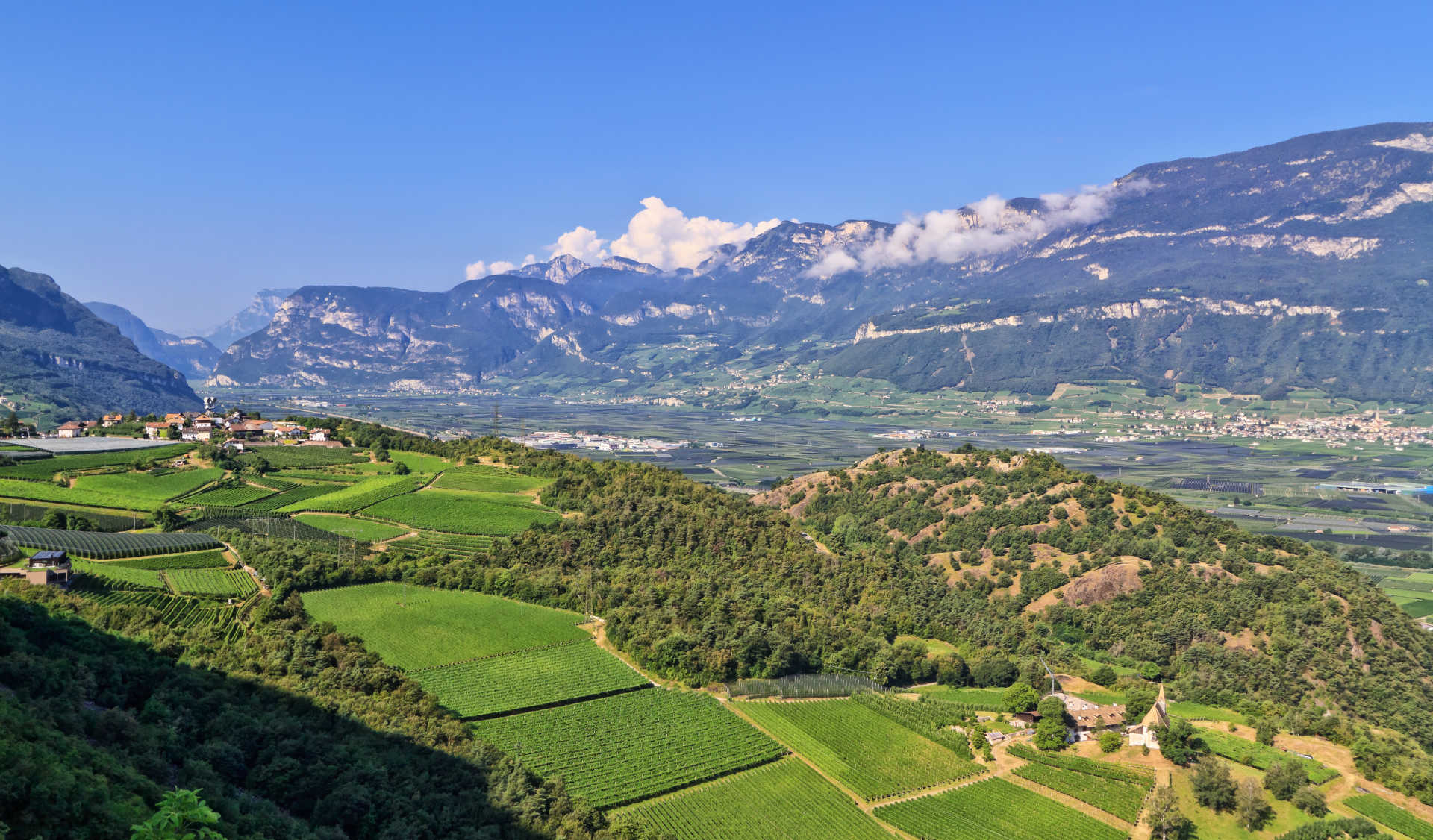
The southern part of Italy’s northeastern Alpine region, Trentino, produces quality wines from international varieties. But its most exceptional native variety, Teroldego, with plantings concentrated around the sandy, gravelly, limestone soils of its Campo Rotaliano district, makes a deep purple-hued red wine with scents and flavors of wild blackberry, herbs, espresso and cocoa.