
Winemaker Notes
Professional Ratings
-
Robert Parker's Wine Advocate
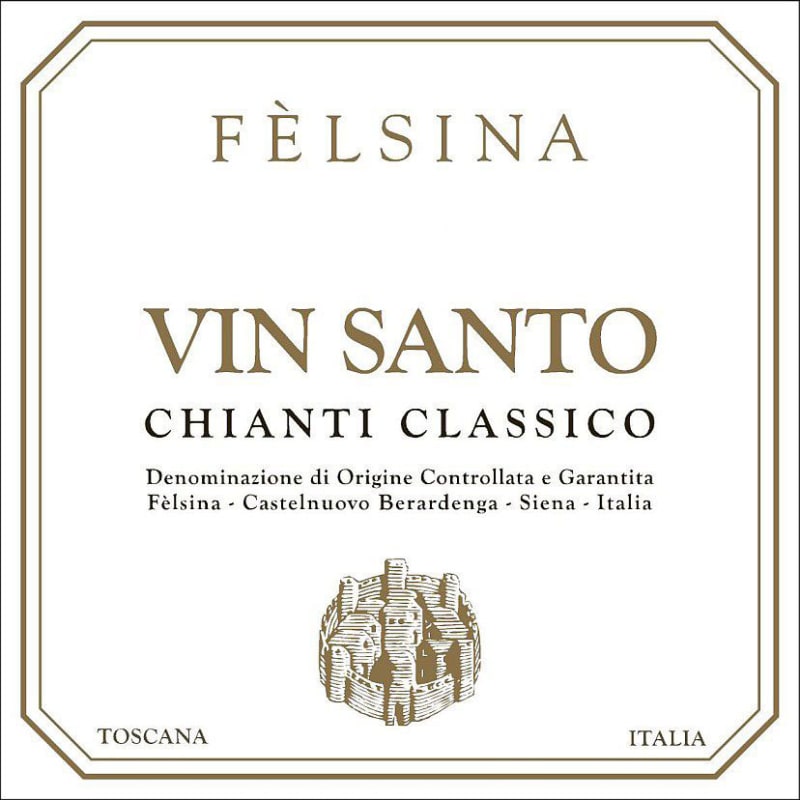
Made with Trebbiano, Malvasia and Sangiovese, the 2005 Vin Santo del Chianti Classico opens to a brilliant amber color and thick viscosity that hugs to the rim of the glass. Oak-driven tones of vanilla and caramel are immediately apparent, but quickly followed by candied fruit, butterscotch and orange peel. Clusters undergo a natural drying process on mats until February of the following year. The must is transferred to sealed oak casks containing the "mother," or gelatinous remains from previous vintages.
-
Wine Spectator
This sweet and mellow mix of butterscotch, caramel and salted almond flavors is shaped by vibrant acidity, which brings focus on the long butterscotch aftertaste. Drink now through 2019.


Apart from the classics, we find many regional gems of different styles.
Late harvest wines are probably the easiest to understand. Grapes are picked so late that the sugars build up and residual sugar remains after the fermentation process. Ice wine, a style founded in Germany and there referred to as eiswein, is an extreme late harvest wine, produced from grapes frozen on the vine, and pressed while still frozen, resulting in a higher concentration of sugar. It is becoming a specialty of Canada as well, where it takes on the English name of ice wine.
Vin Santo, literally “holy wine,” is a Tuscan sweet wine made from drying the local white grapes Trebbiano Toscano and Malvasia in the winery and not pressing until somewhere between November and March.
Rutherglen is an historic wine region in northeast Victoria, Australia, famous for its fortified Topaque and Muscat with complex tawny characteristics.

Famous for its food-friendly, approachable red wines and their storied history, Chianti is perhaps the best-known wine region of Italy. This appellation within Tuscany has it all: sweeping views of rolling hills, endless vineyards, the warm Mediterranean sun, hearty cuisine and a rich artistic heritage. Chianti includes seven subzones: Chianti Colli Fiorentini, Rufina, Montalbano, Colli Senesi, Colline Pisane, Colli Aretini and Montespertoli, with area beyond whose wines can be labeled simply as Chianti.
However the best quality comes from Chianti Classico, in the heart of the Chianti zone, which is no longer a subzone of the region at all but has been recognized on its own since 1996. The Classico region today is delimited by the confines of the original Chianti zone protected since the 1700s.
Chianti wines are made primarily of Sangiovese, with other varieties comprising up to 25-30% of the blend. Generally, local varieties are used, including Canaiolo, Colorino and Mammolo, but international varieties such as Cabernet Sauvignon, Merlot and Syrah are allowed as long as they are grown within the same zone.
Basic, value-driven Chianti wine is simple and fruit-forward and makes a great companion to any casual dinner. At its apex, Chianti is full bodied but with good acidity, firm tannins, and notes of tart red fruit, dried herbs, fennel, balsamic and tobacco. Chianti Riserva, typically the top bottling of a producer, can benefit handsomely from a decade or two of cellaring.