


Winemaker Notes
Professional Ratings
-
Robert Parker's Wine Advocate
Scheduled to be bottled in February of 2014, the 2010 Cote Rotie La Landonne is a more fresh, pure and focused example of the 2009. While it doesn’t have the over the top exuberance of the prior vintage, it offers incredibly pure, detailed and classic aromas and flavors of black pepper, currants, blackberry, mineral and smoked bacon fat. Full-bodied, layered and deeply concentrated, yet also graceful and seamless, this knockout effort should require a decade to come around and have 3-4 decades of longevity.
-
Wine Spectator
Terrifically dense, with tightly coiled flavors of warm ganache, fig paste and blackberry confiture. Shows plenty of range as well, with well-embedded notes of bay leaf, chestnut, juniper, black tea and charcoal. This is intensely grippy through the fine-grained and lengthy finish. Should age marvelously and slowly. Best from 2017 through 2040.



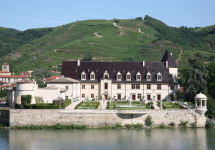
The Guigal domain was founded in 1946 by Etienne Guigal in the ancient village of Ampuis, home of the wines of the Côte-Rôtie. In these vineyards that are over 2400 years old, you can still see the small terraced walls characteristic of the Roman period. Etienne Guigal arrived in this region in 1923 at the age of 14. He made wine for over 67 vintages and, at the beginning of his career, participated in the development of the Vidal-Fleury establishment.
Despite his young age, Marcel Guigal took over from his father in 1961 when the latter was victim to a brutal illness rendering him blind. Marcel's hard work and perseverance enabled the Guigals to buy out Vidal-Fleury in 1984, although the establishment retains its own identity and commercial autonomy. In 2000, the Guigals purchased the Jean-Louis Grippat estate in Saint-Joseph and Hermitage, as well as the Domaine de Vallouit in Côte-Rôtie, Hermitage, Saint-Joseph and Crozes-Hermitage.
In the cellars of the Guigal estate in Ampuis, the northern appellations of the Rhône Valley are produced and aged. These are the appellations of Côte-Rôtie, Condrieu, Hermitage, Saint-Joseph and Crozes-Hermitage. The great appellations of the Southern Rhône, Chateauneuf-du-Pape, Gigondas, Tavel and Côtes-du-Rhône, are also aged in the Ampuis cellars.

Marked by an unmistakable deep purple hue and savory aromatics, Syrah makes an intense, powerful and often age-worthy red. Native to the Northern Rhône, Syrah achieves its maximum potential in the steep village of Hermitage and plays an important component in the Red Rhône Blends of the south, adding color and structure to Grenache and Mourvèdre. Syrah is the most widely planted grape of Australia and is important in California and Washington. Sommelier Secret—Such a synergy these three create together, the Grenache, Syrah, Mourvedre trio often takes on the shorthand term, “GSM.”

The cultivation of vines here began with Greek settlers who arrived in 600 BC. Its proximity to Vienne was important then and also when that city became a Roman settlement but its situation, far from the negociants of Tain, led to its decline in more modern history. However the 1990s brought with it a revival fueled by one producer, Marcel Guigal, who believed in the zone’s potential. He, along with the critic, Robert Parker, are said to be responsible for the zone’s later 20th century renaissance.
Where the Rhone River turns, there is a build up of schist rock and a remarkable angle that produces slopes to maximize the rays of the sun. Cote Rotie remains one of the steepest in viticultural France. Its varied slopes have two designations. Some are dedicated as Côte Blonde and others as Côte Brune. Syrahs coming from Côte Blonde are lighter, more floral, and ready for earlier consumption—they can also include up to 20% of the highly scented Viognier. Those from Côte Brune are more sturdy, age-worthy and are typically nearly 100% Syrah. Either way, a Cote Rotie is going to have a particularly haunting and savory perfume, expressing a more feminine side of the northern Rhone.