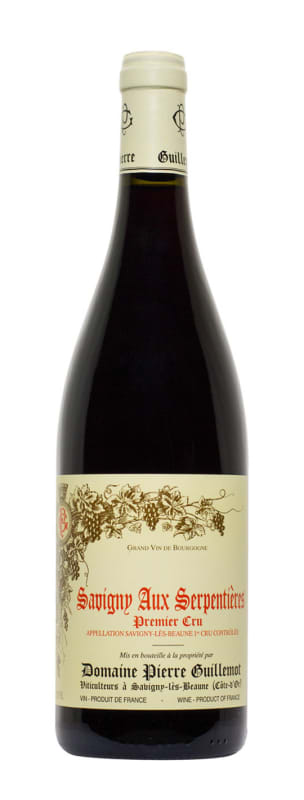


Winemaker Notes
Professional Ratings
-
Decanter
Aux Serpentières produces some of the most potentially long-lived wines in Savigny, with Guillemot’s debut 1947 vintage still drinking superbly. But it needs time to reveal all its charms. A brooding and reserved bouquet of plum, wild strawberry and subtle, mossy soil tones introduces an ample, authoritative palate framed by a substantial chassis of fine tannins. Drinking Window 2025 - 2045
-
Robert Parker's Wine Advocate
The 2016 Savigny-lès-Beaune 1er Cru Aux Serpentières is also showing well from bottle, offering up a complex but youthfully reserved bouquet of plums, strawberries, sweet spices and rich soil. On the palate, it's medium to full-bodied, deep and tight-knit, with an ample chassis of fine structuring tannins and juicy balancing acids. This will need some time, but it's a successful Serpentières in the making.
Rating: 92+


Thin-skinned, finicky and temperamental, Pinot Noir is also one of the most rewarding grapes to grow and remains a labor of love for some of the greatest vignerons in Burgundy. Fairly adaptable but highly reflective of the environment in which it is grown, Pinot Noir prefers a cool climate and requires low yields to achieve high quality. Outside of France, outstanding examples come from in Oregon, California and throughout specific locations in wine-producing world. Somm Secret—André Tchelistcheff, California’s most influential post-Prohibition winemaker decidedly stayed away from the grape, claiming “God made Cabernet. The Devil made Pinot Noir.”

Savigny-lès-Beaune is a small village near Beaune that produces delightful red and white wines under its own appellation name. Cut by a river, the vineyards on its southern side have sandy soils that result in charming, floral reds. Premiers Crus vineyards on this side include Les Peuillets, Les Narbantons, Les Rouvrettes and Les Marconnets.
On Savigny’s northern side, bordering Pernand-Vergelles, vineyards are planted on rocky soils and produce juicy and spicy Pinot Noir. The village’s best whites, all made of Chardonnay, are full on the palate and abound in texture, complexity and freshness.