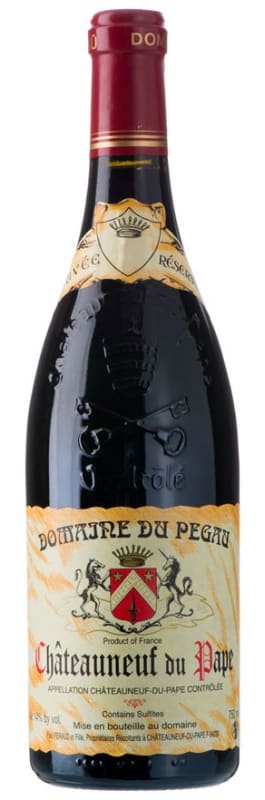


Winemaker Notes
Try pairing this wine with red grilled meat, lamb shoulder with thyme and dishes of tapas and curry.
Professional Ratings
-
Wine Spectator
A gutsy style, with a frame of brick dust around a core of steeped cherry, plum and blackberry fruit. The back end pulls in dried sage, savory and tobacco notes. The finish lingers over a singed chestnut hint. Rock-solid and unabashedly old-school. Best from 2020 through 2030.
-
Jeb Dunnuck
The 2014 Châteauneuf-du-Pape Cuvée Réservée reminds me of the 2008 with its classic, balanced, elegant style. It’s not the most serious wine from the estate, yet it offers textbook garrigue, pepper, and meatiness, medium body, fine, silky tannins, and a great finish. It’s ideal for drinking over the coming 7-8 years, and given the track record of this wine for aging gracefully even in difficult vintages, I wouldn’t be surprised to see it drink nicely for longer.
-
James Suckling
A wild, rustic edge to this assertive and punchy fruit-driven Châteauneuf-du-Pape. A smooth black cherry and blood plum-flavored palate. Appealing tangy freshness to close. The rusticity denotes drink now or as a much older wine.
-
Robert Parker's Wine Advocate
As to the 2014 Chateauneuf du Pape Cuvee Reservee, which is already in bottle, it’s a medium-bodied, lively and fresh example of this cuvee that offers classic Pegau notes of cured meats, tapenade, spiced meats and blackcurrant fruits. Clean, complex, with bright acidity and solid concentration, it needs a decant if drinking anytime soon, but should keep for at least a decade.
-
Wine & Spirits
This is as ripe as a fat pear, with marzipan richness and a hint of bitter orange. It holds more promise right now than overt flavor; give it another year in the cellar and decant for rich fish.


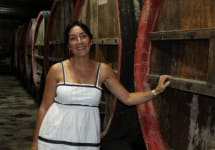
Ancestors of father and daughter team Paul and Laurence Féraud farmed olives, cherries and grapes in Chateauneuf-du-Pape dating back to the 17th century. The methods established centuries ago carry on in the current vintages, creating robust, concentrated, traditional red and white wines. For many years the winery was known as Domaine Feraud fils and they made traditional Chateauneuf-du-Pape.
In 1987 Domaine du Pegau was formed as we know it today, when Laurence Feraud returned from her winemaking studies and she teamed up with her father Paul to create the winery. Complementing each other they have conserved the authenticity and quality of their Chateauneuf-du-Pape whilst bringing it to the attention of wine lovers around the world.

With bold fruit flavors and accents of sweet spice, Grenache, Syrah and Mourvèdre form the base of the classic Rhône Red Blend, while Carignan, Cinsault and Counoise often come in to play. Though they originated from France’s southern Rhône Valley, with some creative interpretation, Rhône blends have also become popular in other countries. Somm Secret—Putting their own local spin on the Rhône Red Blend, those from Priorat often include Merlot and Cabernet Sauvignon. In California, it is not uncommon to see Petite Sirah make an appearance.

Famous for its full-bodied, seductive and spicy reds with flavor and aroma characteristics reminiscent of black cherry, baked raspberry, garrigue, olive tapenade, lavender and baking spice, Châteauneuf-du-Pape is the leading sub-appellation of the southern Rhône River Valley. Large pebbles resembling river rocks, called "galets" in French, dominate most of the terrain. The stones hold heat and reflect it back up to the low-lying gobelet-trained vines. Though the galets are typical, they are not prominent in every vineyard. Chateau Rayas is the most obvious deviation with very sandy soil.
According to law, eighteen grape varieties are allowed in Châteauneuf-du-Pape and most wines are blends of some mix of these. For reds, Grenache is the star player with Mourvedre and Syrah coming typically second. Others used include Cinsault, Counoise and occasionally Muscardin, Vaccarèse, Picquepoul Noir and Terret Noir.
Only about 6-7% of wine from Châteauneuf-du-Pape is white wine. Blends and single-varietal bottlings are typically based on the soft and floral Grenache Blanc but Clairette, Bourboulenc and Roussanne are grown with some significance.
The wine of Chateauneuf-du-Pape takes its name from the relocation of the papal court to Avignon. The lore says that after moving in 1309, Pope Clément V (after whom Chateau Pape-Clément in Pessac-Léognan is named) ordered that vines were planted. But it was actually his successor, John XXII, who established the vineyards. The name however, Chateauneuf-du-Pape, translated as "the pope's new castle," didn’t really stick until the 19th century.