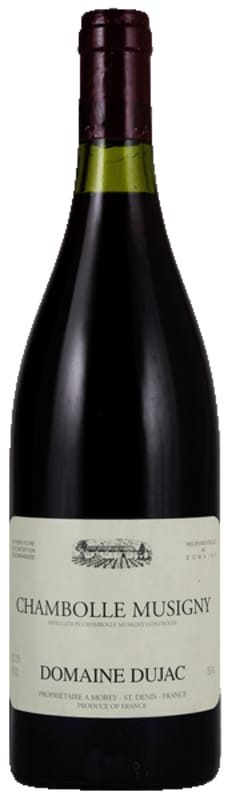


Winemaker Notes
Made from Pinot Noir grapes gown on clay and limestone soils. Fermented in stainless steel tanks, using naturally occurring yeast.
Professional Ratings
-
Decanter
This wine is detailed and approachable, with its ripe, high-toned red fruit and floral aromas that continue seamlessly onto the palate. The texture is firm enough to give the wine balance. Still, there is no astringency or tartness - the tannin and density of the extract are well balanced with the level of acidity, and the wine continues to a rewarding finish. The grapes come from Les Veroilles at the top of the slope, Les Argillières at mid-slope, and Les Drazey near the base of the slope – the total surface is 0.89 hectares.
Barrel Sample: 93 -
Jasper Morris
Middling purple, while the nose is rather reticent. Mostly dark raspberry, maybe a bit of cherry. There is certainly more density than the Fils & Père version, a lifted dark red fruit at the finish with very good fruit acid balance.
Barrel Sample: 90-91


Thin-skinned, finicky and temperamental, Pinot Noir is also one of the most rewarding grapes to grow and remains a labor of love for some of the greatest vignerons in Burgundy. Fairly adaptable but highly reflective of the environment in which it is grown, Pinot Noir prefers a cool climate and requires low yields to achieve high quality. Outside of France, outstanding examples come from in Oregon, California and throughout specific locations in wine-producing world. Somm Secret—André Tchelistcheff, California’s most influential post-Prohibition winemaker decidedly stayed away from the grape, claiming “God made Cabernet. The Devil made Pinot Noir.”

Chambolle-Musigny represents the charm of the Côte de Nuits district of Burgundy. But you’ll find that term mainly in reference to the vineyards in its southern stretches, which border Clos Vougeot: the Grand Cru of Le Musingy and in part, its neighboring and most exceptional Premier Cru, Les Amoureuses. Some producers argue for the primacy of Les Amoureuses and its eligibility for Grand Cru status given its wines can sometimes surpass other Grands Crus.
Le Musigny ranks on par with the most acclaimed Grands Crus for Pinot Noir: Romanée-Conti, La Tâche, Richebourg, Chambertin, and Chambertin-Clos de Bèze. It is also the only Grand Cru in Côte de Nuits for Chardonnay. All of the others are in Côte de Beaune.
This village can in fact claim only two Grands Crus vineyards and—in the context of breaking down the minutiae—they are markedly different. Bonnes-Mares, the other one at the far northern end above the village, bordering Morey-St-Denis, offers power, strength and great aging potential. But Chambolle-Musigny includes a nice handful of exceptional Premiers Crus, as noted above with Les Amoureuses as the finest. Le Fuees and Les Cras are other noteworthy Premiers Crus.
Overall, a top Chambolle-Musigny offers pure aromas of violets, dark cherry and damp earth, coupled with a velvety elegance, supple mid-palate, an abundance of black and red berry, and finesse and power through a long and fine-grained finish.