
Winemaker Notes
Professional Ratings
-
Decanter
This definitely represents a new beginning for the Clos des Lambrays, beginning with a dizzying array of aromas that range from high-toned red fruits to ripe, plummy black fruit, all touched with spice, and a suggestion of wild herbs and fresh flowers. After blending there was an average of 80% whole cluster fermentation. The texture on the palate is concentrated but not heavy, and there is a charming, silky aspect to it so, despite the tannin and density, the overall impression is one of finesse and elegance.
-
James Suckling
Spot-on balance with rich fruit, but it’s not as extreme as the 2020. A refined, mossy nose brimming with subtle sweet berries that mix red and black fruit. A subtle, smoky edge gives another aspect to the evolving aromas and flavors. Round and ripe but really fresh and delineated, with lovely finesse.
-
Wine Spectator
Offers plenty of finesse allied to a firm structure, showcasing rose, cherry, currant, mineral and spice flavors. Vibrant acidity and fine-grained tannins are well-proportioned in this version, while the aftertaste lingers on and on. A picture of elegance, purity and length. Best from 2026 through 2045.
-
Jasper Morris
A dark crimson colour. There is power to the bouquet, in a more sombre style, with alcohol. Dried herbs on the nose. Blacker fruit. Extremely powerful wine here but more thanks to fruit concentration than overt alcohol. Quite dense and with good acidity. This is not at all seductive at this stage in its life but has the bone structure for the long term.
-
Robert Parker's Wine Advocate
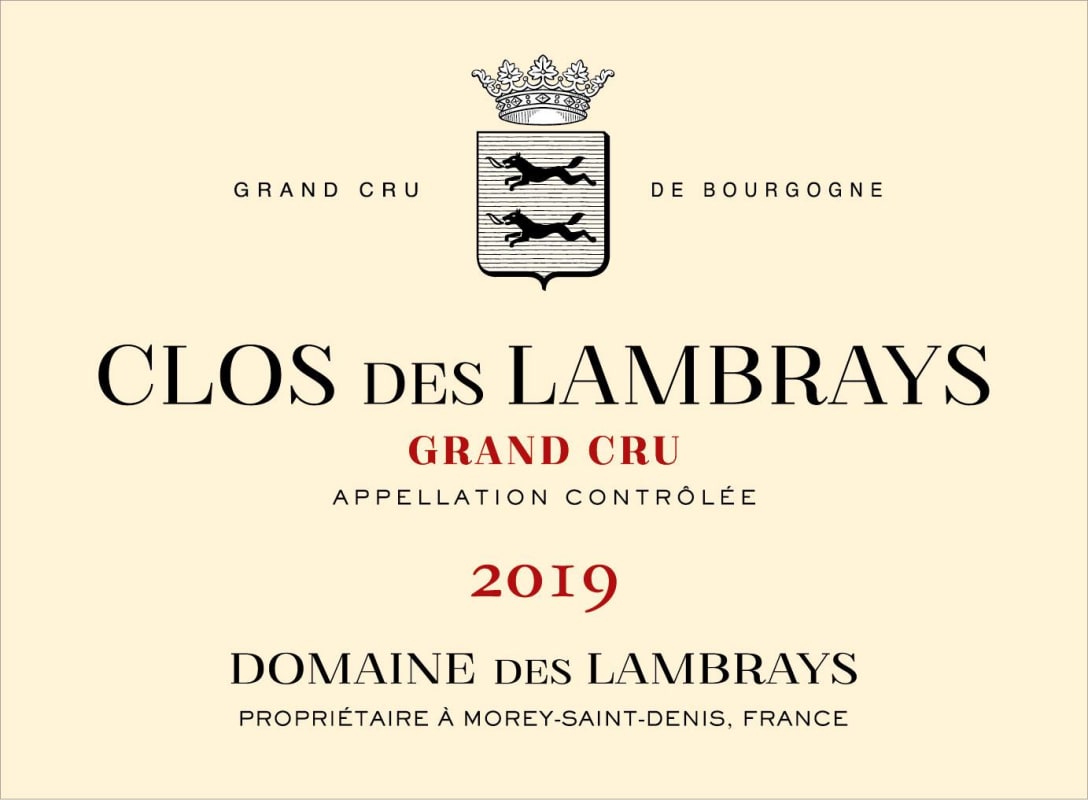
The 2019 Clos des Lambrays Grand Cru is showing very well in bottle, wafting from the glass with aromas of raspberries, strawberries and plums mingled with scents of orange rind, rose petals and sweet spices. Full-bodied, ample and satiny, it's a sensual, caressing wine with a fleshy core of fruit, polished tannins and lively balancing acids. This will offer a broad drinking window.


Thin-skinned, finicky and temperamental, Pinot Noir is also one of the most rewarding grapes to grow and remains a labor of love for some of the greatest vignerons in Burgundy. Fairly adaptable but highly reflective of the environment in which it is grown, Pinot Noir prefers a cool climate and requires low yields to achieve high quality. Outside of France, outstanding examples come from in Oregon, California and throughout specific locations in wine-producing world. Somm Secret—André Tchelistcheff, California’s most influential post-Prohibition winemaker decidedly stayed away from the grape, claiming “God made Cabernet. The Devil made Pinot Noir.”

While Morey-St-Denis of Burgundy might not get the same attention as its neighbors, Gevrey-Chambertin to the north and Chambolle-Musigny to the south, there is no reason why it shouldn’t. The same line of limestone runs from the Combe de Lavaux in Gevrey—all the way through Morey—ending in Chambolle.
There are four grand cru vineyards, moving southwards from the border with Gevrey-Chambertin: Clos de la Roche, Clos St-Denis, Clos des Lambrays, Clos de Tart and a small segment of Bonnes-Mares overlapping from Chambolle. Clos de la Roche is probably the finest vineyard, giving wines of true depth, body, and sturdiness for the long haul than most other vineyards.
Pinot Noir from Morey-St-Denis is known for its deep red cherry, blackcurrant and blueberry fruit. Aromas of spice, licorice and purple flowers are present in the wines’ youth, evolving to forest and game as the wine ages.