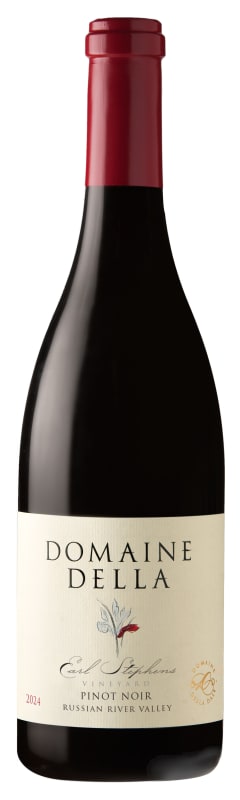


Winemaker Notes
The 2024 leans into the wine's polished, perfumed register. Bright garnet, with red cherry, kirsch, raspberry, and violet aromas layered with cinnamon, allspice, and bergamot tea. The palate is medium-bodied with sleek, fine-grained tannins and a long, perfumed finish woven with cedar and dried herbs.
Professional Ratings
-
Jeb Dunnuck
The 2024 Pinot Noir Earl Stephens Vineyard is a medium red color with a watery rim and has aromas of ripe cherries. It has a broader feel on the palate, with medium body, more expansive tannins, forest spice, incense, and toast on the finish. This should age nicely. Drink 2026-2040.
-
Wilfred Wong of Wine.com
The 2024 Domaine Della PINOT NOIR EARL STEPHENS VINEYARD shows a light ruby-garnet color; delicate spice and wild strawberry aromas rise from the glass; medium-bodied, gushing with fine elevation on the palate; layers of ripe berry flavors unfold with hints of oak; a firm, structured finish brings focus and length. Pair with grilled squab with a black cherry and star anise glaze, served over a bed of farro and roasted root vegetables—the wine’s lifted red fruit and spice echo the glaze, while its structure and depth complement the richness of the bird, creating a refined and quietly powerful Sonoma expression. (Tasted: April 15, 2026, San Francisco, CA)


While the Russian River Valley is a large appellation with multiple climate zones and soil types, it is best known for cool-climate varieties, with Pinot Noir as the most celebrated. The grapes benefit from a reliable late afternoon flow of Pacific Ocean fog through the Petaluma Gap and along the Russian River Valley that ensures slow and steady ripening and the preservation of grape acidity. Today many of California’s most highly regarded Pinot Noir vineyards are in the Russian River Valley, along with its sub-appellation, Green Valley.
Historically Russian River Valley Pinot Noirs had bright red fruit and delicate earthy, mineral notes. But changes in viticultural and winemaking practices have led to stylistic changes in some of the region’s wines. Adjustments to canopy management, among other techniques, have resulted in riper fruit and bolder wines as well. These show flavors of black cherry, blackberry, cola, spice and darker, loamy earth tones, accenting traditional Pinot Noir notes of strawberry, raspberry and light cherry.