

Winemaker Notes
Professional Ratings
-
Robert Parker's Wine Advocate
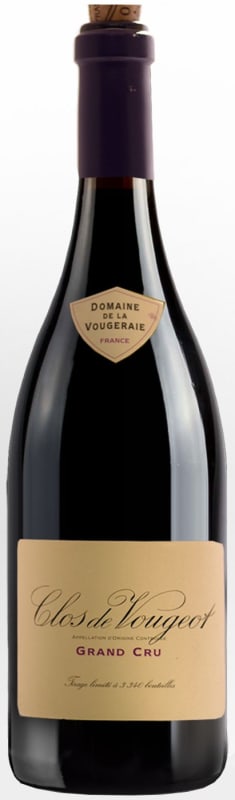
The 2016 Clos de Vougeot Grand Cru has a very elegant and poised bouquet, fine transparency here with superb delineation, not powerful but very precise and almost understated in style. The palate is medium-bodied with a pleasant chewiness to the tannin, good body, more assertive in the mouth than on the nose with a chalky texture toward the finish. Good length, lean and poised but fanning out with confidence—what a sublime expression of this famous vineyard.
Range: 93-95 -
Wine & Spirits
The scale of this walled vineyard makes it a spotty grand cru, but some of the best parcels produce great wines—and Vougeraie farms some exceptional land, a 2.5-acre parcel just below the small road leading up to the château. The vines, on a slope facing east, date from plantings in the 1940s, ’50s, ’80s and ’90s. They produced a 2016 with delicate persistence and powerful substance. Craig Ganzer, a Burgundy collector, described the wine as “almost entirely minerals and earth.” It’s ripe, powerful and complex, a structured wine suited to a long rest in the cellar.


Thin-skinned, finicky and temperamental, Pinot Noir is also one of the most rewarding grapes to grow and remains a labor of love for some of the greatest vignerons in Burgundy. Fairly adaptable but highly reflective of the environment in which it is grown, Pinot Noir prefers a cool climate and requires low yields to achieve high quality. Outside of France, outstanding examples come from in Oregon, California and throughout specific locations in wine-producing world. Somm Secret—André Tchelistcheff, California’s most influential post-Prohibition winemaker decidedly stayed away from the grape, claiming “God made Cabernet. The Devil made Pinot Noir.”

Containing the largest Grand Cru in all of the Côte d’Or, Vougeot, the village, takes its name from the small stream flowing through it, called Vouge. Over three quarters of the village retains Grand Cru status, and a single vineyard at that: Clos de Vougeot (or simply, Clos Vougeot). Its mass—over 50 ha—retains the single name chiefly for historic reasons.
But today, Clos de Vougeot contains over 80 owners and shows significant soil and slope variations within its boundaries. The top, bordering Musigny and Grands Echezeaux, is calcareous and gravelly on oolitic limestone and exhibits wonderful drainage. The middle sections are limestone, gravel and clay with less of a slope. The lower part has little slant and is mostly made of clay. Historically the diverse parcels were blended but today the abundance of owners means that everyone has his own style. Exploring and understanding them is part of the allure of Clos de Vougeot.
In general a fine Clos de Vougeot when young will be dense and dark but juicy, with a pronounced austerity, and needs a good ten years to bring it to its full potential.