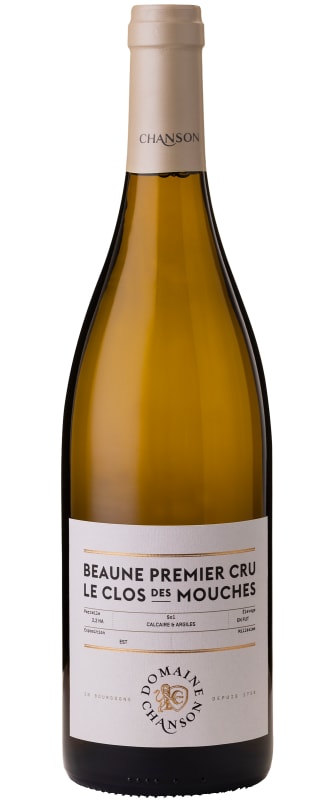


Winemaker Notes
Pale gold color. Floral fragrances with very fresh scents of white-fleshed fruit mixed with citrus notes and enhanced by a subtle minerality. Powerful, balanced, rich, with complex honeyed and woody notes.
To be enjoyed with seafood and certain cheeses like Comté or Citeaux.
Professional Ratings
-
Jasper Morris
Fullish colour and soft bouquet with oak that needs refreshing. No worry about that. Like the Savigny in the same condition, the fundamental wine is fresh enough, with an excellent mineral backbone alongside pure white fruit. Drink from 2028-2032.
Barrel Sample: 91-93 -
Decanter
There is a lovely, sweet character to the cherry fruit aroma, with accents of violets, liquorice and earth. On the palate, there is a deft balance between sweet fruit and tart acidity, along with the substance to age; this should end up well. The grapes are from nearly 2ha of old-vine fruit; in 2024, they were partially destemmed before fermentation and ageing in barrel.
-
Vinous
The 2024 Beaune Clos de Mouches Blanc 1er Cru has a little more personality and nuance than the preceding Chassagne Chenevottes, with touches of Anjou pear and candle wax, well-defined and focused. The palate is fresh and tensile, with lovely salinity infused into this Clos des Mouches and a bright, zesty finish that encourages you back for another sip. Yes please!
Barrel Sample: 90-92



Founded in 1750, Chanson is one of the five grand "shippers" of Burgundy's Côte d'O r- an estate steeped in centuries-old tradition and rich in viticultural history. As a négociant (winemaker and merchant) and a domaine (vineyard estate), Chanson has represented the best of Burgundy for more than 250 years, growing its own grapes, partnering with other growers, bottling, selling, and shipping its own wines.
Chanson's holdings comprise some of Burgundy's most coveted vineyards. Located in the heart of the Côte de Beaune (the historical center of Burgundy) and surrounded by some of the greatest vineyards in the world, Chanson can count French philosophe Voltaire, romantic poet Lamartine, and the Bonaparte family among its clients.
Its celebrated bastion, a 15th-century fortress first rented and then acquired in 1794 to cellar the wines, is an internationally celebrated icon of Burgundy (the largest of six bastions that form part of the wall surrounding the city of Beaune).
To visit Chanson is to travel back in time and experience the magic of the 1000-year-old tradition of winemaking. Chanson still vinifies and cellars its wines in the bastion as it has for over 200 years. The 10-meter thick walls of this ancient fortress make it ideal for winemaking.

One of the most popular and versatile white wine grapes, Chardonnay offers a wide range of flavors and styles depending on where it is grown and how it is made. While it tends to flourish in most environments, Chardonnay from its Burgundian homeland produces some of the most remarkable and longest lived examples. California produces both oaky, buttery styles and leaner, European-inspired wines. Somm Secret—The Burgundian subregion of Chablis, while typically using older oak barrels, produces a bright style similar to the unoaked style. Anyone who doesn't like oaky Chardonnay would likely enjoy Chablis.

While the city represents the epicenter of wine production in Burgundy, the term, “Beaune” also refers to the specific sub-appellation of the greater Côte de Beaune, whose vineyards climb up the pastoral slopes that border the city to its west. Originally founded as a Roman camp by Julius Caesar, the city of Beaune eventually became the seat of the dukes of Burgundy until the 13th century. Today it is home to top négociants such as Louis Jadot, Joseph Drouhin, Louis Latour, and Bouchard Père et Fils.
The appellation, dominated by Pinot Noir plantings, represents a lovely and charming place to begin to understand red Burgundy. Its sandy soils create light and supple, floral driven Pinot Noir. These wines are designed to be enjoyed within five to 10 years. The vineyards of Beaune span a broad swath of Premier Crus from Savigny-lès-Beaune to its border with Pommard.
Chardonnay acreage here has been increasing here in the more recent years.