

Winemaker Notes
Professional Ratings
-
Jasper Morris
The original planting has reached 120-year-old in 2024. A gorgeous full bright purple colour. A solid plump right of dark fruit, black and red cherries, the tannins are really refined, and the acidity keeps a fresh feel at the finish. Really successful this year. Barrel Sample: 95-97
-
Decanter
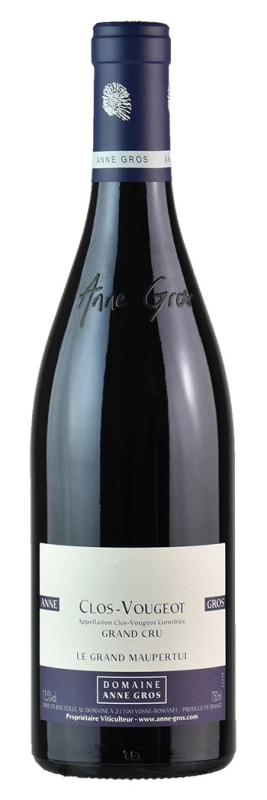
A lovely dark-coloured wine with black plum and mulberry fruit aromas touched with lavender, ginger, smoke, and earth. The wine is approachable out of barrel, but there is no lack of structure or tannin. Anne’s son Paul proclaims it to be his favourite wine of the vintage, and it’s easy to see why. The vines on her hectare of vines in Grand Maupertui have been in the family since the time of her grandfather Louis Gros. They were originally planted in 1904 and since this time only single dead vines have been replaced (repiquage), thus the average age is over 80 years.


Thin-skinned, finicky and temperamental, Pinot Noir is also one of the most rewarding grapes to grow and remains a labor of love for some of the greatest vignerons in Burgundy. Fairly adaptable but highly reflective of the environment in which it is grown, Pinot Noir prefers a cool climate and requires low yields to achieve high quality. Outside of France, outstanding examples come from in Oregon, California and throughout specific locations in wine-producing world. Somm Secret—André Tchelistcheff, California’s most influential post-Prohibition winemaker decidedly stayed away from the grape, claiming “God made Cabernet. The Devil made Pinot Noir.”

Containing the largest Grand Cru in all of the Côte d’Or, Vougeot, the village, takes its name from the small stream flowing through it, called Vouge. Over three quarters of the village retains Grand Cru status, and a single vineyard at that: Clos de Vougeot (or simply, Clos Vougeot). Its mass—over 50 ha—retains the single name chiefly for historic reasons.
But today, Clos de Vougeot contains over 80 owners and shows significant soil and slope variations within its boundaries. The top, bordering Musigny and Grands Echezeaux, is calcareous and gravelly on oolitic limestone and exhibits wonderful drainage. The middle sections are limestone, gravel and clay with less of a slope. The lower part has little slant and is mostly made of clay. Historically the diverse parcels were blended but today the abundance of owners means that everyone has his own style. Exploring and understanding them is part of the allure of Clos de Vougeot.
In general a fine Clos de Vougeot when young will be dense and dark but juicy, with a pronounced austerity, and needs a good ten years to bring it to its full potential.