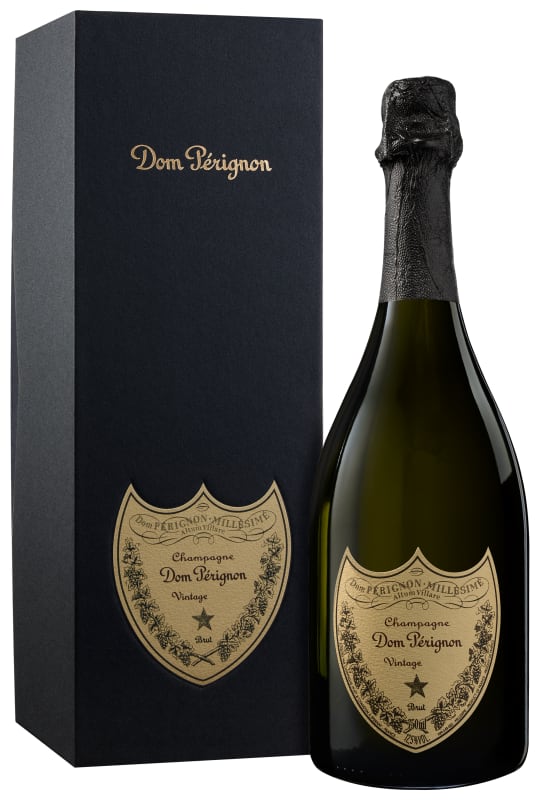


Winemaker Notes
Dom Pérignon Vintage 2017 feels like a substance in zero gravity, with the fluidity of a moving mass. The movement pulses, boiling, then whirling. The wine leaves an impression of soft gushing. Of these evening perfumes, intense and mysterious, which trail carries us away. Of these fluid and rhythmic dances which movement we are drawn into. Seduction.
Professional Ratings
-
Vinous
The 2017 Dom Pérignon is just as stunning as it was last year, if not more so. What a wine! Lemon confit, marzipan, white flowers and chalk soar out of the glass. The 2017 is like a slightly more refined version of the 2002, another year in which the Chardonnays were quite opulent. In 2017, Chardonnay accounts for 61% of the blend, very high for Dom Pérignon. Over the last year, the 2017 has gained mid-palate creaminess and has just come together beautifully. Sadly, production is tiny, so much so that the 2017 is expected to be in the market for just a few months before the maison transitions to the 2018.
-
James Suckling
Dense and layered with dried apples and pears as well as candied lemons, grilled lemons and lemon meringue. It's full-bodied, rich, tangy and flavorful. March 2026 release. Tiny production. Smallest ever for Dom Pérignon. A blend of 61% chardonnay and 39% pinot noir. Dosage 4.5 g/L.
-
Robert Parker's Wine Advocate
Of the two releases—the 2017 and the 2018—the 2017 Dom Pérignon is the deeper and more structurally endowed wine, unfurling from the glass with a complex bouquet of orange peel, dried apricot and burnt buttered toast, mingling with nuances of dried flowers, toasted hazelnut and cacao bean, all strongly singed with the house’s signature smoky reduction. On the palate, it is full-bodied and concentrated, with a rich core of fruit. Its darker, open-knit profile is animated by a pillowy mousse, vibrant acidity and attractively bitter, structuring phenolics that assert themselves on a long, resonant finish.
-
Wine Spectator
A vivid Champagne, offering a finely detailed mousse, with a toasty overtone to the flavors of crushed white raspberry and white cherry fruit, grapefruit pith, toast point and oyster shell, all defined by chiseled, lemony acidity. A fine example from a challenging vintage. Drink now through 2037.




Dom Pérignon: an absolute commitment to Vintage
Dom Pérignon's commitment to vintage is absolute. Each Dom Pérignon is a true act of creation, made from only the best grapes. The champagne's intensity is based in precision, so inviting, so mysterious. Each Vintage has three Plénitudes, and embodies the total faith in the creation that is constantly renewed by Chef de Cave Vincent Chaperon. Coupled with a bold sense of playfulness, Dom Pérignon inspires the greatest creators in the world.Made only from the best grapes grown in one single year, each Dom Perignon's Vintage represents a harmonic balance between the nature of the year and the signature of Dom Pérignon. After no fewer than 8 years of elaboration, each vintage emerges complete, seamless and tactile. Dom Pérignon Champagne is made through an assemblage of Pinot Noir and Chardonnay, created by using only the best grapes harvested from the 17 Grands Crus in Champagne and the Premier Cru of Hautvillers.

Representing the topmost expression of a Champagne house, a vintage Champagne is one made from the produce of a single, superior harvest year. Vintage Champagnes account for a mere 5% of total Champagne production and are produced about three times in a decade. Champagne is typically made as a blend of multiple years in order to preserve the house style; these will have non-vintage, or simply, NV on the label. The term, "vintage," as it applies to all wine, simply means a single harvest year.

Associated with luxury, celebration, and romance, the region, Champagne, is home to the world’s most prized sparkling wine. In order to bear the label, ‘Champagne’, a sparkling wine must originate from this northeastern region of France—called Champagne—and adhere to strict quality standards. Made up of the three towns Reims, Épernay, and Aÿ, it was here that the traditional method of sparkling wine production was both invented and perfected, birthing a winemaking technique as well as a flavor profile that is now emulated worldwide.
Well-drained, limestone and chalky soil defines much of the region, which lend a mineral component to its wines. Champagne’s cold, continental climate promotes ample acidity in its grapes but weather differences from year to year can create significant variation between vintages. While vintage Champagnes are produced in exceptional years, non-vintage cuvées are produced annually from a blend of several years in order to produce Champagnes that maintain a consistent house style.
With nearly negligible exceptions, . These can be blended together or bottled as individual varietal Champagnes, depending on the final style of wine desired. Chardonnay, the only white variety, contributes freshness, elegance, lively acidity and notes of citrus, orchard fruit and white flowers. Pinot Noir and its relative Pinot Meunier, provide the backbone to many blends, adding structure, body and supple red fruit flavors. Wines with a large proportion of Pinot Meunier will be ready to drink earlier, while Pinot Noir contributes to longevity. Whether it is white or rosé, most Champagne is made from a blend of red and white grapes—and uniquely, rosé is often produce by blending together red and white wine. A Champagne made exclusively from Chardonnay will be labeled as ‘blanc de blancs,’ while ones comprised of only red grapes are called ‘blanc de noirs.’