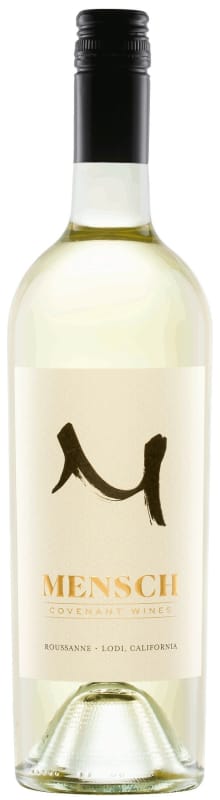


Winemaker Notes
Mensch Roussanne serves up a wonderful mineral core with bright acidity for good structure. Hints of stone fruit, citrus and jasmine give it the kind of quality you’d expect in a wine that costs twice as much. It is regularly among their highest rated white wines.
This wine is Kosher for Passover
Professional Ratings
-
Wine Enthusiast
This Rhone-style white is distinctive and well balanced, and will help cure Chardonnay boredom. Made with native yeast in neutral barrels, it offers enticing, toasty aromas and tasty but subdued apricot and peach-skin flavors that leave a tangy finish.
-
Wilfred Wong of Wine.com
COMMENTARY: COMMENTARY: The 2019 Covenant Wines Mensch Roussanne shows the versatility of the Lodi AVA. TASTING NOTES: This wine brings a rush of dried earth and tropical fruits onto the palate. Pair it with lightly-grilled chicken thighs in a mix of salad greens. (Tasted: July 16, 2020, San Francisco, CA)


Full and silky in body but also charmingly crisp, Roussanne is native to the Rhône Valley of France. It is responsible for some of the finest Northern Rhône white wines. Roussanne adds richness and acidity to Marsanne’s soft, fruitiness, making age worthy and highly respected whites. Somm Secret—Roussanne takes its name from the French word, roux, meaning rouge or red because of the berry’s pink glow. In California, virtually all of the 339 acres of Roussanne come from true clones brought over by Tablas Creek and John Alban.

Positioned between the San Francisco Bay and the Sierra Nevada mountain range, the Lodi appellation, while relatively far inland, is able to maintain a classic Mediterranean climate featuring warm, sunny days and cool evenings. This is because the appellation is uniquely situated at the end of the Sacramento River Delta, which brings chilly, afternoon “delta breezes” to the area during the growing season.
Lodi is a premier source of 100+ year old ancient Zinfandel vineyards—some dating back as far as 1888! With low yields of small berries, these heritage vines produce complex and bold wines, concentrated in rich and voluptuous, dark fruit.
But Lodi doesn’t just produce Zinfandel; in fact, the appellation produces high quality wines from over 100 different grape varieties. Among them are Cabernet Sauvignon, Merlot, Chardonnay and Sauvignon blanc as well as some of California's more rare and unique grapes. Lodi is recognized as an ideal spot for growing Spanish varieties like Albarino and Tempranillo, Portugese varieties—namely Touriga Nacional—as well as many German, Italian and French varieties.
Soil types vary widely among Lodi’s seven sub-appellations (Cosumnes River, Alta Mesa, Deer Creek Hills, Borden Ranch, Jahant, Clements Hills and Mokelumne River). The eastern hills are clay-based and rocky and in the west, along the Mokelumne and Cosumnes Rivers, sandy and mineral-heavy soils support the majority of Lodi’s century-old own-rooted Zinfandel vineyards. Unique to Lodi are pink Rocklin-Jahant loam soils, mainly found in the Jahant sub-appellation.