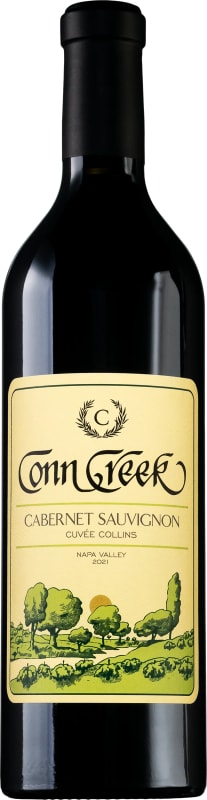


Winemaker Notes
Bright, angular, and undeniably old-school, this cool and expressive wine delights the senses with cool mint and bay laurel, uplifted with high-toned flavors of red raspberry, pomegranate, and crisp plum. As the wine opens in the glass, richer notes of blackberries and smoked cedar awaken, with percolating hints of clove and toasted peppercorns from the wine's 26 months in barrel.
Blend: 90% Cabernet Sauvignon, 5% Cabernet Franc, 5% Malbec
Professional Ratings
-
Decanter
With Jean Hoefliger as a consultant winemaker, there is a new emphasis on elegance and refinement. The blend is 90% Cabernet Sauvignon, 5% Cabernet Franc, and 5% Malbec, sourced from Spring Mountain, Atlas Peak, and sites throughout Napa Valley. Aged for 18 months in 40% new French oak, the Cuvée Collins is teeming with inky black fruit character, laced with tobacco and fine cedar. Full-bodied, with compact, firm tannins framing plenty of creamy blackcurrant and cassis fruits, it also offers notes of graphite and hints of mocha with a cool, wet slate and saline mineral finish. Founded in 1973, Conn Creek Winery is situated on the eastern side of Napa Valley, just off the Silverado Trail.
-
James Suckling
So floral, black-fruited and layered, offering an array of powerful flavors on a lavish, richly tannic texture. Black cherry, spearmint, rose petal and touches of smoke and iron flavors give a distinctive profile. Full-bodied, firmly tannic and enjoyable for its deep, vivid flavors. Drink now or hold.


One of the most prestigious wines of the world capable of great power and grace, Napa Valley Cabernet is a leading force in the world of fine, famous, collectible red wine. Today the Napa Valley and Cabernet Sauvignon are so intrinsically linked that it is difficult to discuss one without the other. But it wasn’t until the 1970s that this marriage came to light; sudden international recognition rained upon Napa with the victory of the Stag’s Leap Wine Cellars 1973 Cabernet Sauvignon in the 1976 Judgement of Paris.
Cabernet Sauvignon undoubtedly dominates Napa Valley today, covering half of the land under vine, commanding the highest prices per ton and earning the most critical acclaim. Cabernet Sauvignon’s structure, acidity, capacity to thrive in multiple environs and ability to express nuances of vintage make it perfect for Napa Valley where incredible soil and geographical diversity are found and the climate is perfect for grape growing. Within the Napa Valley lie many smaller sub-AVAs that express specific characteristics based on situation, slope and soil—as a perfect example, Rutherford’s famous dust or Stags Leap District's tart cherry flavors.