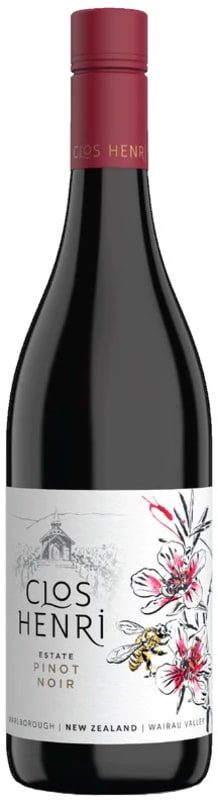


Winemaker Notes
Freshly squeezed cherries and plums, our Estate Pinot Noir is flush with abundant aromas of dark red fruits and a licorice undercurrent Exuberant and densely concentrated, the lively palate has notes of cherry liqueur and macerated plums which are all bound together with firm, textural tannins.
Professional Ratings
-
James Suckling
Lightly cooked strawberries and brambleberries with hints of chocolate and pie crust with some cloves. Medium- to full-bodied, this has chewy, fine tannins and a flavorful finish. Some tar undertones. From organically grown grapes.
-
Wilfred Wong of Wine.com
The 2013 Clos Henri Pinot Noir, grown in the stony soils of Marlborough, reveals a pale ruby hue with a subtle brick tint at the rim. Aromas of fragrant spices and dried berries rise gracefully from the glass. On the palate, it is supple and refined, with elegant balance and persistent follow-through. A natural partner for classic New Zealand roast lamb with kumara and mint sauce. (Tasted: August 2, 2025, San Francisco, CA)
-
Wine Spectator
Juicy blackberry, black cherry and Earl Grey flavors show intensity and focus. The tannins are dense but polished, with details of chicory, fennel seed, loamy soil, sage and black pepper that linger. Drink now. 6,000 cases made, 1,300 cases imported.







Thin-skinned, finicky and temperamental, Pinot Noir is also one of the most rewarding grapes to grow and remains a labor of love for some of the greatest vignerons in Burgundy. Fairly adaptable but highly reflective of the environment in which it is grown, Pinot Noir prefers a cool climate and requires low yields to achieve high quality. Outside of France, outstanding examples come from in Oregon, California and throughout specific locations in wine-producing world. Somm Secret—André Tchelistcheff, California’s most influential post-Prohibition winemaker decidedly stayed away from the grape, claiming “God made Cabernet. The Devil made Pinot Noir.”

An icon and leading region of New Zealand's distinctive style of Sauvignon blanc, Marlborough has a unique terroir, making it ideal for high quality grape production (of many varieties). Despite some common generalizations, which could be fairly justified given that Marlborough is responsible for 90% of New Zealand's Sauvignon blanc production, the wines from this region are actually anything but homogenous. At the northern tip of New Zealand’s South Island, the vineyards of Marlborough benefit from well-draining, stony soils, a dry, sunny climate and wide temperature fluctuations between day and night, a phenomenon that supports a perfect balance between berry ripeness and acidity.
The region’s king variety, Sauvignon blanc, is beloved for its pungent, aromatic character with notes of exotic tropical fruit, freshly cut grass and green bell pepper along with a refreshing streak of stony minerality. These wines are made in a wide range of styles, and winemakers take advantage of various clones, vineyard sites, fermentation styles, lees-stirring and aging regimens to differentiate their bottlings, one from one another.
Also produced successfully here are fruit-forward Pinot noirs (especially where soils are clay-rich), elegant Riesling, Pinot gris and Gewürztraminer.