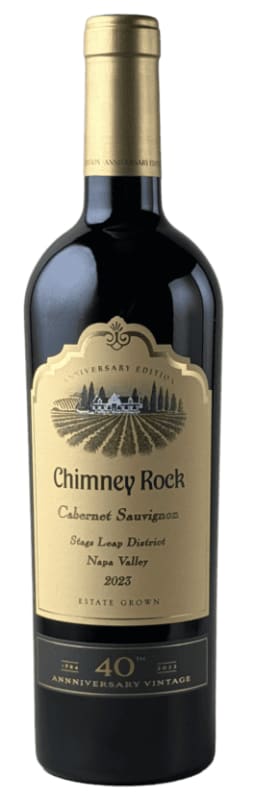


Winemaker Notes
This richly aromatic wine dances with aromas of black currant, cherry, and plums. It is delicately highlighted with notes of caramel, cocoa power and hints of sage and vanilla. Sumptuous and silky. Rich with cherry fruit at the palate entry followed by a sultry, silky mid-palate. The acidity is bright and the finish is long and smooth.
Blend: 79% Cabernet Sauvignon, 14% Merlot, 4% Cabernet Franc, 2% Petit Verdot, 1% Malbec
Professional Ratings
-
James Suckling
So well-balanced, elegant and drinkable. This full-bodied red is moderately tannic, showing deep flavors of raspberries, black cherries, dark chocolate and baking spices. While velvety and approachable, it also delivers great complexity and length.
-
Wine Spectator
Keenly structured yet polished, with handsome flavors of black cherry and red currant accented by tomato leaf and bittersweet chocolate as this gathers richness toward fine-grained tannins. Merlot, Cabernet Sauvignon, Petit Verdot and Cabernet Franc.


A noble variety bestowed with both power and concentration, Cabernet Sauvignon enjoys success all over the globe, its best examples showing potential to age beautifully for decades. Cabernet Sauvignon flourishes in Bordeaux's Medoc where it is often blended with Merlot and smaller amounts of some combination of Cabernet Franc, Malbecand Petit Verdot. In the Napa Valley, ‘Cab’ is responsible for some of the world’s most prestigious, age-worthy and sought-after “cult” wines. Somm Secret—DNA profiling in 1997 revealed that Cabernet Sauvignon was born from a spontaneous crossing of Cabernet Franc and Sauvignon Blanc in 17th century southwest France.

Legend has it that quick and nimble stags would escape the indigenous hunters of southern Napa Valley through the landmark palisades that sit just northeast of the current city of Napa. As a result, the area was given the name, Stags Leap. While its grape-growing history dates back to the mid-1800s, winemaking didn’t really take off until the mid-1970s after a small but pivotal blind tasting called the Judgement of Paris.
When a 1973 Stag’s Leap Wine Cellars Cabernet Sauvignon won first place against its high-profile Bordeaux contenders, like Chateau Mouton Rothschild and Chateau Haut-Brion, international attention to the Stags Leap District of Napa Valley escalated rapidly.
The vineyards in this one-of-a-kind wine growing region receive hot afternoon air reflecting off of its eastern palisade formation. In combination with the cool evening breezes from the San Pablo Bay just south, this becomes an optimal environment for grape growing. While many varieties could thrive here, Cabernet Sauvignon and Merlot dominate with virtually no others, save for a spot or two of Syrah.
Stags Leap soils—eroded volcanic and old river sediments—encourage well established root systems and result in complex, terroir-driven wines. Stags Leap District reds have a distinct sour cherry and black berry character with baking spice and dried earth aromas, and supple tannins.