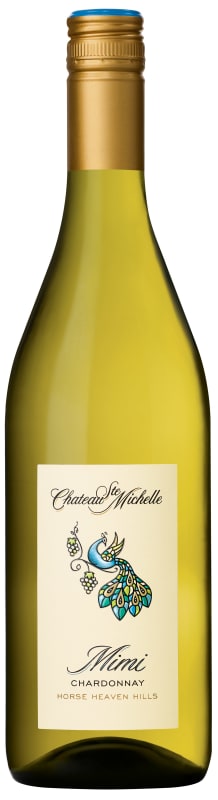


Winemaker Notes
Professional Ratings
-
Wine Enthusiast
This wine is named after former Canoe Ridge Estate vineyard manager Mimi Nye. Its high toned, pretty pear, yellow apple and barrel spice aromas lead to crisp, focused, well-balanced fruit flavors that linger on the finish. It's a spot on example of this variety and style.
-
Wine & Spirits
This is crisp and lemony, with a forward juicy-apple note that’s light, fresh and firm. With its nervy acidity, it’s suitable for chilling down to serve as an aperitif.



Chateau Ste. Michelle is the founding and oldest winery in Washington State. Established on December 5, 1933, Chateau Ste. Michelle is celebrating 90 years of being committed to quality grape growing and producing award winning wines. Washington’s oldest and most acclaimed winery features award-winning wines and unparalleled experiences at our historic Chateau. The wines interweave with the rich heritage to create a memorable wine experience.
The winemaking philosophy is to highlight the style, quality, and expression of Washington State. Always striving to respect the varietal characters and individuality of each location, yet still craft each wine for a pleasurable, food friend experience. Quality is the driving force at Chateau Ste. Michelle. The winery has spent decades investing in quality vineyards throughout the Columbia Valley, the finest winemaking equipment, and world-class, top winemaking talent. This commitment to quality has led Chateau Ste. Michelle to earn some of the highest accolades in the industry today.
24 "Winery of the Year" Honors from Wine & Spirits
18 "Top 100" Wines from Wine Spectator

One of the most popular and versatile white wine grapes, Chardonnay offers a wide range of flavors and styles depending on where it is grown and how it is made. While it tends to flourish in most environments, Chardonnay from its Burgundian homeland produces some of the most remarkable and longest lived examples. California produces both oaky, buttery styles and leaner, European-inspired wines. Somm Secret—The Burgundian subregion of Chablis, while typically using older oak barrels, produces a bright style similar to the unoaked style. Anyone who doesn't like oaky Chardonnay would likely enjoy Chablis.

"Surely this is Horse Heaven!”
Its wide prairies and rolling expanses led an early pioneer to proclaim that the region looked like “horse heaven,” and as a result, the area was appropriately named. Horse Heaven Hills is in south central Washington state, geographically bound on its northern border by the Yakima River and in the south, by the larger Columbia River.
Its proximity to the Columbia River contributes to a variety of climactic factors that dramatically affect its grapes. In particular, an increase in wind from changes in pressure along the river, which flows from the cool and wet Pacific Ocean, inland to Washington’s hot and arid plains, creates 30% more wind than there would be otherwise. These winds moderate temperatures, protect against mold and rot, reduce the risk of early and late season frosts, diminish canopy size and toughen grape skins.
The vineyards bordering the river are on steep, south-facing, well-exposed slopes, with well-drained, sandy-loam soils. But the soils of the appellation are diverse throughout, ranging from wind-blown sand and loess, Missoula Flood sediment, and rocky basalt. Horse Heaven Hills has an arid continental climate with elevations ranging from 200 to 1,800 feet.
The first vines of the appellation were planted in 1972 in an optimal spot now referred to as the Champoux Vineyard. Today it remains the source of some of Washington’s most desirable and expensive Cabernet Sauvignons. In fact, the appellation as a whole boasts many of Washington’s top scoring wines. Its primary grape varieties are Cabernet Sauvignon, Merlot, Syrah, Chardonnay and Riesling.