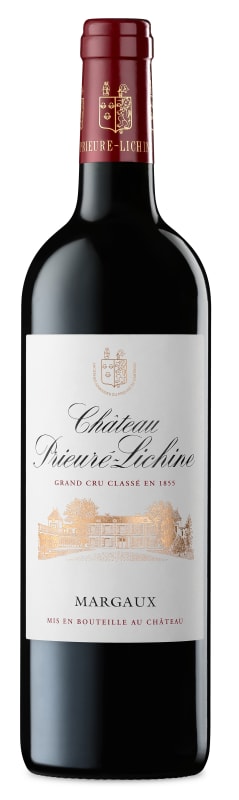


Winemaker Notes
Professional Ratings
-
Jeb Dunnuck
Cassis, liquid violets, graphite, and spicy wood all shine on the nose of the 2025 Château Prieuré-Lichine, and it's medium to full-bodied on the palate, with a concentrated, nicely balanced mouthfeel, beautiful tannins, and a great finish. It plays in the focused, seemingly fresher style of the vintage yet shows the riper side of Margaux while still being beautifully balanced and textured.
Barrel Sample: 93-95 -
James Suckling
Well composed, textural and velvety, with currants, herbs and baking spices on the nose. Medium-bodied with fine tannins. Refined texture with substance and harmony. Persistent, focused finish.
Barrel Sample: 94-95 -
Decanter
Super fragrant and aromatic with purple flowers and ripe bramble fruit on the nose – so inviting. Plush, ripe fruit with a crushed velvet texture to the tannins that fills the mouth giving width and weight. Yet the acidity keeps things moving in a direct line from start to finish. Nice construction with everything in the right place. Tannins need to calm but this is friendly, charming and plump – and very cool also. More blue fruit than black. Cola, liquorice and oyster shell. Ageing 18 months, 30% new barrels, 70% one year.
Barrel Sample: 94 -
Vinous
The 2025 Prieuré-Lichine is terrific. I won't be surprised if it turns out even better than this note suggests. Floral overtones weave through a core of dark red/purplish fruit, all framed by silky tannins. This is classic Prieuré-Lichine, with perhaps a bit more fruit density than most years. A pretty appealing combination in my book. –Antonio Galloni
Barrel Sample: 92-94 -
Robert Parker's Wine Advocate
The 2025 Prieuré-Lichine reveals a vibrant bouquet of dark wild berries, mulberries, cassis and floral notes. Medium- to full-bodied, fleshy and dense, it’s structured and concentrated, built around a solid tannic chassis that carries through to a long, elegantly spicy finish. Less immediately charming and enveloping than usual, it instead emphasizes depth and power.
Barrel Sample: 91-93


One of the world’s most classic and popular styles of red wine, Bordeaux-inspired blends have spread from their homeland in France to nearly every corner of the New World. Typically based on either Cabernet Sauvignon or Merlot and supported by Cabernet Franc, Malbec and Petit Verdot, the best of these are densely hued, fragrant, full of fruit and boast a structure that begs for cellar time. Somm Secret—Blends from Bordeaux are generally earthier compared to those from the New World, which tend to be fruit-dominant.

Silky, seductive and polished are the words that characterize the best wines from Margaux, the most inland appellation of the Médoc on the Left Bank of Bordeaux.
Margaux’s gravel soils are the thinnest of the Médoc, making them most penetrable by vine roots—some reaching down over 23 feet for water. The best sites are said to be on gentle outcrops, or croupes, where more gravel facilitates good drainage.
The Left Bank of Bordeaux subscribes to an arguably outdated method of classification but it is nonetheless important in regards to history of the area. In 1855 the finest chateaux were deemed on the basis of reputation and trading price—at that time. In 1855, Chateau Margaux achieved first growth status, yet it has been Chateau Palmer (officially third growth from the 1855 classification) that has consistently outperformed others throughout the 20th century.
Chateau Margaux in top vintages is capable of producing red Cabernet Sauvignon based wines described as pure, intense, spell-binding, refined and profound with flavors and aromas of black currant, violets, roses, orange peel, black tea and incense.
Other top producers worthy of noting include Chateau Rauzan-Ségla, Lascombes, Brane-Cantenac, and d’Issan, among others.
The best wines of Margaux combine a deep ruby color with a polished structure, concentration and an unrivaled elegance.