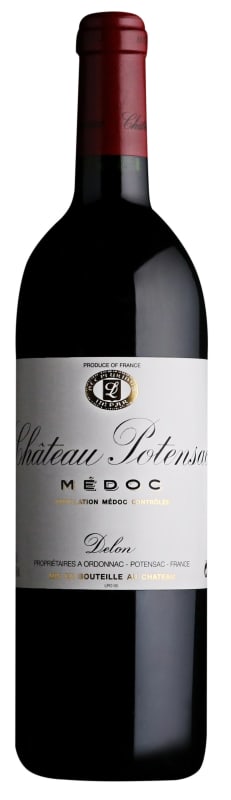


Winemaker Notes
Blend: 41% Merlot, 37% Cabernet Sauvignon, 22% Cabernet Franc
Professional Ratings
-
Jeb Dunnuck
A Merlot-forward blend of 41% Merlot, 37% Cabernet Sauvignon, and 22% Cabernet Franc that's being raised 12 months in 20% new barrels, the 2025 Château Potensac comes from a château that does well in ripe vintages, and this is no exception. Its deep purple hue is followed by a great nose of ripe cherries, currants, sappy tobacco, and graphite. On the palate, it's medium-bodied, with a pure, focused, nicely balanced mouthfeel, good acidity (the pH is 3.57), and ripe, polished tannins. Readers should buy a case or more of this for drinking over the coming 30 years.
Barrel Sample: 92-94 -
James Suckling
The polish and integration of fruit and tannins are very impressive, with a caressing texture and a fruity finish. It’s balanced and transparent. Brightness shines through.
Barrel Sample: 93-94 -
Robert Parker's Wine Advocate
This estate is always reliable, but I was taken aback by just how good the 2025 Potensac is. A blend of 37% Cabernet Sauvignon, 22% Cabernet Franc and the rest Merlot, from vines averaging over 60 years of age, it offers up aromas of dark berries, crème de cassis and iris, followed by a medium- to full-bodied, layered and concentrated palate with excellent density, high-quality tannins and a long, perfumed finish. The 2025 may well be the best wine ever produced at this estate.
Barrel Sample: 91-93 -
Vinous
The 2025 Potensac has a lot to offer. Dark and savory, the 2025 presents an attractive mélange of strong savory/earthy inflections and dark-fleshed fruit. A burst of floral notes punctuates the finish. The 2025 will need a few years in bottle, but it has quite a bit of potential. –Antonio Galloni
Barrel Sample: 91-93 -
Decanter
Slightly dusty and woody on the nose at the moment, with good juiciness on the palate, notes of slate and dark forest berries, supported by bold and coarse tannins. Overall, the wine looks slightly austere and firm at this stage. It will improve with age, but you need to be patient.
Barrel Sample: 92


One of the world’s most classic and popular styles of red wine, Bordeaux-inspired blends have spread from their homeland in France to nearly every corner of the New World. Typically based on either Cabernet Sauvignon or Merlot and supported by Cabernet Franc, Malbec and Petit Verdot, the best of these are densely hued, fragrant, full of fruit and boast a structure that begs for cellar time. Somm Secret—Blends from Bordeaux are generally earthier compared to those from the New World, which tend to be fruit-dominant.

One of the most—if not the most—famous red wine regions of the world, the Medoc reaches from the city of Bordeaux northwest along the left bank of the Gironde River almost all the way to the Atlantic. Its vineyards climb along a band of flatlands, sandwiched between the coastal river marshes and the pine forests in the west. The entire region can only claim to be three to eight miles wide (at its widest), but it is about 50 miles long.
While the Medoc encompasses the Haut Medoc, and thus most of the classed-growth villages (Margaux, Moulis, Listrac, St-Julien, Pauillac and St. Estephe) it is really only those wines produced in the Bas-Medoc that use the Medoc appellation name. The ones farther down the river, and on marginally higher ground, are eligible to claim the Haut Medoc appellation, or their village or cru status.
While the region can’t boast a particularly dramatic landscape, impressive chateaux disperse themselves among the magically well-drained gravel soils that define the area. This optimal soil draining capacity is completely necessary and ideal in the Medoc's damp, maritime climate. These gravels also serve well to store heat in cooler years.