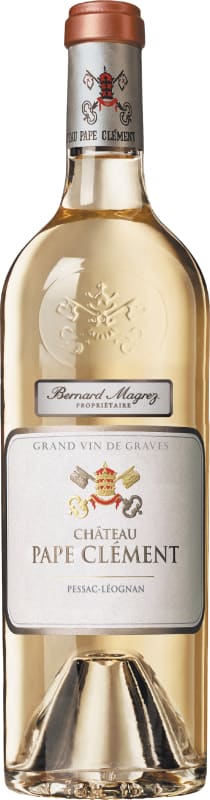


Winemaker Notes
Professional Ratings
-
James Suckling
This is enveloping, with a broad textural element running throughout. It’s bright and incisive, yet with a blanket of fruit that extends across the palate. Flavorful and long. A blend of 56% sauvignon blanc, 30% semillon and 14% sauvignon gris. Aged in barrels, foudres, concrete, amphorae and stainless steel.
Barrel Sample: 97-98 -
Vinous
Rich, vivid and textured, the 2025 Pape Clément Blanc is outrageously beautiful. Lemon confit, marzipan, white flowers, tangerine peel, mint and white pepper soar from the glass. All the elements are so well balanced. This builds beautifully through to the intense, palate-staining finish. In 2025, the Blanc is quite simply magnificent—clearly one of the wines of the vintage. –Antonio Galloni
Barrel Sample: 96-98 -
Decanter
Straw, ripe peach and some waxy lemon aspects with really floral and fragrant aromas on the nose – smells rich and enticing. Beautiful succulence with a dollop of pineapple, lemon and lime, creamy vanilla and peach plus a touch of oiliness that gives amplitude and width. I love the intensity and delicacy here, a wine you really want to drink, full of fruit yet crystalline, focused, mineral, saline and salivating with fruit purity and impressive length. Some enjoyable pineapple bitterness with struck match and oyster shell salinity. Gorgeous precision and clarity – really nothing out of place. A glass I wanted more of immediately. 3.14pH. A yield of 18hl/ha. Ageing 65% in barrels (1/3 new), 16% in foudres and 21% in stoneware, concrete and stainless steel.
Barrel Sample: 96


Sometimes light and crisp, other times rich and creamy, Bordeaux White Blends typically consist of Sauvignon Blanc and Semillon. Often, a small amount of Muscadelle or Sauvignon Gris is included for added intrigue. Popularized in Bordeaux, the blend is often mimicked throughout the New World. Somm Secret—Sauternes and Barsac are usually reserved for dessert, but they can be served before, during or after a meal. Try these sweet wines as an aperitif with jamón ibérico, oysters with a spicy mignonette or during dinner alongside hearty Alsatian sausage.

Recognized for its superior reds as well as whites, Pessac-Léognan on the Left Bank claims classified growths for both—making it quite unique in comparison to its neighboring Médoc properties.
Pessac’s Chateau Haut-Brion, the only first growth located outside of the Médoc, is said to have been the first to conceptualize fine red wine in Bordeaux back in the late 1600s. The estate, along with its high-esteemed neighbors, La Mission Haut-Brion, Les Carmes Haut-Brion, Pique-Caillou and Chateau Pape-Clément are today all but enveloped by the city of Bordeaux. The rest of the vineyards of Pessac-Léognan are in clearings of heavily forested area or abutting dense suburbs.
Arid sand and gravel on top of clay and limestone make the area unique and conducive to growing Sémillon and Sauvignon blanc as well as the grapes in the usual Left Bank red recipe: Cabernet Sauvignon, Merlot, Cabernet Franc and miniscule percentages of Petit Verdot and Malbec.
The best reds will show great force and finesse with inky blue and black fruit, mushroom, forest, tobacco, iodine and a smooth and intriguing texture.
Its best whites show complexity, longevity and no lack of exotic twists on citrus, tropical and stone fruit with pronounced floral and spice characteristics.