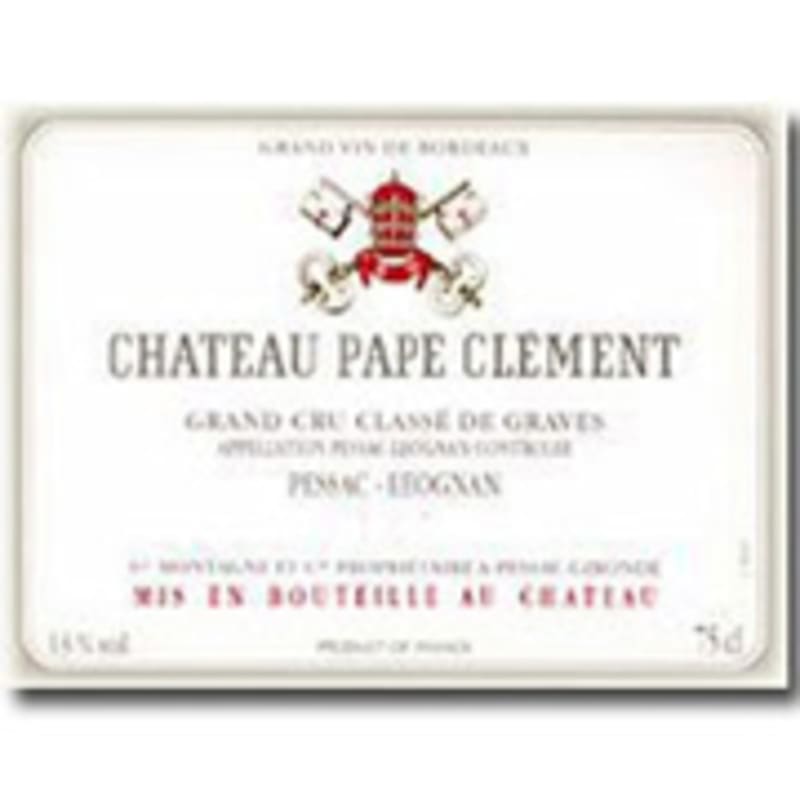

Winemaker Notes
Professional Ratings
-
Robert Parker's Wine Advocate
A blend of 50% Cabernet Sauvignon, 45% Merlot, and 5% Cabernet Franc, the 2009 Pape Clement is not as dense or provocative as the 2005, but it is a worthy competitor. Tighter and more muscular than the 2005, the 2009 reveals an opaque purple color along with notes of graphite, blueberries, and blackberries, stunning richness, a full-bodied mouthfeel, and tremendous length and intensity. Some patience will be required, and I do not believe this effort will achieve the near perfection of the 2005, but it is another winner in this extraordinary vintage. Yields were 43 hectoliters per hectare, and the wine finished around 13.5% alcohol.
Barrel Sample: 95-97 Points -
Decanter
An early-ripening and generous wine in an early-ripening and generous year, this is full of the exuberance that it demonstrated when young. The terroir is starting to exert its influence now, with a lovely pull back on the finish as the tannins step up. It's still youthful and buttoned down but the fruit is exotically ripe and really starting to come into its prime, with traces of heavy black pepper spice. Extremely good quality, if vintage led.
-
Jeb Dunnuck
Drinking beautifully today, the 2009 Château Pape Clément (50% Cabernet Sauvignon, 45% Merlot, and the rest 5% Cabernet Franc) reveals a saturated ruby/purple color as well as an upfront, complex bouquet of blackcurrants, chocolate, lead pencil, earth, and graphite. It’s full-bodied and powerful, yet stays seamless and silky on the palate, with a beautiful sense of elegance. With ripe tannins, beautiful balance, and a great finish, it has the sexy, opulent style of the vintage front and center. You can safely drink this fabulous wine anytime over the coming 2-3 decades.
-
Wine Spectator
Rich and muscular, with exotic roasted spice, braised fig and warm raspberry confiture notes that are supported by a broad baseline of dark cocoa, tar and freshly brewed espresso. Not shy about its modernity, but everything is in place. Just needs to settle in with cellaring. Best from 2015 through 2030.
-
James Suckling
A nose of sweet tobacco and wet earth with lots of ripe fruit. Plenty of blueberry character. Also lots of licorice. Full bodied, with super silky tannins and a long, long finish. Chewy now. Muscular. Best in 2020.
Rating: 94+ -
Wine Enthusiast
Spiced pears in red wine, an exotic range of sweet berry fruits and nutmeg, along with a solid core of structure. Intriguing wine.
Barrel Sample: 92-94 Points


One of the world’s most classic and popular styles of red wine, Bordeaux-inspired blends have spread from their homeland in France to nearly every corner of the New World. Typically based on either Cabernet Sauvignon or Merlot and supported by Cabernet Franc, Malbec and Petit Verdot, the best of these are densely hued, fragrant, full of fruit and boast a structure that begs for cellar time. Somm Secret—Blends from Bordeaux are generally earthier compared to those from the New World, which tend to be fruit-dominant.

Recognized for its superior reds as well as whites, Pessac-Léognan on the Left Bank claims classified growths for both—making it quite unique in comparison to its neighboring Médoc properties.
Pessac’s Chateau Haut-Brion, the only first growth located outside of the Médoc, is said to have been the first to conceptualize fine red wine in Bordeaux back in the late 1600s. The estate, along with its high-esteemed neighbors, La Mission Haut-Brion, Les Carmes Haut-Brion, Pique-Caillou and Chateau Pape-Clément are today all but enveloped by the city of Bordeaux. The rest of the vineyards of Pessac-Léognan are in clearings of heavily forested area or abutting dense suburbs.
Arid sand and gravel on top of clay and limestone make the area unique and conducive to growing Sémillon and Sauvignon blanc as well as the grapes in the usual Left Bank red recipe: Cabernet Sauvignon, Merlot, Cabernet Franc and miniscule percentages of Petit Verdot and Malbec.
The best reds will show great force and finesse with inky blue and black fruit, mushroom, forest, tobacco, iodine and a smooth and intriguing texture.
Its best whites show complexity, longevity and no lack of exotic twists on citrus, tropical and stone fruit with pronounced floral and spice characteristics.