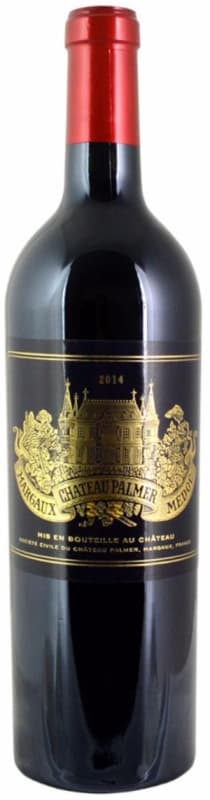


Winemaker Notes
Professional Ratings
-
Jeb Dunnuck
The finest vintage I’ve ever tasted from this estate, surpassing the 2009 and 2010, the 2016 Château Palmer is a blend of 47% each of Merlot and Cabernet Sauvignon, with the balance Petit Verdot, all of which was brought up in 65% new French oak. This magical effort reveals a saturated purple color as well as a huge nose of crème de cassis, graphite, crushed rocks, and spring flowers, and it develops beautifully with time in the glass. Full-bodied, deep, incredibly concentrated and powerful, it nevertheless just glides over the palate with flawless purity and balance, present, ripe tannins, and a finish that just won’t quit. This is Bordeaux at its most regal and classic. It will be drinkable with just 4-5 years of bottle age and keep for half a century.
-
Wine Enthusiast
Powerful tannins and hugely rich fruit balance together in this superb wine. The velvet texture belies the power behind the concentrated, ripe black-fruit flavor, with vibrant acidity giving ample lift. The wine’s structure will ensure aging for many years. Drink from 2024.
Cellar Selection -
Decanter
As is always the case with Palmer, the richness, depth and silkiness is just so impressive. Sophisticated and well constructed, with a vertical lift-off, there's a creamy richness on the palate which supports pencil-lead, liquorice, damson, black cherry and slate. I love the smoky cocoa bean finish. Like the Alter Ego, it's a different style this year but no less impressive, displaying width, heft and incredible persistency. It's a wine that's going to age far into the future and is extremely easy to recommend. The highest ever proportion of grand vin was produced in 2016.
-
James Suckling
Such attractive fruit and alluring ripeness that it draws you in from the get-go. The discreet power here is delivered with a very astute touch. Assorted dark-berry aromas, as well as red plums, abound on the nose. The richness and depth in the mouth is stunning. The tannins are super polished and layered and they draw pristine dark fruit flavors deep into the finish in effortless mode. This is a star of the vintage. A blend of 47 per cent merlot, 47 per cent cabernet sauvignon and six per cent petit verdot. Try from 2024.
-
Robert Parker's Wine Advocate
The 2016 Palmer is a blend of 47% Merlot, 47% Cabernet Sauvignon and 6% Petit Verdot. Opaque garnet-purple colored, it slowly glides out of the glass with compelling notes of blueberry compote, warm cassis and kirsch with emerging hints of violets, cigar box, black tea, sandalwood and Sichuan pepper. Medium to full-bodied, wonderfully rich, concentrated and packed with latent energy, the palate literally grows in the mouth, revealing layer upon layer of black, blue and red fruits and tons of floral sparks, framed by super ripe, incredibly fine-grained tannins and finishing with epic length. It’s a wine that makes you wanna drape yourself languidly over a chaise lounge, glass of Palmer in hand, sighing with deep satisfaction, “This is so wonderfully Palmer.”
Rating: 98+ -
Wine Spectator
This is a very solid rendering, with a core of steeped blackberry, black currant and fig fruit flavors that are juicy and well-defined. The back end picks up lots of graphite, tobacco, anise and violet notes while maintaining focus and energy. Shows latent depth as the fruit echoes steadily. Best from 2023 through 2038.


One of the world’s most classic and popular styles of red wine, Bordeaux-inspired blends have spread from their homeland in France to nearly every corner of the New World. Typically based on either Cabernet Sauvignon or Merlot and supported by Cabernet Franc, Malbec and Petit Verdot, the best of these are densely hued, fragrant, full of fruit and boast a structure that begs for cellar time. Somm Secret—Blends from Bordeaux are generally earthier compared to those from the New World, which tend to be fruit-dominant.

Silky, seductive and polished are the words that characterize the best wines from Margaux, the most inland appellation of the Médoc on the Left Bank of Bordeaux.
Margaux’s gravel soils are the thinnest of the Médoc, making them most penetrable by vine roots—some reaching down over 23 feet for water. The best sites are said to be on gentle outcrops, or croupes, where more gravel facilitates good drainage.
The Left Bank of Bordeaux subscribes to an arguably outdated method of classification but it is nonetheless important in regards to history of the area. In 1855 the finest chateaux were deemed on the basis of reputation and trading price—at that time. In 1855, Chateau Margaux achieved first growth status, yet it has been Chateau Palmer (officially third growth from the 1855 classification) that has consistently outperformed others throughout the 20th century.
Chateau Margaux in top vintages is capable of producing red Cabernet Sauvignon based wines described as pure, intense, spell-binding, refined and profound with flavors and aromas of black currant, violets, roses, orange peel, black tea and incense.
Other top producers worthy of noting include Chateau Rauzan-Ségla, Lascombes, Brane-Cantenac, and d’Issan, among others.
The best wines of Margaux combine a deep ruby color with a polished structure, concentration and an unrivaled elegance.