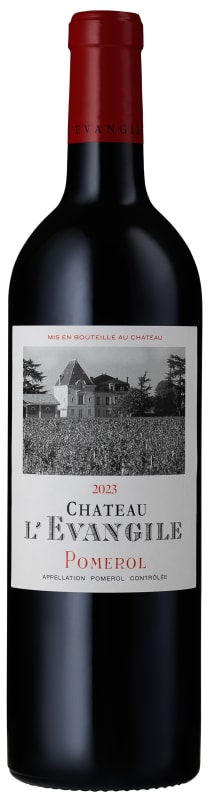


Winemaker Notes
Professional Ratings
-
Decanter
Fragrant redcurrant and cranberry. Milk chocolate, vanilla, creamy, fruity and fresh with cherry and plum fruit. Cool and crisp, so much freshness straight away and so sleek, the weight is there in the density of the ripe fruit but this keeps a very slick frame. Lovely movement and energy, softly vibrant but also quite rich - a spectrum of cranberry and blackcurrant and plum fruit gives lots of different expressions with liquorice and tobacco on the finish. Chalky and stony, a lovely mineral grip too. Feels sophisticated, with balance, nothing sticks out, suave and elegant. I love it’s gentle expression though, doesn’t shout but this will be so great to drink and enjoy. I love it. Everything seems to be balanced delicately on a tightrope, with tenderness, density and tension. Really great and more finessed than some Pomerols. 3.8pH. Ageing 8% amphora, 50% new oak, 15% foudre, the rest used barrels. 42hl/ha yield. Green harvests were performed to drop 15-20% of the potential yield, given the team 'had never seen so many grapes on the vines'.
Barrel Sample: 97 -
James Suckling
Mesmerizing aromas of blackberries, bark and hints of dark mushrooms, violets and chocolate. Medium-bodied with ultra-fine tannins that are polished and very long, bright acidity and a long and vivid finish. Rather endless. 78% merlot, 21% cabernet franc and 1% cabernet sauvignon. From organically grown grapes.
-
Jeb Dunnuck
A brilliant, ripe, textured Pomerol, the 2023 Château L'Evangile offers a deep-hued, intense perfume of red, blue, and black fruits intermixed with sappy flowers, chocolate, and tobacco. Based on 78% Merlot, 21% Cabernet Franc, and 1% Cabernet Sauvignon and aged 18 months in new oak barrels, it's incredibly refined on the palate, medium to full-bodied, with ultra-fine tannins, stunning purity, and a great finish. It might be playing it a little safe, but it's nevertheless a remarkable wine. Give bottles 4-5 years and enjoy over the following 30 years or so.
-
Vinous
The 2023 L’Évangile is sensual and plush in the glass. Silky, refined tannins wrap around a core of dark-toned fruit, spice, mocha, leather and dried flowers. This opens nicely, leading to an explosive, deep finish that is quite compelling. Élevage is 50% new oak, 27% once-used barrels, 15% 26hL cask and 8% amphora. It's another fine effort from the team led by Technical Director Juliette Couderc. –Antonio Galloni
Barrel Sample: 94-96 -
Robert Parker's Wine Advocate
The 2023 L'Evangile has turned out nicely, unwinding in the glass with notes of cherries, iris, mocha and smoke. Medium- to full-bodied, rich and fleshy, with a broad, expansive profile, it's built around sweet tannins and ripe acids. It's a blend of 78% Merlot, 21% Cabernet Franc and 1% Cabernet Sauvignon, checking in at 13.5% alcohol, that was harvested between September 4 and 28, and yields came in at 42 hectoliters per hectare after a green harvest.


One of the world’s most classic and popular styles of red wine, Bordeaux-inspired blends have spread from their homeland in France to nearly every corner of the New World. Typically based on either Cabernet Sauvignon or Merlot and supported by Cabernet Franc, Malbec and Petit Verdot, the best of these are densely hued, fragrant, full of fruit and boast a structure that begs for cellar time. Somm Secret—Blends from Bordeaux are generally earthier compared to those from the New World, which tend to be fruit-dominant.

A source of exceptionally sensual and glamorous red wines, Pomerol is actually a rather small appellation in an unassuming countryside. It sits on a plateau immediately northeast of the city of Libourne on the right bank of the Dordogne River. Pomerol and St-Émilion are the stars of what is referred to as Right Bank Bordeaux: Merlot-dominant red blends completed by various amounts of Cabernet Franc or Cabernet Sauvignon. While Pomerol has no official classification system, its best wines are some of the world’s most sought after.
Historically Pomerol attached itself to the larger and more picturesque neighboring region of St-Émilion until the late 1800s when discerning French consumers began to recognize the quality and distinction of Pomerol on its own. Its popularity spread to northern Europe in the early 1900s.
After some notable vintages of the 1940s, the Pomerol producer, Petrus, began to achieve great international attention and brought widespread recognition to the appellation. Its subsequent distribution by the successful Libourne merchant, Jean-Pierre Mouiex, magnified Pomerol's fame after the Second World War.
Perfect for Merlot, the soils of Pomerol—clay on top of well-drained subsoil—help to create wines capable of displaying an unprecedented concentration of color and flavor.
The best Pomerol wines will be intensely hued, with qualities of fresh wild berries, dried fig or concentrated black plum preserves. Aromas may be of forest floor, sifted cocoa powder, anise, exotic spice or toasted sugar and will have a silky, smooth but intense texture.