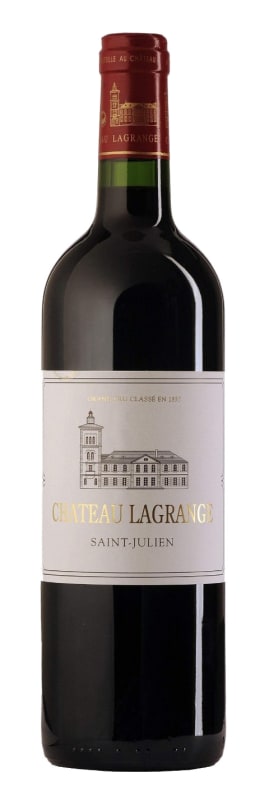


Winemaker Notes
The 2020 is a vintage of contrasts, a vine grower's vintage. They harvested the smallest crop in 30 years. The extraordinary freshness in this wine, produced the hottest vintage in modern history, is real proof of the buffer effect of their terroir. The precision of the fruit transpires with lovely notes of black cherry, black currant, and licorice. The tense tannic structure is reminiscent of the great 2010, with a more creamy, smoother mid-palate. A truly classic vintage that will be enjoyable earlier yet maintain a remarkable aging potential. A focused, finely tuned expressive wine showing great purity.
Blend 74% Cabernet Sauvignon, 24% Merlot, 2% Petit Verdot
Professional Ratings
-
Jeb Dunnuck
Coming from depressingly low yields of just 26 hectoliters per hectare (the lowest since 1991), the 2020 Chateau Lagrange checks in as 74% Cabernet Sauvignon, 24% Merlot, and 2% Petit Verdot that was raised in 60% new French oak. It's a gorgeous, complete Saint-Julien offering remarkable purity in its cassis, violets, chocolate, and leafy tobacco-like aromas and flavors. Medium to full-bodied on the palate, with terrific balance, a pure, focused mouthfeel, ripe tannins, and beautifully integrated oak, it's going to benefit from 4-6 years of bottle age and cruise over the following 2+ decades in cold cellar. Best After 2027.
Rating: 95+
-
James Suckling
Attractive nose of blackberries, blackcurrants, walnuts, ink and kaffir leaves. It’s medium- to full-bodied, firm and structured, with chewy and tight tannins. Dark and intense, with a long and persistent finish. Turns to graphite and cedar. Needs time to open and soften. Try from 2026.
-
Wine Enthusiast
This wine, with its red plum and spice flavors has an initial smoothness that is belied by the wine's dry, firm core. Its dark tannins are there to ensure a fine future.
Barrel Sample: 92-94 -
Decanter
A perky, bright and enjoyable Lagrange, showing some angularity and austerity to the tannins but at the same time it is bright with clarity of direction, firm and concentrated fruits and juicy on the finish. A little subdued, but this is a quality Lagrange with extremely carefully placed fine tannins and fruit - it shows the essence of St-Julien balance, and one that will not need the full 10 years to come around. 50% less volume than usual.
Barrel Sample: 93 -
Wilfred Wong of Wine.com
COMMENTARY: The 2020 Chateau Lagrange shows excellent elegance from start to finish. TASTING NOTES: This wine shines with aromas and flavors of red and blackcurrants, chalky notes, and shading of oak. Try it with a lightly-spiced rotisserie chicken. (Tasted: January 27, 2023, San Francisco, CA)
-
Wine Spectator
Very sleek, with a racy iron edge driving through in lockstep with cassis and cherry coulis flavors. Reveals a subtle black tea accent on the finish, with the minerality eventually holding center stage. Cabernet Sauvignon, Merlot and Petit Verdot. Best from 2024 through 2036.
-
Robert Parker's Wine Advocate
The 2020 Lagrange (Pomerol) wafts from the glass with aromas of sweet berries, cherries, loamy soil and new oak, followed by a medium to full-bodied, velvety and fleshy palate with a gourmand core of fruit framed by powder tannins that assert themselves on the finish. Best after 2025.


One of the world’s most classic and popular styles of red wine, Bordeaux-inspired blends have spread from their homeland in France to nearly every corner of the New World. Typically based on either Cabernet Sauvignon or Merlot and supported by Cabernet Franc, Malbec and Petit Verdot, the best of these are densely hued, fragrant, full of fruit and boast a structure that begs for cellar time. Somm Secret—Blends from Bordeaux are generally earthier compared to those from the New World, which tend to be fruit-dominant.

An icon of balance and tradition, St. Julien boasts the highest proportion of classed growths in the Médoc. What it lacks in any first growths, it makes up in the rest: five amazing second growth chateaux, two superb third growths and four well-reputed fourth growths. While the actual class rankings set in 1855 (first, second, and so on the fifth) today do not necessarily indicate a score of quality, the classification system is important to understand in the context of Bordeaux history. Today rivalry among the classed chateaux only serves to elevate the appellation overall.
One of its best historically, the estate of Leoville, was the largest in the Médoc in the 18th century, before it was divided into the three second growths known today as Chateau Léoville-Las-Cases, Léoville-Poyferré and Léoville-Barton. Located in the north section, these are stone’s throw from Chateau Latour in Pauillac and share much in common with that well-esteemed estate.
The relatively homogeneous gravelly and rocky top soil on top of clay-limestone subsoil is broken only by a narrow strip of bank on either side of the “jalle,” or stream, that bisects the zone and flows into the Gironde.
St. Julien wines are for those wanting subtlety, balance and consistency in their Bordeaux. Rewarding and persistent, the best among these Bordeaux Blends are full of blueberry, blackberry, cassis, plum, tobacco and licorice. They are intense and complex and finish with fine, velvety tannins.