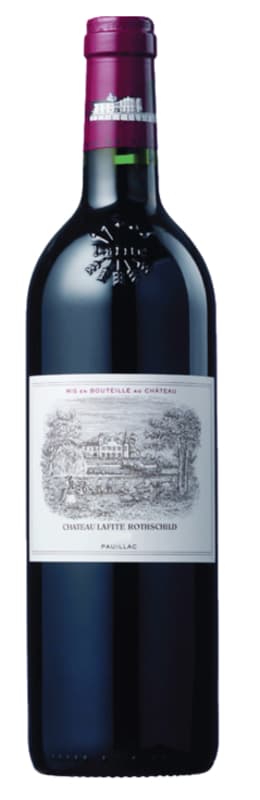


Winemaker Notes
Blend: 92% Cabernet Sauvignon, 8% Merlot
Professional Ratings
-
Decanter
What I love about the 2016 Lafite is that the sweetness of the fruit comes through even at this early stage. Sweet, ripe blackberry and cassis pulse through the palate behind the tight construction of tension and classicism given by high acidity and plenty of tannins. It has ripeness and a sense of promise but, as is often the case with a young Lafite, it's not giving a lot away and we can expect it to age for many decades perfectly comfortably. Extremely accomplished, one to cherish. Matured in 100% new oak.
-
Jeb Dunnuck
On another level and one of the greatest young Bordeaux I’ve ever tasted, the 2016 Lafite-Rothschild is composed of 92% Cabernet Sauvignon and 8% Merlot raised in new oak. It takes the classic elegance and class of Lafite and turns the dial up to 11, offering a massive, heavenly array of blackcurrants, cedar pencil, graphite, tobacco, and incense aromas and flavors that soar from the glass. Deep, full-bodied, and flawlessly constructed, with perfectly integrated fruit, acidity, and tannins, this is legendary stuff all the way. It will be drinkable in 7-8 years and keep for 50-75 years or more. Along with Mouton, it’s the wine of the vintage from the Médoc. Hats off to director Eric Kohler.
-
James Suckling
Incredible aromas of crushed berries, sweet tobacco and wet earth. So perfumed and gorgeous. Hot stones and cement, too. Full-bodied, dense and powerful with lots of intense tannins and a never ending finish. Juicy and flavorful. A muscular Lafite, not seen for a long time. Classssssss! Try after 2025.
-
Robert Parker's Wine Advocate
The 2016 Lafite Rothschild is a blend of 92% Cabernet Sauvignon and 8% Merlot, with 15% of the press wine contributing to the blend this year. Deep purple-black in color, it slowly reveals the most gorgeous perfume of kirsch, lilacs, black raspberries and warm blackcurrants with underlying nuances of cigar box, rose hip tea, cloves, licorice and pencil lead plus a waft of garrigue. Medium-bodied and built like a brick house with a firm yet beautifully ripe, finely pixelated tannic backbone and seamless freshness supporting the amazing intensity of black fruits and floral layers, it finishes very long and provocatively perfumed.
-
Wine Enthusiast
Almost entirely Cabernet Sauvignon, this wine beautifully sums up the density and the richness of this variety in Pauillac. It is impressive, made even more so in this vintage by the ripeness of the tannins, the beautiful, plush fruit and enormous promise. Drink this wine from 2026. Its aging potential is enormous. Cellar Selection
-
Wine Spectator
This offers the best of both sides of Pauillac, with a deep, deep well of dark currant, fig, blackberry and black cherry paste flavors forming a lush side while a series of I-beams made of graphite and iron provide the rigid structure. The two sides meld, pulling in extra sweet tobacco, smoldering cast iron, juniper and savory notes on the finish, leaving a mouthwatering feel. A real stunner. Best from 2025 through 2045.


One of the world’s most classic and popular styles of red wine, Bordeaux-inspired blends have spread from their homeland in France to nearly every corner of the New World. Typically based on either Cabernet Sauvignon or Merlot and supported by Cabernet Franc, Malbec and Petit Verdot, the best of these are densely hued, fragrant, full of fruit and boast a structure that begs for cellar time. Somm Secret—Blends from Bordeaux are generally earthier compared to those from the New World, which tend to be fruit-dominant.

The leader on the Left Bank in number of first growth classified producers within its boundaries, Pauillac has more than any of the other appellations, at three of the five. Chateau Lafite Rothschild and Mouton Rothschild border St. Estephe on its northern end and Chateau Latour is at Pauillac’s southern end, bordering St. Julien.
While the first growths are certainly some of the better producers of the Left Bank, today they often compete with some of the “lower ranked” producers (second, third, fourth, fifth growth) in quality and value. The Left Bank of Bordeaux subscribes to an arguably outdated method of classification that goes back to 1855. The finest chateaux in that year were judged on the basis of reputation and trading price; changes in rank since then have been miniscule at best. Today producers such as Chateau Pontet-Canet, Chateau Grand Puy-Lacoste, Chateau Lynch-Bages, among others (all fifth growth) offer some of the most outstanding wines in all of Bordeaux.
Defining characteristics of fine wines from Pauillac (i.e. Cabernet-based Bordeaux Blends) include inky and juicy blackcurrant, cedar or cigar box and plush or chalky tannins.
Layers of gravel in the Pauillac region are key to its wines’ character and quality. The layers offer excellent drainage in the relatively flat topography of the region allowing water to run off into “jalles” or streams, which subsequently flow off into the Gironde.