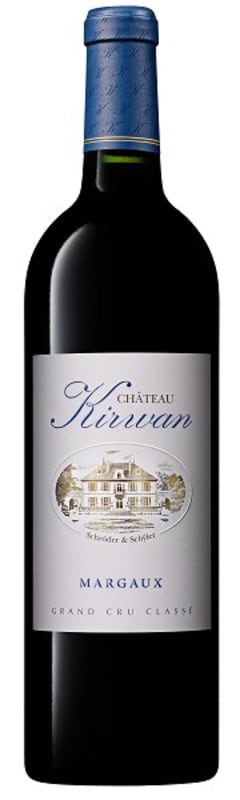


Winemaker Notes
Professional Ratings
-
Wine Enthusiast
This big, rich wine offers dense tannins as well as sumptuous black fruits. Fruit and acidity come together to create a wine with both richness and juicy blackplum flavors. Drink this powerful wine from 2025.
Editors' Choice -
Decanter
This is not generous but is hugely concentrated and opens with a Margaux floral flourish. Damson and cassis are joined by a shot of freshness on the well constructed palate. The tannins are a little overly tight on the finish - you can feel the juice slightly strangled by them - but it's clearly a wine that's built to last. 4% Petit Verdot rounds out the blend.
-
James Suckling
There’s fragrant charm here with purple flowers and a swathe of ripe, juicy dark berries. This has a firmish overall feel with sturdy tannins, driving ripe and fresh, red and dark berries long. The oak is very nicely played.
-
Wilfred Wong of Wine.com
COMMENTARY: While I have enjoyed Kirwan through the years, the 2016 vintage seems to have taken another step up in its performance. TASTING NOTES: This wine is bright and lively. Its aromas and flavors of red currants and chalk should pair it well with an eye of the round roast wrapped with crisp bacon. (Tasted: January 25, 2019, San Francisco, CA)
-
Jeb Dunnuck
One of the more finesse-driven examples of this cuvée that I can remember, the 2016 Château Kirwan offers up a medium ruby color to go with notes of smoke tobacco, gravelly minerality, graphite, and sweet cassis fruit. Medium-bodied, elegant and supple, if not a touch lean, it’s not a blockbuster but has outstanding purity and notable elegance. Drink it over the coming 15 years or so.
-
Robert Parker's Wine Advocate
Medium to deep garnet-purple colored, the 2016 Kirwan is scented of red plums, cassis, redcurrants, earth and cigar box. The palate is medium-bodied, lean, chewy and lively with an earthy finish.
-
Wine Spectator
Bright damson plum, bitter cherry and rose petal notes lead the way in this fresh and focused version, with light rooibos tea and mineral accents underlining the silky, elegant finish. Sneaky long too. Best from 2021 through 2031.


One of the world’s most classic and popular styles of red wine, Bordeaux-inspired blends have spread from their homeland in France to nearly every corner of the New World. Typically based on either Cabernet Sauvignon or Merlot and supported by Cabernet Franc, Malbec and Petit Verdot, the best of these are densely hued, fragrant, full of fruit and boast a structure that begs for cellar time. Somm Secret—Blends from Bordeaux are generally earthier compared to those from the New World, which tend to be fruit-dominant.

Silky, seductive and polished are the words that characterize the best wines from Margaux, the most inland appellation of the Médoc on the Left Bank of Bordeaux.
Margaux’s gravel soils are the thinnest of the Médoc, making them most penetrable by vine roots—some reaching down over 23 feet for water. The best sites are said to be on gentle outcrops, or croupes, where more gravel facilitates good drainage.
The Left Bank of Bordeaux subscribes to an arguably outdated method of classification but it is nonetheless important in regards to history of the area. In 1855 the finest chateaux were deemed on the basis of reputation and trading price—at that time. In 1855, Chateau Margaux achieved first growth status, yet it has been Chateau Palmer (officially third growth from the 1855 classification) that has consistently outperformed others throughout the 20th century.
Chateau Margaux in top vintages is capable of producing red Cabernet Sauvignon based wines described as pure, intense, spell-binding, refined and profound with flavors and aromas of black currant, violets, roses, orange peel, black tea and incense.
Other top producers worthy of noting include Chateau Rauzan-Ségla, Lascombes, Brane-Cantenac, and d’Issan, among others.
The best wines of Margaux combine a deep ruby color with a polished structure, concentration and an unrivaled elegance.