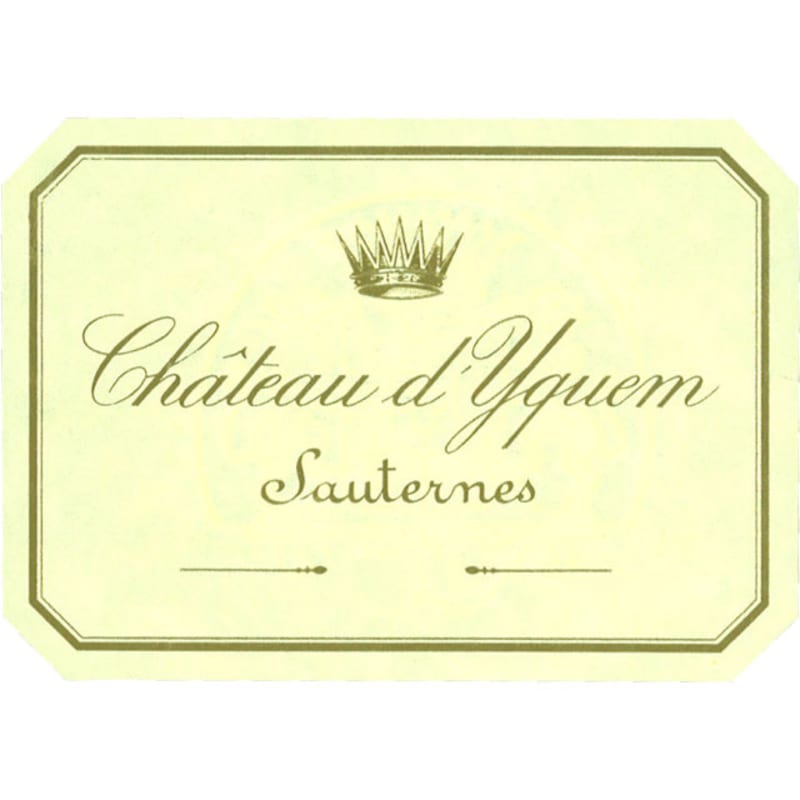

Winemaker Notes
The harvest began very early, on the 5th of September, and lasted 9 weeks. This made it possible to reflect all the diversity of a year in which both flowering and véraison were very spread out. Picking began especially early at Yquem in 2014. Some 25% of the crop was brought in before the 15th of September, providing a rare and precious background of acidity.
Professional Ratings
-
Wine Enthusiast
Barrel Sample. Apricot tones with lively acidity give this rich wine a vein of freshness. Pear and white peach notes offer weight, while a lime backbone brings levity. There is a richness from the botrytis that is lifted by this wines delicious freshness.
Barrel Sample: 97-99 Points -
James Suckling
Very subtle Yquem on the nose with dried pineapple, lemons, green apples and hints of botrytis. The palate grabs you by the arms and shows you superb concentration of spices, dried fruit, phenolics and incredible energy. Nothing is like this from Sauternes this vintage! Drink whenever you like. Spellbinding.
-
Robert Parker's Wine Advocate
The Château Yquem 2014 was picked over 9 weeks this year, with one-quarter of the grapes picked prior to 15 September. It delivers 134 grams per liter residual sugar and 7.3 grams per liter tartaric acid, with a pH 3.60. It has a captivating bouquet (I know...I know...what else were you expecting) But it entrances with its pure, wild honey notes mixed with almond and white chocolate scents, bestowed with beguiling delineation and focus. The palate is very poised with the acidity nigh on perfect. Occasionally an Yquem only reveals its components parts at this early juncture, necessitates conjecture. However the 2014 has a sense of harmony and completeness already, as if the élevage is merely there to usher it on to its finished state. There is undeniably great depth here, perhaps less conspicuous than other vintages because of that silver thread of acidity: notes of lemon sherbet, orange zest, shaved ginger and again, a few "flakes' of white chocolate. It is extremely long with tenderness rather than power on the finish. It's not quite up there in the rarefied heights of say, the 2001 or 2009, but it is what we call in the trade, "the business."
Barrel Sample: 96-98 Points -
Wine Spectator
A stunner, sporting tropical mango and papaya notes that glide along beautifully, while heather honey, pineapple chutney and toasted coconut flavors fill in through the finish. Delivers an amazing mouthfeel that is both creamy and intense, presenting a pretty inner floral brightness that contrasts with the fruit. Best from 2020 through 2045.
-
Decanter
Lively, pure and fresh aromas, pear and citrus notes. So rich and concentrated on the palate but with a flare of acidity that provides tension and draws the wine out on the finish.


Apart from the classics, we find many regional gems of different styles.
Late harvest wines are probably the easiest to understand. Grapes are picked so late that the sugars build up and residual sugar remains after the fermentation process. Ice wine, a style founded in Germany and there referred to as eiswein, is an extreme late harvest wine, produced from grapes frozen on the vine, and pressed while still frozen, resulting in a higher concentration of sugar. It is becoming a specialty of Canada as well, where it takes on the English name of ice wine.
Vin Santo, literally “holy wine,” is a Tuscan sweet wine made from drying the local white grapes Trebbiano Toscano and Malvasia in the winery and not pressing until somewhere between November and March.
Rutherglen is an historic wine region in northeast Victoria, Australia, famous for its fortified Topaque and Muscat with complex tawny characteristics.

Sweet and unctuous but delightfully charming, the finest Sauternes typically express flavors of exotic dried tropical fruit, candied apricot, dried citrus peel, honey or ginger and a zesty beam of acidity.
Sémillon, Sauvignon Blanc, Sauvignon Gris and Muscadelle are the grapes of Sauternes. But Sémillon's susceptibility to the requisite noble rot makes it the main variety and contributor to what makes Sauternes so unique. As a result, most Sauternes estates are planted to about 80% Sémillon. Sauvignon is prized for its balancing acidity and Muscadelle adds aromatic complexity to the blend with Sémillon.
Botrytis cinerea or “noble rot” is a fungus that grows on grapes only in specific conditions and its onset is crucial to the development of the most stunning of sweet wines.
In the fall, evening mists develop along the Garonne River, and settle into the small Sauternes district, creeping into the vineyards and sitting low until late morning. The next day, the sun has a chance to burn the moisture away, drying the grapes and concentrating their sugars and phenolic qualities. What distinguishes a fine Sauternes from a normal one is the producer’s willingness to wait and tend to the delicate botrytis-infected grapes through the end of the season.