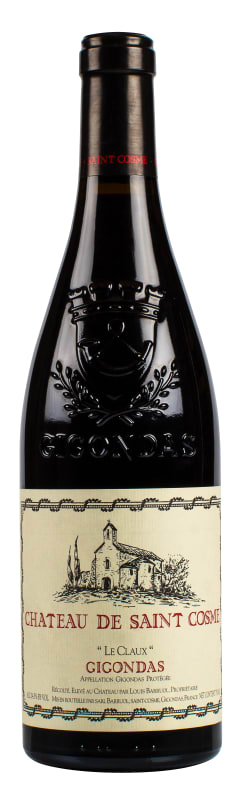


Winemaker Notes
The soil at Le Claux is a yellowish limestone marl and produces the most “Burgundian” wine at Saint Cosme. “It’s extremely refined and fresh with lots of bouquet. Its propensity to mature is excellent,” says Barruol. The wine features aromas and flavors of wild strawberries, violet, peat, Chinese Five Spice, and camphor.
Grenache is the pale-colored, red-fruited, and potpourri-scented red grape variety of the southern Rhône and can be paired with both rustic and sophisticated dishes. Full-bodied Grenache-based wines are ideal with stews, braises, and grilled meats, while lighter versions can work well with dark fish and tomato-based dishes such as ratatouille.
Professional Ratings
-
James Suckling
Welcome to the deep end of Gigondas. The dense nose of damson plums and baking spices barely prepares you for the enormous concentration of this very full-bodied and very muscular palate. Huge finish but with good freshness. The only thing this needs is more time in the bottle to calm down and slim down a bit. Extremely long finish. From organically grown grapes from vines planted in 1880. Best after 2027.
-
Jeb Dunnuck
Based on 100% Grenache that was not destemmed and was raised in used oak, the 2023 Gigondas Le Claux comes from a site just down the hill from the château, just across the street from the Hominis Fides lieu-dit. Offering red and black fruits, savory herbs, loamy soils, and camphor, it's ripe, layered, and charming, while at the same time bringing ample background tannic grip. It has medium to full-bodied richness with terrific concentration and depth. Give it a few years and drink over the following decade or more. Drink 2028-2038.
-
Robert Parker's Wine Advocate
The 2023 Gigondas le Claux is especially successful, unfurling in the glass with aromas of ripe blackberries, dark cherries, peony and crushed herbs. Medium- to full-bodied, it’s rich and concentrated, with an ample core of fruit framed by supple, powdery tannins and a seamless, enveloping texture. More accessible and caressing than the more tightly wound 2022, it will drink well on release but reward at least a decade’s patience in the cellar.
Rating: 94+ -
Wine Enthusiast
This wine comes out swinging—brawny, brooding, and unapologetic. But beneath its muscular frame lies a graceful core. The nose unfolds with black and blueberry compote wrapped in roasted meat, bay leaf, fine herbs, and forest-floor nuance. The palate is firm and structured, with drying tannins anchoring the dark fruit and granitic tension. Cellar confidently through 2035+.


Grenache thrives in any warm, Mediterranean climate where ample sunlight allows its clusters to achieve full phenolic ripeness. While Grenache's birthplace is Spain (there called Garnacha), today it is more recognized as the key player in the red blends of the Southern Rhône, namely Châteauneuf-du-Pape, Côtes du Rhône and its villages. Somm Secret—The Italian island of Sardinia produces bold, rustic, single varietal Grenache (there called Cannonau). California, Washington and Australia have achieved found success with Grenache, both flying solo and in blends.

The Southern Rhône region of Gigondas extends northwest from the notably jagged wall of mountains called the Dentelles di Montmirail, whose highest point climbs to about 2,600 feet. The region and its wines have much in common with the neighboring Chateauneuf-du-Pape except that the vineyards of Gigondas exist at higher elevation and its soils, comprised mainly of crumbled limestone from the Dentelles, often produce a more dense and robust Grenache-based red wine.
The region has a history of fine winemaking, extending back to Roman times. But by the 20th century, Gigondas was merely lumped into the less distinct zone of Côtes du Rhône Villages. However, it was first among these satellite villages to earn its own appellation, which occurred in 1971.
Gigondas reds must be between 50 to 100% Grenache with Syrah and Mourvèdre comprising the bulk of the remainder of the blend. They tend express rustic flavors and aromas of wild blackberry, raspberry, fig, plum, as well as juniper, dried herbs, anise, smoke and river rock. The best are bold but balanced, and finish with impressively sexy and velvety tannins.
The Gigondas appellation also produces rosé but no white wines.