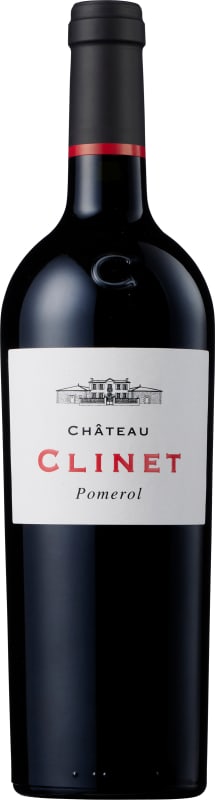


Winemaker Notes
Blend: 80% Merlot, 20% Cabernet Sauvignon
Professional Ratings
-
Jeb Dunnuck
Dense purple-hued, the 2025 Château Clinet is a ripe, sumptuous, and seamless beauty with so much to love. Ripe red, blue, and black fruits, violets, smoky tobacco, and chocolate all shine on the nose, and it's full-bodied on the palate, with a pure, layered, graceful mouthfeel, ultra-fine tannins, and a great finish. It shows just how successful the more clay-dominant soils of Pomerol were in this vintage, and it's unquestionably up with the crème de la crème of the vintage.
Barrel Sample: 96-98 -
Vinous
The 2025 Clinet was the earliest picking ever, from September 4, and aged in 60% new oak plus 40% one-year-old barrels. Vintages now have a little more Cabernet Sauvignon, as a hectare of Merlot was uprooted. Now this has a delightful nose, perhaps the most elegant and refined that I have encountered at this stage: vivid red cherry, raspberry and wild strawberry scents, neatly embroidered oak, more floral in style. The palate is medium-bodied with chiselled, fine tannins, bright and tensile, exquisite focus, with a peacock's tail on the finish. Quite crystalline on the finish, this is a Clinet that I would like in my cellar. Or at the dinner table. Or in my glass. –Neal Martin
Barrel Sample: 96-98 -
Decanter
Lots of fragrant floral aromatics on the nose, smells so vivid and expressive along with mint, blackcurrant leaf, pepper and tobacco. Supple and generous, immediately both energetic and plush with great tannins, great lift and focus. Joyful and full of red berry juice with chalky tannins that fill the mouth. Spice comes in on the finish. Plump yet also has an element of cool crispness. I like this – it’s elegant and refined while still being mouthwatering and juicy. Great stuff that makes you smile. Salty with a slightly reserved nature but still giving such flavour and complexity. Earliest ever harvest (started 4 September). A yield of 34hl/ha. Ageing 100% in oak (60% new).
Barrel Sample: 94 -
James Suckling
A composed, well-structured and precise Pomerol showcasing red berries and baking spices on the nose. Full-bodied with plush tannins and fresh acidity. There is energy at the center despite the solid frame of tannins shaping the midpalate. Focused and driven finish.
Barrel Sample: 94-95 -
Robert Parker's Wine Advocate
Less marked by oak than in recent vintages, the 2025 Clinet reveals a refined bouquet of cedar, dark berries, spice and fresh licorice. Medium- to full-bodied, dense and layered, it’s broad-shouldered yet more tensile than usual, built around a structured core of fruit and concluding with a long, perfumed finish. Reflecting the vintage in its balance between density and approachability, it remains true to the estate’s style, with a firm, robust frame. It will benefit from some years in bottle to fully harmonize. This is a blend of 80% Merlot and 20% Cabernet Sauvignon.
Barrel Sample: 93-95



One of the world’s most classic and popular styles of red wine, Bordeaux-inspired blends have spread from their homeland in France to nearly every corner of the New World. Typically based on either Cabernet Sauvignon or Merlot and supported by Cabernet Franc, Malbec and Petit Verdot, the best of these are densely hued, fragrant, full of fruit and boast a structure that begs for cellar time. Somm Secret—Blends from Bordeaux are generally earthier compared to those from the New World, which tend to be fruit-dominant.

A source of exceptionally sensual and glamorous red wines, Pomerol is actually a rather small appellation in an unassuming countryside. It sits on a plateau immediately northeast of the city of Libourne on the right bank of the Dordogne River. Pomerol and St-Émilion are the stars of what is referred to as Right Bank Bordeaux: Merlot-dominant red blends completed by various amounts of Cabernet Franc or Cabernet Sauvignon. While Pomerol has no official classification system, its best wines are some of the world’s most sought after.
Historically Pomerol attached itself to the larger and more picturesque neighboring region of St-Émilion until the late 1800s when discerning French consumers began to recognize the quality and distinction of Pomerol on its own. Its popularity spread to northern Europe in the early 1900s.
After some notable vintages of the 1940s, the Pomerol producer, Petrus, began to achieve great international attention and brought widespread recognition to the appellation. Its subsequent distribution by the successful Libourne merchant, Jean-Pierre Mouiex, magnified Pomerol's fame after the Second World War.
Perfect for Merlot, the soils of Pomerol—clay on top of well-drained subsoil—help to create wines capable of displaying an unprecedented concentration of color and flavor.
The best Pomerol wines will be intensely hued, with qualities of fresh wild berries, dried fig or concentrated black plum preserves. Aromas may be of forest floor, sifted cocoa powder, anise, exotic spice or toasted sugar and will have a silky, smooth but intense texture.