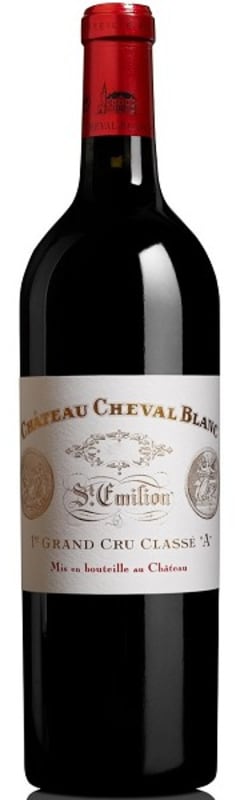


Winemaker Notes
2010 Cheval Blanc has a dark, intense color and a superbly deep, complex, and concentrated nose typical of great Cabernet Franc. The bouquet displays seductive floral and fruity aromas, along with fresh fig, blackcurrant, blackberry, and raspberry, as well as notes of bergamot and mint. With aeration, more floral notes appear, especially violet.
Blend: 50% Cabernet Franc, 48% Merlot, 2% Cabernet Sauvignon
Professional Ratings
-
Jeb Dunnuck
Showing even better than a bottle a few years ago, the 2010 Cheval Blanc is perfection in a glass and wine doesn’t get any better. As with the 2009, it’s a powerful, concentrated Cheval Blanc, yet it has a slightly dark, cooler profile in its smoky black fruits, graphite, new leather, crushed rocks and cured meat aromas and flavors. Where the 2009 hits the palate with a sunny, sexy style, this stays more inward and masculine, yet it still has incredible sweetness of fruit, flawless integration of its fruit, tannins, and acidity, a great mid-palate, and a finish that goes on for over a minute. It opens up with time in the glass and offers incredible pleasure today, with an exotic masculine yet sexy style, but feel free to enjoy this legendary wine any time over the coming 3-4 decades.
-
James Suckling
The aroma in this wine is crazy with flowers, mushroom, forest floor, and fruit. It seems like I am walking through a row of the vines in Cheval Blanc when I have my nose in the glass. It's full-bodied, with fabulous layers of ultra-fine tannins and milk chocolate, raspberries, and a phenomenal finish. Truly one of the greatest Chevals ever. Better than 2009. Try in 2020.
-
Robert Parker's Wine Advocate
Deep garnet in color and made of 54% Cabernet Franc and 46% Merlot, the nose of the 2010 Cheval Blanc is a bit subdued to begin, measuredly opening out to reveal achingly provocative notions of molten chocolate, preserved Morello cherries, baked blackberries, boysenberries and blueberry compote with wafts of underbrush, cigar box, cumin seed and sandalwood. Full-bodied, the palate is a full-on atomic bomb waiting to go off, with very tightly coiled, slowly maturing black fruits eking out glimpses of a vast array of nuances. Still very youthful, it finishes with an incredibly persistent, jaw-dropping display of earth and mineral fireworks. I’d leave this one for another 5 years and drink it over the next 50.
-
Wine Enthusiast
This is the finest Cheval Blanc for many years. It is, quite simply, magnificent. The wine shows the greatness of Cabernet Franc in the vintage, with 57% of the variety in the blend. It is beautifully structured and perfumed with velvety tannins, balanced acidity and swathes of black-currant and black-cherry fruits. It's well on course to becoming a legendary wine. Cellar Selection.
-
Wine Spectator
Lush and very rounded, with lots of muscle and heft, but also great polish and pose to the gorgeous boysenberry, plum and fig notes. Supercreamy on the finish, with bittersweet cocoa, violet, mint, anise and tobacco in reserve.
Barrel Sample: 95-98 Points


One of the world’s most classic and popular styles of red wine, Bordeaux-inspired blends have spread from their homeland in France to nearly every corner of the New World. Typically based on either Cabernet Sauvignon or Merlot and supported by Cabernet Franc, Malbec and Petit Verdot, the best of these are densely hued, fragrant, full of fruit and boast a structure that begs for cellar time. Somm Secret—Blends from Bordeaux are generally earthier compared to those from the New World, which tend to be fruit-dominant.

Marked by its historic fortified village—perhaps the prettiest in all of Bordeaux, the St-Émilion appellation, along with its neighboring village of Pomerol, are leaders in quality on the Right Bank of Bordeaux. These Merlot-dominant red wines (complemented by various amounts of Cabernet Franc and/or Cabernet Sauvignon) remain some of the most admired and collected wines of the world.
St-Émilion has the longest history in wine production in Bordeaux—longer than the Left Bank—dating back to an 8th century monk named Saint Émilion who became a hermit in one of the many limestone caves scattered throughout the area.
Today St-Émilion is made up of hundreds of independent farmers dedicated to the same thing: growing Merlot and Cabernet Franc (and tiny amounts of Cabernet Sauvignon). While always roughly the same blend, the wines of St-Émilion vary considerably depending on the soil upon which they are grown—and the soils do vary considerably throughout the region.
The chateaux with the highest classification (Premier Grand Cru Classés) are on gravel-rich soils or steep, clay-limestone hillsides. There are only four given the highest rank, called Premier Grand Cru Classés A (Chateau Cheval Blanc, Ausone, Angélus, Pavie) and 14 are Premier Grand Cru Classés B. Much of the rest of the vineyards in the appellation are on flatter land where the soils are a mix of gravel, sand and alluvial matter.
Great wines from St-Émilion will be deep in color, and might have characteristics of blackberry liqueur, black raspberry, licorice, chocolate, grilled meat, earth or truffles. They will be bold, layered and lush.