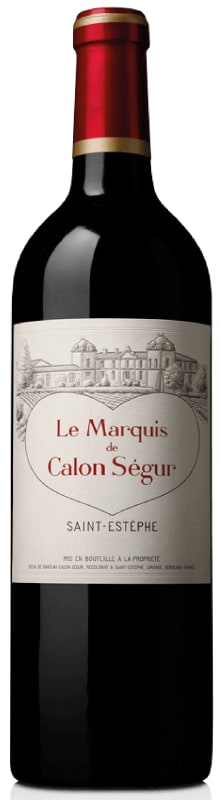


Winemaker Notes
The estate’s Second Wine offers a different interpretation of the Calon terroir. Le Marquis de Calon Ségur provides immediate enjoyment, warmth and a velvety texture. It is carefully aged generally for 17 months in oak barrels, a third of which are new. Deliciously easy-drinking, silky and expressive, its charm comes to the fore, while at the same time bringing to our minds the elegance of the Grand Vin.
Blend: 56% Cabernet sauvignon, 35% Merlot, 7% Cabernet franc, 2% petit Verdot
The Barrel Sample for this wine is above 14% ABV.
Professional Ratings
-
Wine Enthusiast
The second wine of classed growth Calon Ségur, this is becoming impressive in its own right. This vintage shows the structured side of Saint-Estèphe while also showing generous black fruits and bright acidity. It is set to age well.
Barrel Sample: 93-95
-
Decanter
Gorgeously plump blackberry and damson fruit here, high impact with chewy tannins that build through the palate and give an impression of confidence and pleasure. A clear crowd pleaser, with cocoa bean and chocolate shavings, no need to wait too long to approach. 30% new oak.
Barrel Sample: 93
-
James Suckling
A solid red with a deep, dense center palate and a balance of berry, spice and chocolate character. It’s full and linear at the finish. Better than the 2018.
Barrel Sample: 92-93
-
Jeb Dunnuck
A bottle of wine I'd happily drink, the 2019 Le Marquis De Calon Ségur sports a ruby/purple hue as well as classic Saint-Estèphe notes of red and black fruits, damp earth, leafy herbs, and even some spicy, floral nuances that I don't normally find in young Saint-Estèphe. Medium-bodied on the palate, it's nicely balanced, has well-integrated acidity and tannins, and outstanding length. It's a rock solid second wine with loads to love.
-
Robert Parker's Wine Advocate
Deep purple-black colored, the 2019 Le Marquis de Calon-Ségur wafts out of the glass with fragrant potpourri, garrigue and Darjeeling tea scents over a core of redcurrant jelly, plum preserves and blackcurrant pastilles plus a touch of cracked black pepper. The full-bodied palate has a rock-solid frame of grainy tannins with loads of freshness supporting the crunchy black fruits, finishing long and savory.
Barrel Score: 90-92


One of the world’s most classic and popular styles of red wine, Bordeaux-inspired blends have spread from their homeland in France to nearly every corner of the New World. Typically based on either Cabernet Sauvignon or Merlot and supported by Cabernet Franc, Malbec and Petit Verdot, the best of these are densely hued, fragrant, full of fruit and boast a structure that begs for cellar time. Somm Secret—Blends from Bordeaux are generally earthier compared to those from the New World, which tend to be fruit-dominant.

Deeply colored, concentrated, and distinctive, St. Estephe is the go-to for great, age-worthy and reliable Bordeaux reds. Separated from Pauillac merely by a stream, St. Estephe is the farthest northwest of the highest classed villages of the Haut Medoc and is therefore subject to the most intense maritime influence of the Atlantic.
St. Estephe soils are rich in gravel like all of the best sites of the Haut Medoc but here the formation of gravel over clay creates a cooler atmosphere for its vines compared to those in the villages farther downstream. This results in delayed ripening and wines with higher acidity compared to the other villages.
While they can seem a bit austere when young, St. Estephe reds prove to live very long in the cellar. Traitionally dominated by Cabernet Sauvignon, many producers now add a significant proportion of Merlot to the blend, which will soften any sharp edges of the more tannic, Cabernet.
The St. Estephe village contains two second growths, Chateau Montrose and Cos d’Estournel.