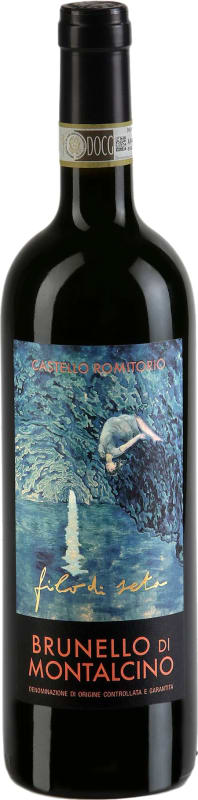


Winemaker Notes
Named for a creek that flows nearby, there was never a more perfect name for a wine with such wonderfully plush tannins — seta means silky in Italian – and an elegance second to none. An excellent expression of high-altitude Montalcino wines, bright, structured, and warming, with generous aromas of wild strawberries, chocolate, and coffee.
Professional Ratings
-
Robert Parker's Wine Advocate
The Castello Romitorio 2019 Brunello di Montalcino Filo di Seta reaches a whole other level of intensity and brilliance with dark fruit, blackberry, an etched mineral quality, petrichor and wet slate that gives this wine an incredibly etched and lively presentation. The tannins are velvety and perfectly match the generous texture of this beautiful Sangiovese. Only later, you start to notice the delicate tones of purple flower and iris root that give this wine such an elegant finish. This is a cellar keeper.
-
Decanter
Not to take anything away from Romitorio’s affable estate Brunello, but the 2019 Filo di Seta plumbs greater depths. It hails from a single plot located at 250 metres on limestone-rich schistous clay. Delineated aromas of eucalyptus, tobacco, dark melted chocolate and brambly berries deliver a seductive overture. The palate follows through with lovely fruit clarity, bringing in pressed florals and a mineral-like, energetic sensation of crystallised rocks. Amply weighted and gracious, its layers of polished tannins and generous concentration grant plenty of confidence for long ageing.
-
Jeb Dunnuck
The deeper red 2019 Brunello Di Montalcino Filo Di Seta delivers powerful notes of medicinal herbs, juniper, menthol, salty earth, and brambly herbs with pine needles. Medium to full-bodied, it has good length and broad shoulders. Rating: 96+
-
James Suckling
lBack cherries, plums and floral notes with subtle, underlying citrus character. Full-bodied and structured. Chewy yet fine-grained tannins. Healthy and vibrant. Persistent length and depth. Give it more time to soften.
-
Wine Spectator
A precise style, exhibiting cherry, blackberry, violet, wild herb and stony mineral flavors. Underlined with a firm, harmonious structure that gives excellent overall balance. This is long, with a strong echo of fruit on the aftertaste.


Among Italy's elite red grape varieties, Sangiovese has the perfect intersection of bright red fruit and savory earthiness and is responsible for the best red wines of Tuscany. While it is best known as the chief component of Chianti, it is also the main grape in Vino Nobile di Montepulciano and reaches the height of its power and intensity in the complex, long-lived Brunello di Montalcino. Somm Secret—Sangiovese doubles under the alias, Nielluccio, on the French island of Corsica where it produces distinctly floral and refreshing reds and rosés.

Famous for its bold, layered and long-lived red, Brunello di Montalcino, the town of Montalcino is about 70 miles south of Florence, and has a warmer and drier climate than that of its neighbor, Chianti. The Sangiovese grape is king here, as it is in Chianti, but Montalcino has its own clone called Brunello.
The Brunello vineyards of Montalcino blanket the rolling hills surrounding the village and fan out at various elevations, creating the potential for Brunello wines expressing different styles. From the valleys, where deeper deposits of clay are found, come wines typically bolder, more concentrated and rich in opulent black fruit. The hillside vineyards produce wines more concentrated in red fruits and floral aromas; these sites reach up to over 1,600 feet and have shallow soils of rocks and shale.
Brunello di Montalcino by law must be aged a minimum of four years, including two years in barrel before realease and once released, typically needs more time in bottle for its drinking potential to be fully reached. The good news is that Montalcino makes a “baby brother” version. The wines called Rosso di Montalcino are often made from younger vines, aged for about a year before release, offer extraordinary values and are ready to drink young.