

Winemaker Notes
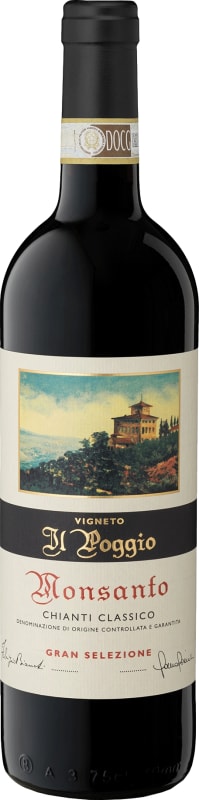
From the Chianti Classico Riserva DOCG, Tuscany Region in Italy, this Chianti Classico is made from Hand picked grapes selected at the optimum moment of the vintage. Fermentation takes place in stainless steel at controlled temperatures with about 25 days of skin contact. Ruby red in color, tending towards garnet. Intensely aromatic and complex with strong aromas of black cherry and apricot fruit. Full bodied with rich blackberry fruit flavors, an elegant mouthfeel and a strong backbone of tannins.
This red wine is an exceptional compliment to red meat, roasts, and game.
Blend: 95% Sangiovese, 5% Colorino and Canaiolo
Professional Ratings
-
Decanter
Il Poggio has grown beyond its original two hectares planted in 1962 and now extends over 5.2ha – but its DNA remains the same. A smidgin of Canaiolo Nero is interplanted with 40-year-old Sangiovese, and the two are co-fermented, while the Colorino is picked and vinified separately. A beautiful showing in 2019, this emerges steadily from the glass with flinty minerals and white pepper first, then arbutus bush and cherry followed by orange and hyacinth. It is elegantly weighted with a generosity of tangy cranberry and ripe strawberry seeping across the palate in a steady textural flow. Stony tannins and steely acidity lend tension. Tarragon lingers.
-
Jeb Dunnuck
Saturated red with a tinge of orange, the 2019 Chianti Classico Gran Selezione Vigneto Il Poggio is stunning. Layered and complex, it unfolds to notes of high-quality leather, kirsch, fresh sage, rosewater, and sweet cedar. Medium to full-bodied, it’s highly refined in its texture, with supple, velvety tannins, seamless, fresh acidity, and a such a graceful finish that’s hard to decipher an ending as it slowly floats away. A stunning wine that reveals its more noble structure underneath, this wine is going to continue to improve if appropriately cellared over the coming 20 years or more. Drink 2026-2050.
-
James Suckling
A very succulent wine with raspberry, cherry, cranberry, orange peel and floral aromas and flavors. It’s medium-bodied with firm, velvety tannins that run the length of the wine and a clean finish. Drinkable now, but will improve with age.
-
Robert Parker's Wine Advocate
The Castello di Monsanto 2019 Chianti Classico Gran Selezione Vigneto Il Poggio (with the San Donato in Poggio location listed on the front label) offers a twofold approach with plenty of fresh cherry fruit and blueberry on the one hand, countered by light age and spice from balanced winemaking on the other. There are subtle hints of clove and toasted spice on the mid-weight close.
-
Wine Spectator
Earth and wild herb aromas segue to cherry, strawberry and pomegranate flavors in this muscular version. Tar, earth, iron and sanguine elements chime in, adding depth as well as a toughness that will require some years to refine. The core of ripe fruit reveals this red's future promise. Sangiovese, Canaiolo and Colorino. Best from 2027 through 2045.
-
Vinous
The 2019 Chianti Classico Gran Selezione Vigna il Poggio is a powerful, tightly coiled wine that is going to need a number of years to be at its best. I would not dream of touching a bottle anytime soon. Crushed flowers, herbs, mint, orange peel and spice are suggestive of a savory, vibrant Il Poggio built for the cellar. Today, the 2019 is deceptive, but there is a lot of wine here. It’s a super-classic expression.
Rating: 95+
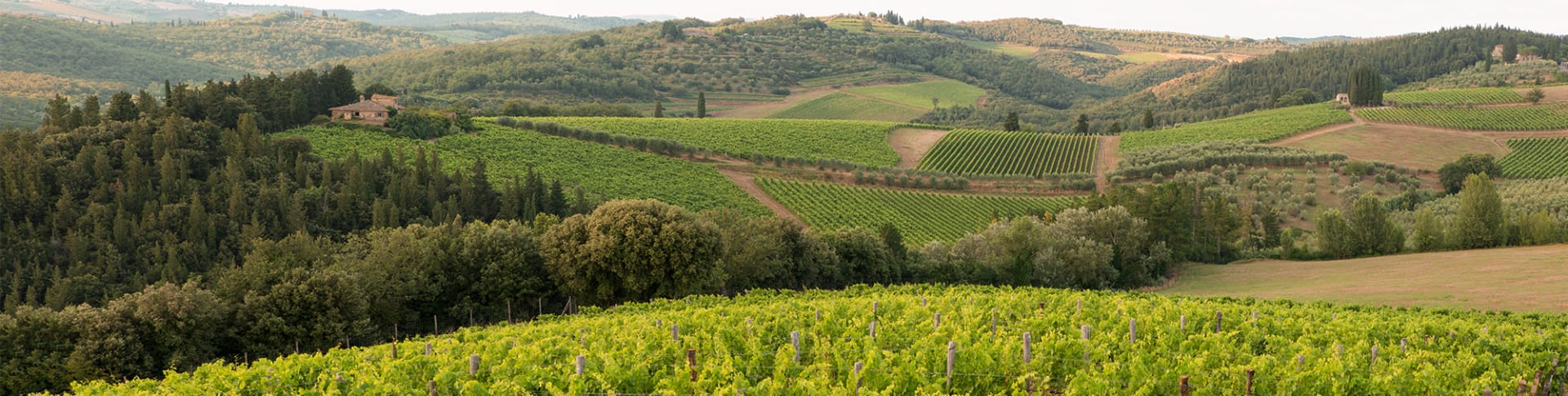




The Castello di Monsanto estate was established by Fabrizio Bianchi in the hillsides of Barberino Val d’Elsa in the province of Florence in the north-central reaches of the Chianti Classico denomination. Bianchi worked to clear a vineyard he named “Il Poggio” (“The Hill”), which would be utilized for production of a single vineyard wine riserva, the first example in Chianti Classico. Always the pioneer, Bianchi began to eliminate the white varieties, Malvasia and Trebbiano, from his Chianti Classico in 1968, preferring to use only the traditional red varieties of Sangiovese, Canaiolo and Colorino.
Cellar innovations in the early years included Slovenian casks for aging, instead of old chestnut barrel, as well as the introduction of stainless steel tanks for fermentation. Furthermore, Castello di Monsanto harvested the first 100% Cabernet Sauvignon, ‘Nemo,’ from the ‘Il Mulino’ vineyard. Today, the Monsanto estate totals 500 acres, of which slightly more than half are woods, while olive orchards occupy an additional 37 acres. Vineyards, situated between 800 and 1,000 feet above sea level, account for 175 acres. Three quarters of the plantings are Sangiovese, the basis for Chianti Classico, while Cabernet Sauvignon and Merlot are the next most widely planted varieties.
One of the most impressive components of Castello di Monsanto is the cellar and its underground tunnel, some 820 feet in length that serves as an aging cellar as well for a potential total of 1,500 barriques. This cave system, one of the most dazzling in all of Italy, took six years to build by hand. The gallery, connecting the new cellar with the original, is located underneath the castle and dates back to 1740.
Today, Fabrizio Bianchi and his daughter, Laura, represent the tradition and elegance that have been associated with the estate throughout its existence. “Il Poggio” was not just an innovation back in 1962; it truly represented a new vision for Chianti Classico. Today, each new vintage is eagerly anticipated as one of the very best bottlings of this wine type.
Each of the wines of Castello di Monsanto, from the award-winning Chianti Classico Riserva, to ‘Nemo’, a Super Tuscan, to the lush and exotic Vin Santo ‘La Chimera’, are true Tuscan treasures. Simply what you would expect from Castello di Monsanto, the grand jewel in the heart of Tuscany.

Among Italy's elite red grape varieties, Sangiovese has the perfect intersection of bright red fruit and savory earthiness and is responsible for the best red wines of Tuscany. While it is best known as the chief component of Chianti, it is also the main grape in Vino Nobile di Montepulciano and reaches the height of its power and intensity in the complex, long-lived Brunello di Montalcino. Somm Secret—Sangiovese doubles under the alias, Nielluccio, on the French island of Corsica where it produces distinctly floral and refreshing reds and rosés.

One of the first wine regions anywhere to be officially recognized and delimited, Chianti Classico is today what was originally defined simply as Chianti. Already identified by the early 18th century as a superior zone, the official name of Chianti was proclaimed upon the area surrounding the townships of Castellina, Radda and Gaiole, just north of Siena, by Cosimo III, Grand Duke of Tuscany in an official decree in 1716.
However, by the 1930s the Italian government had appended this historic zone with additonal land in order to capitalize on the Chianti name. It wasn’t until 1996 that Chianti Classico became autonomous once again when the government granted a separate DOCG (Denominazione di Origine Controllata e Garantita) to its borders. Ever since, Chianti Classico considers itself no longer a subzone of Chianti.
Many Classicos are today made of 100% Sangiovese but can include up to 20% of other approved varieties grown within the Classico borders. The best Classicos will have a bright acidity, supple tannins and be full-bodied with plenty of ripe fruit (plums, black cherry, blackberry). Also common among the best Classicos are expressive notes of cedar, dried herbs, fennel, balsamic or tobacco.