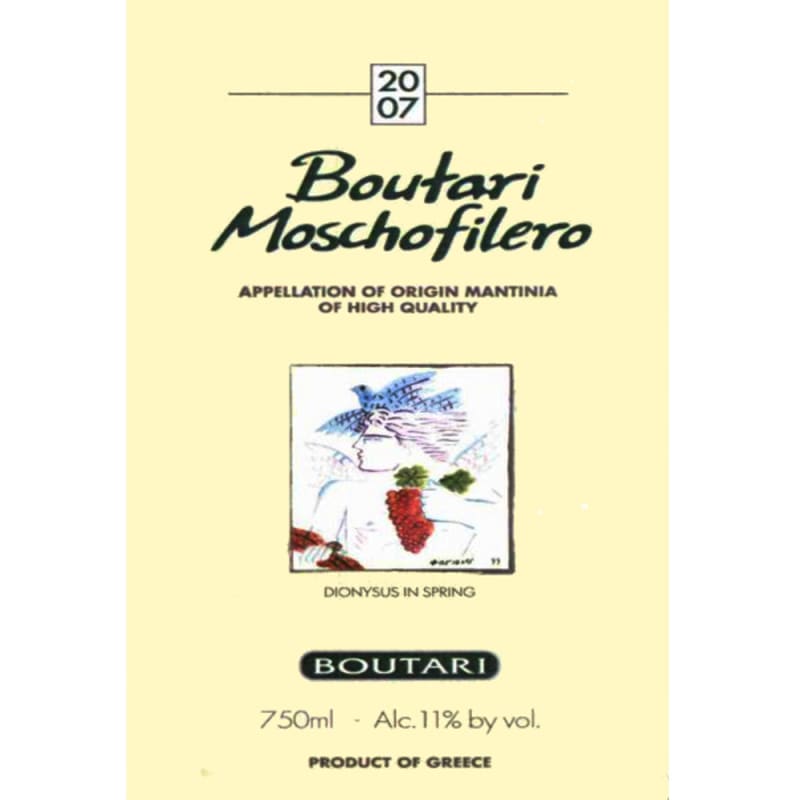

Winemaker Notes
For years Boutari Moschofilero has been an important selling white wine in Greece and, until recently, a virtual unknown in the United States. The Boutari winery's vinification of Moschofilero is a breakthrough for Greek wines...and it just might be the start of the next white wine revolution!
This is a fresh white wine with intense floral (white rose) and fruity (melon and citrus trees) aromas.
Professional Ratings
-
Robert Parker's Wine Advocate
The 2007 MOSCHOFILERO is from vines 15-35 years old. It is light and bright, with only 11% alcohol, delightfully fruity and quite appealing, with a nice, flavorful finish. This is hardly a complex wine, but I found it rather hard to resist. It was one of my favorites from this variety in this report, and I’ve seen street prices on it as low as $10.00, which makes it a pretty nice deal. Drink it fresh and young for best results. It may seem simpler with every passing year even if it holds longer. Drink now-2010.


A pink-skinned variety from the Peloponnese, Greek Moschofilero produces a delicatly perfumed, fresh white wine. There on the Mantineia plateau, the cool growing conditions allow ample time for the grapes to develop balanced sugars and aromatics. Moschofilero is actually the most popular of many mutations of the ancient Fileri grape. These range in color from white to red and produce an array of styles including fruity pink and sparkling versions. Somm Secret—If you already love Muscat, definitely try Moschofilero. Though the grapes are unrelated, they produce remarkably similar wines.

A picturesque Mediterranean nation with a rich wine culture dating back to ancient times, Greece has so much more to offer than just retsina. Between the mainland and the country’s many islands, a wealth of Greek wine styles exists, made mostly from Greece’s plentiful indigenous varieties. After centuries of adversity after Ottoman rule, the modern Greek wine industry took off in the late 20th century with an influx of newly trained winemakers and investments in winemaking technology.
The climate—generally hot Mediterranean—can vary a bit with latitude and elevation, and is mostly moderated by cool maritime breezes. Drought can be an issue for Greek wine during the long, dry summers, sometimes necessitating irrigation.
Over 300 indigenous grapes have been identified throughout Greece, and though not all of them are suitable for wine production, future decades will likely see a significant revival and refinement of many of these native Greek wine varieties. Assyrtiko, the crisp, saline Greek wine variety of the island of Santorini, is one of the most important and popular white wine varieties, alongside Roditis, Robola, Moschofilero, and Malagousia. Muscat is also widely grown for both sweet and dry wines. Prominent red wine varieties include full-bodied and fruity Agiorghitiko, native to Nemea; Macedonia’s savory, tannic Xinomavro; and Mavrodaphne, used commonly to produce a Port-like fortified wine in the Peloponnese.