
Winemaker Notes
Grape Variety: 100% Tempranillo
Professional Ratings
-
Robert Parker's Wine Advocate
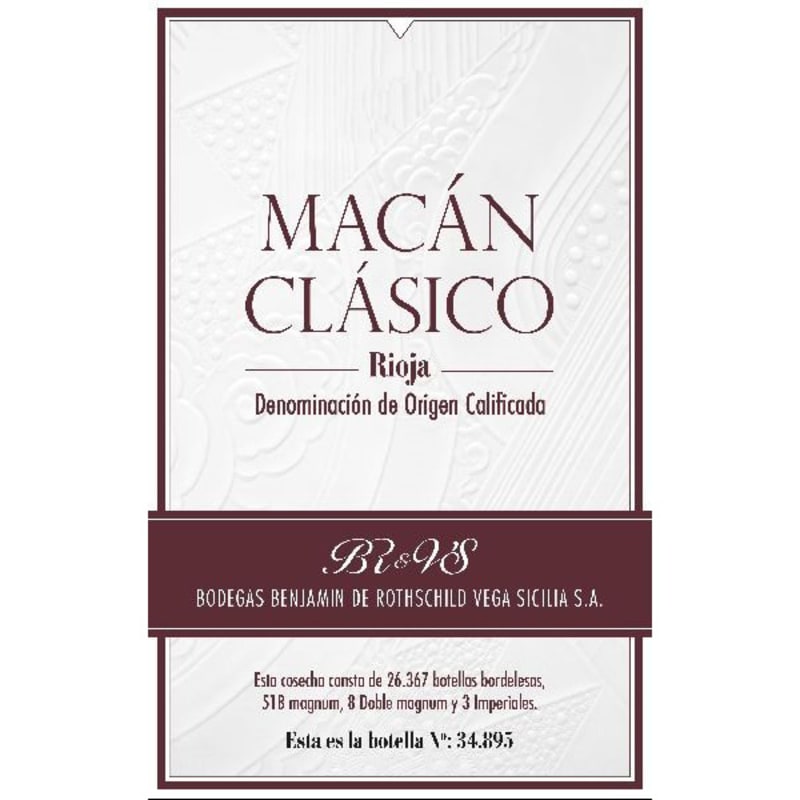
The second vintage of the second wine is the strictest in the Bordeaux sense. The 2010 Macán Clásico has benefited from one extra year in bottle compared side by side with the 2011, the fruit is receding and more complex aromas of bottle age are emerging, subtly balsamic with notes of forest floor, spices, more red fruit than black fruit, balanced and subtle, quite harmonious. The palate is medium-bodied and serious with some grainy tannins, good acidity. It is both subtle and immediate, accessible, yet ripe without excess. It ends with a slight, but pleasant bitterness. 33,8000 bottles and some larger formats were produced, less than for the Grand Vin.Rating: 92+
-
Wine Spectator
This firm red shows a savory character, with tobacco, licorice and dried herb notes. A core of cherry fruit keeps this balanced, showing a structure of firm tannins and balsamic acidity. Drink now through 2020.


Hailed as the star red variety in Spain’s most celebrated wine region, Tempranillo from Rioja, or simply labeled, “Rioja,” produces elegant wines with complex notes of red and black fruit, crushed rock, leather, toast and tobacco, whose best examples are fully capable of decades of improvement in the cellar.
Rioja wines are typically a blend of fruit from its three sub-regions: Rioja Alta, Rioja Alavesa and Rioja Oriental, although specific sub-region (zonas), village (municipios) and vineyard (viñedo singular) wines can now be labeled. Rioja Alta and Alavesa, at the highest elevations, are considered to be the source of the brightest, most elegant fruit, while grapes from the warmer and drier, Rioja Oriental, produce wines with deep color, great body and richness.