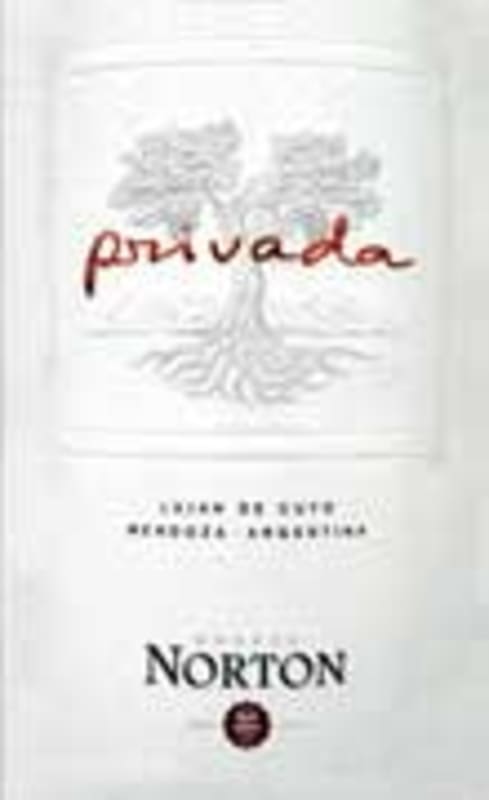

Winemaker Notes
Ruby red color of remarkable intensity. Excellent aromatic complexity with notes of ripe fruit, spices and fine touch of smoke and coffee. Unctuous on the palate. Excellent concentration.
"Goes for the gusto, with a very ambitious helping of bacony toast to go with its layers of fig, plum and currant fruit. Shows licorice, loam and spice on the thickly textured finish. Cabernet Sauvignon, Malbec and Merlot." 90 Points
Wine Spectator
November 30, 2006
"Norton's 2004 Privada is a blend of 40% Malbec, 30% Merlot, and 30% Cabernet Sauvignon sourced from several Mendoza appellations with vine age ranging from 50-80 years and modest yields of 1.6 tons per acre. The wine was aged for 16 months in new French oak. Purple-colored, it has a complex bouquet of pain grille, pencil lead, clove, black currant and black cherry. This leads to a medium to full-bodied wine with good grip, ripe fruit, and well-integrated, soft tannins. The finish is long and pure. This tasty blend will evolve for several years but can be enjoyed now and over the next 10+ years." 90 Points
Wine Advocate
December 2007
Professional Ratings


One of the world’s most classic and popular styles of red wine, Bordeaux-inspired blends have spread from their homeland in France to nearly every corner of the New World. Typically based on either Cabernet Sauvignon or Merlot and supported by Cabernet Franc, Malbec and Petit Verdot, the best of these are densely hued, fragrant, full of fruit and boast a structure that begs for cellar time. Somm Secret—Blends from Bordeaux are generally earthier compared to those from the New World, which tend to be fruit-dominant.

With vineyards tretching along the eastern side of the Andes Mountains from Patagonia in the south to Salta in the north, Argentina is one of the world’s largest and most dynamic wine producing countries—and most important in South America.
Since the late 20th century vineyard investments, improved winery technology and a commitment to innovation have all contributed to the country’s burgeoning image as a producer of great wines at all price points. The climate here is diverse but generally continental and agreeable, with hot, dry summers and cold snowy winters—a positive, as snow melt from the Andes Mountains is used heavily to irrigate vineyards. Grapes very rarely have any difficulty achieving full ripeness.
Argentina’s famous Mendoza region, responsible for more than 70% of Argentina’s wine production, is further divided into several sub-regions, with Luján de Cuyo and the Uco Valley most noteworthy. Red wines dominate here, especially Malbec, the country’s star variety, while Chardonnay is the most successful white.
The province of San Juan is best known for blends of Bonarda and Syrah. Torrontés is a specialty of the La Rioja and Salta regions, the latter of which is also responsible for excellent Malbecs grown at very high elevation.